
Last updated November 2, 2026
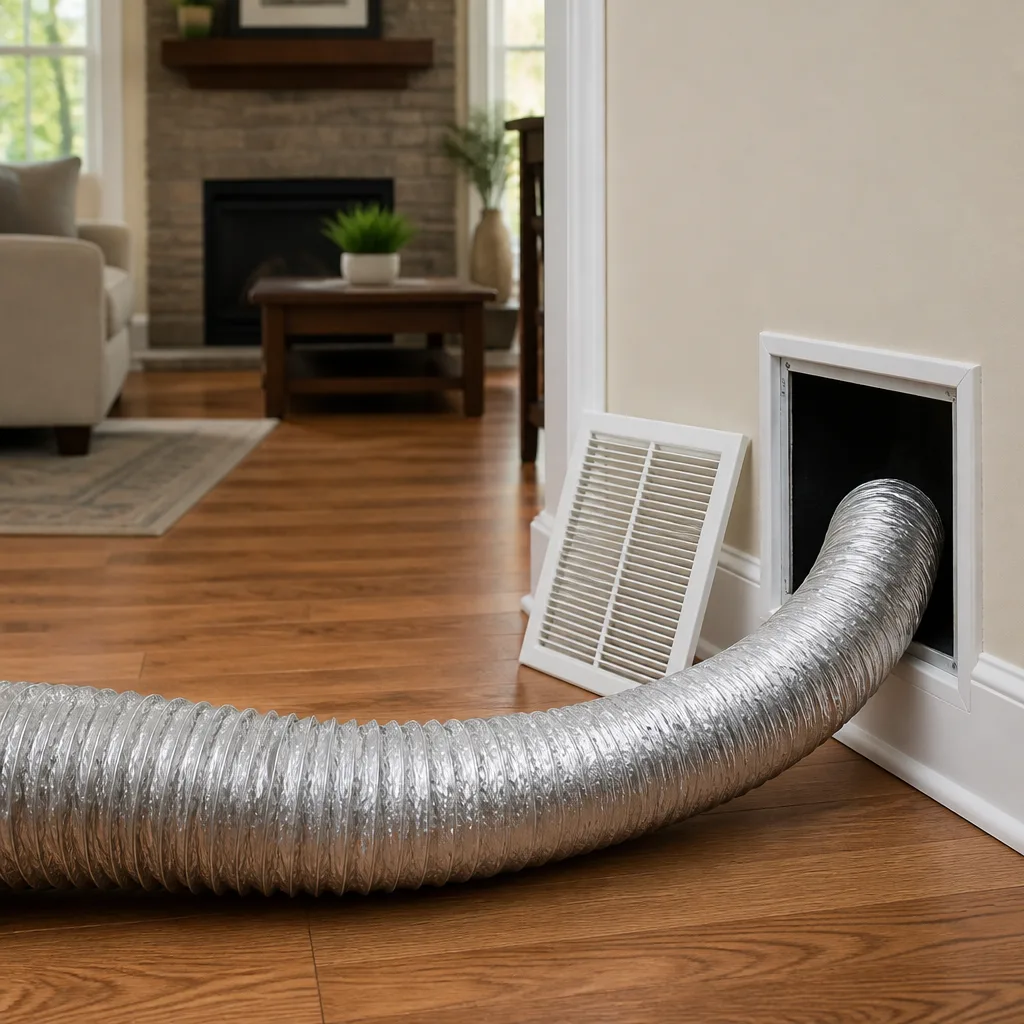 Whole-home duct cleaning
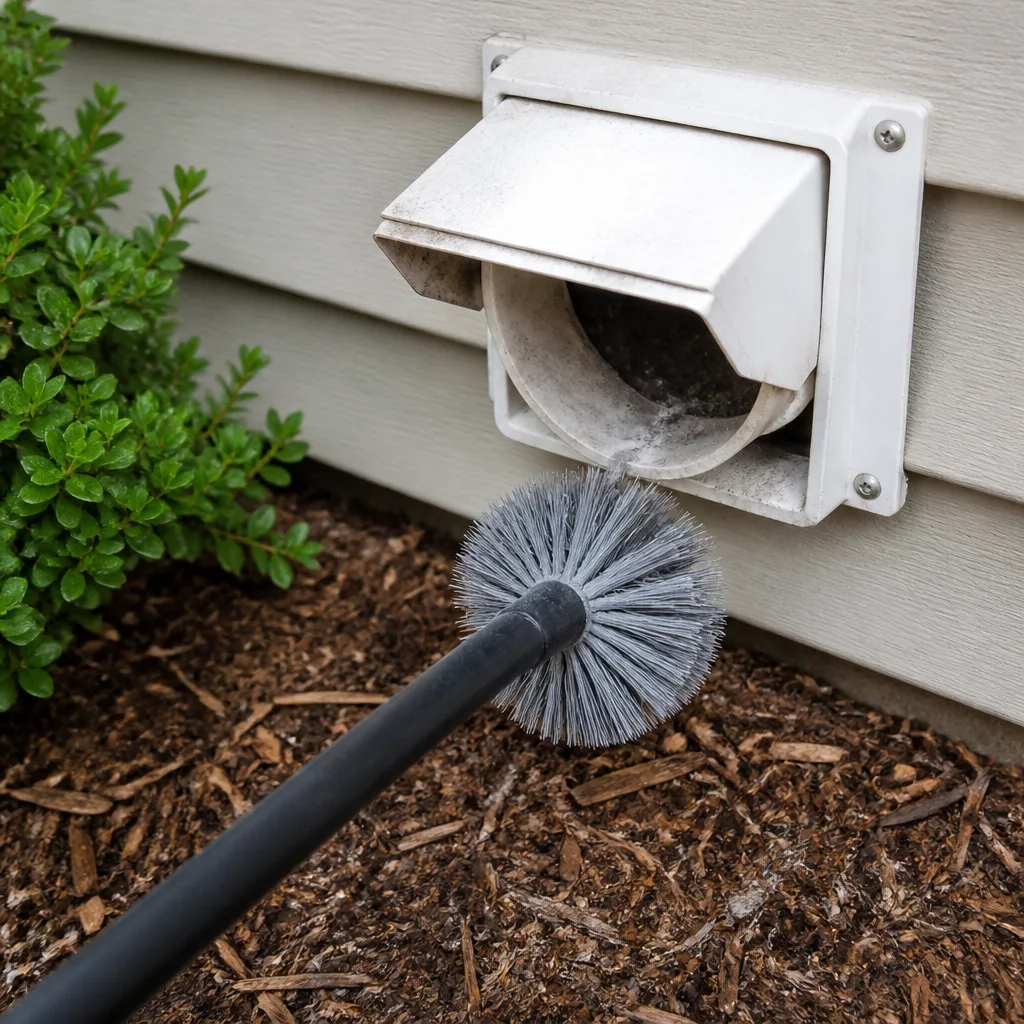 Dryer vent cleaning
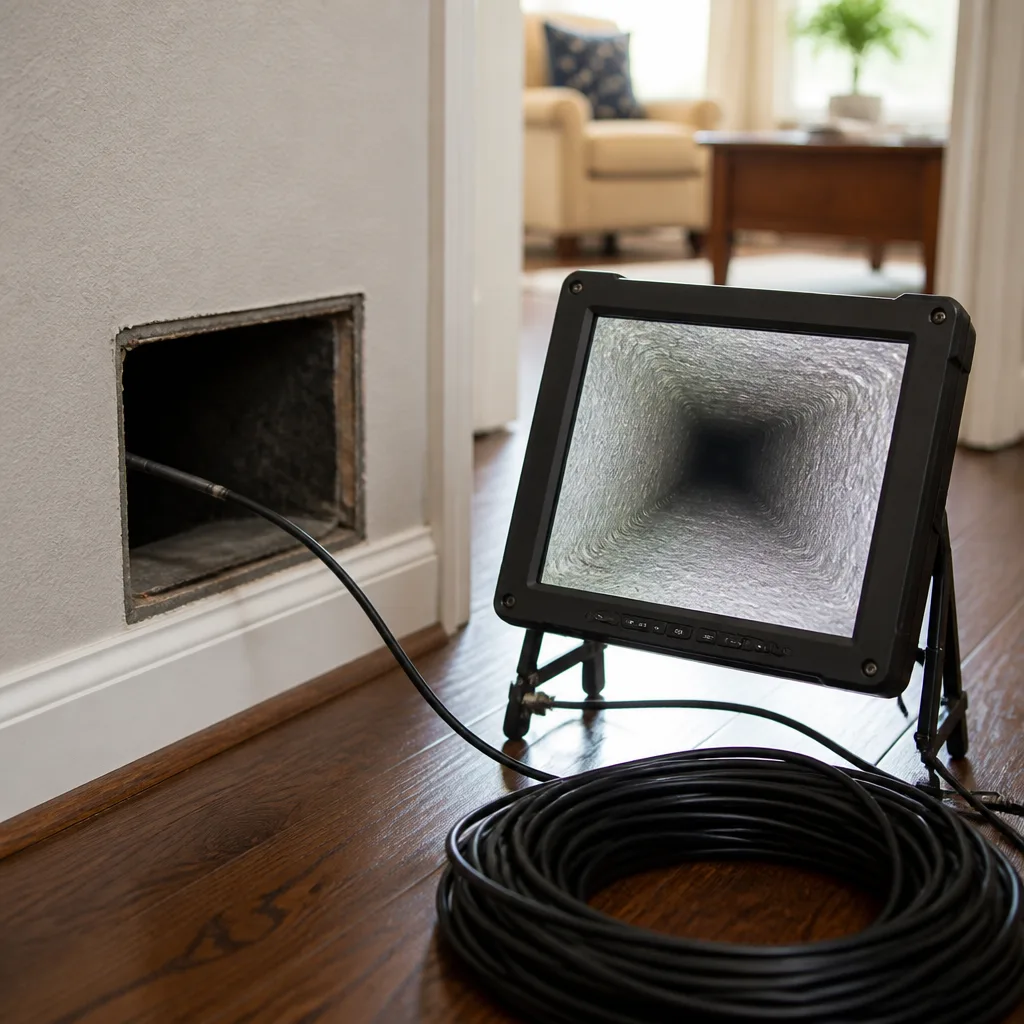 Camera inspection
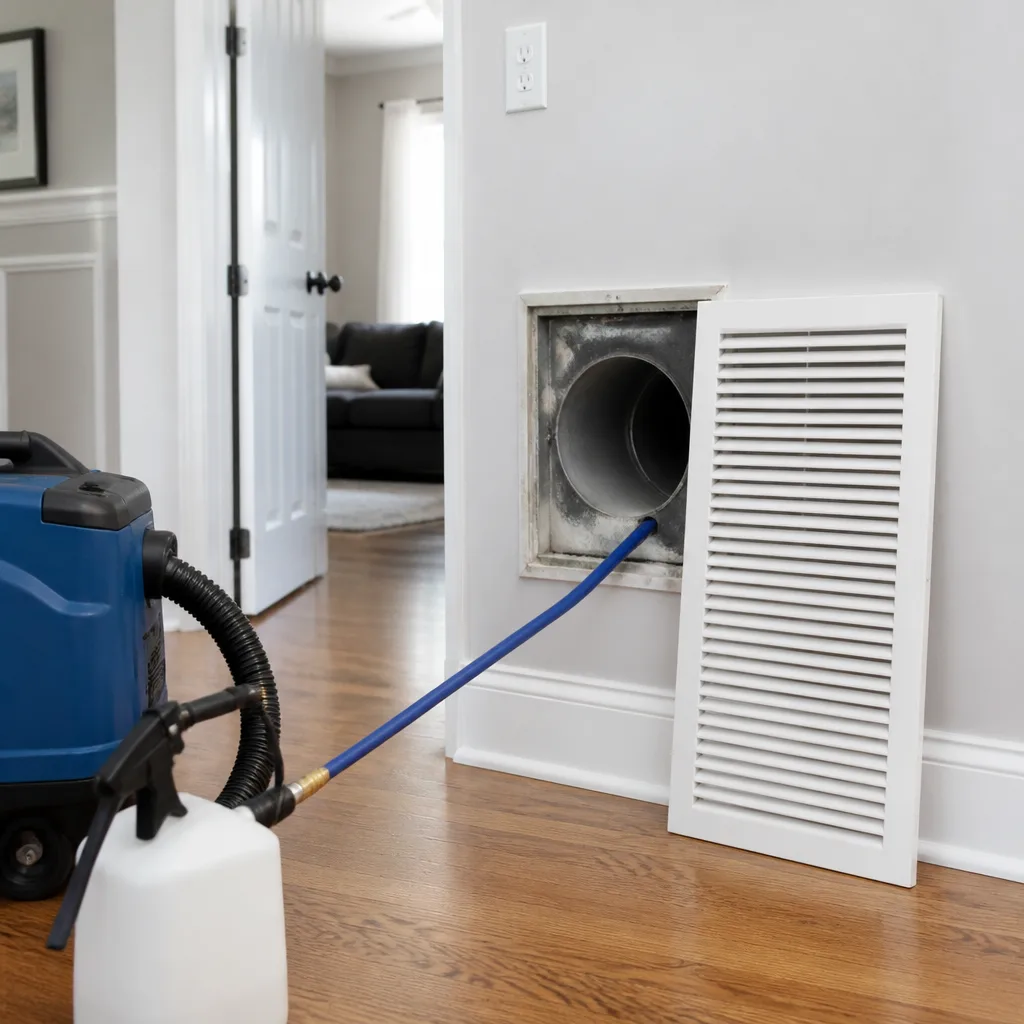 Sanitizing & deodorizing
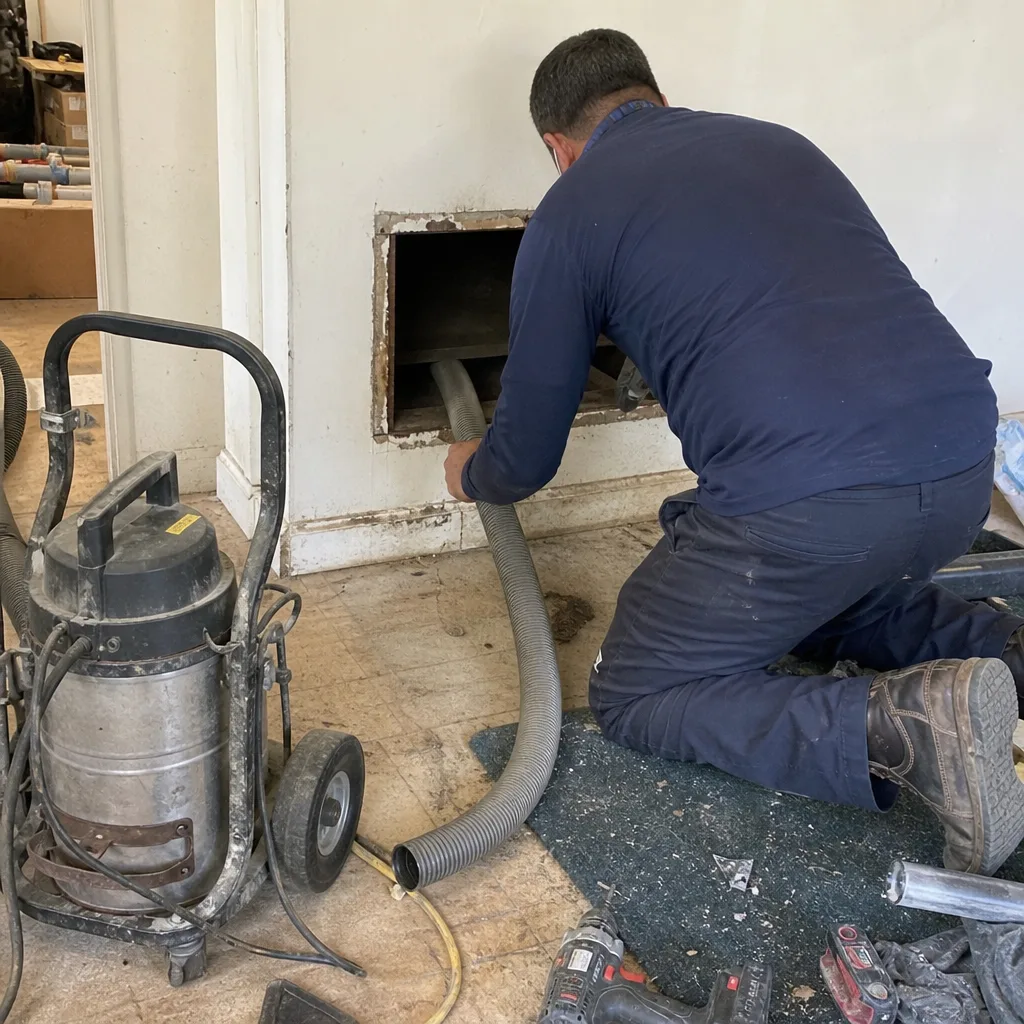
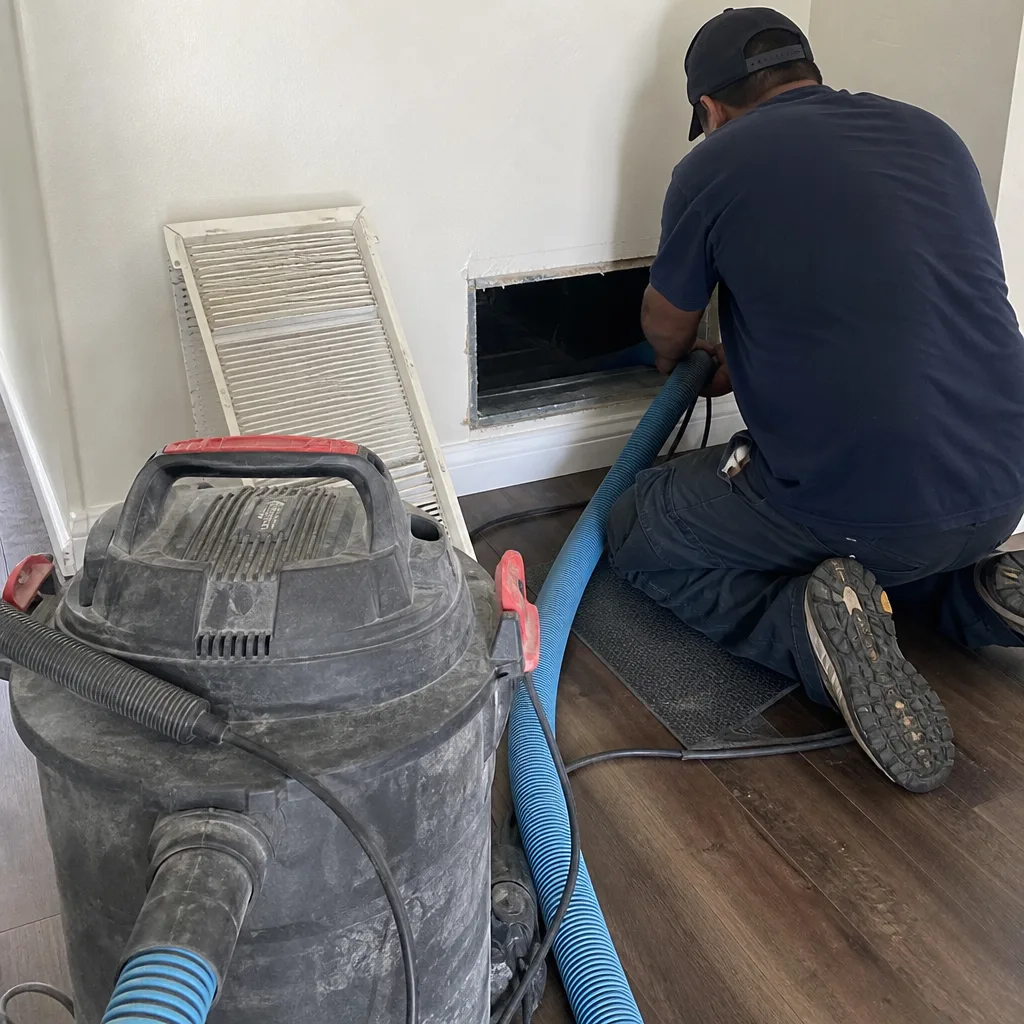
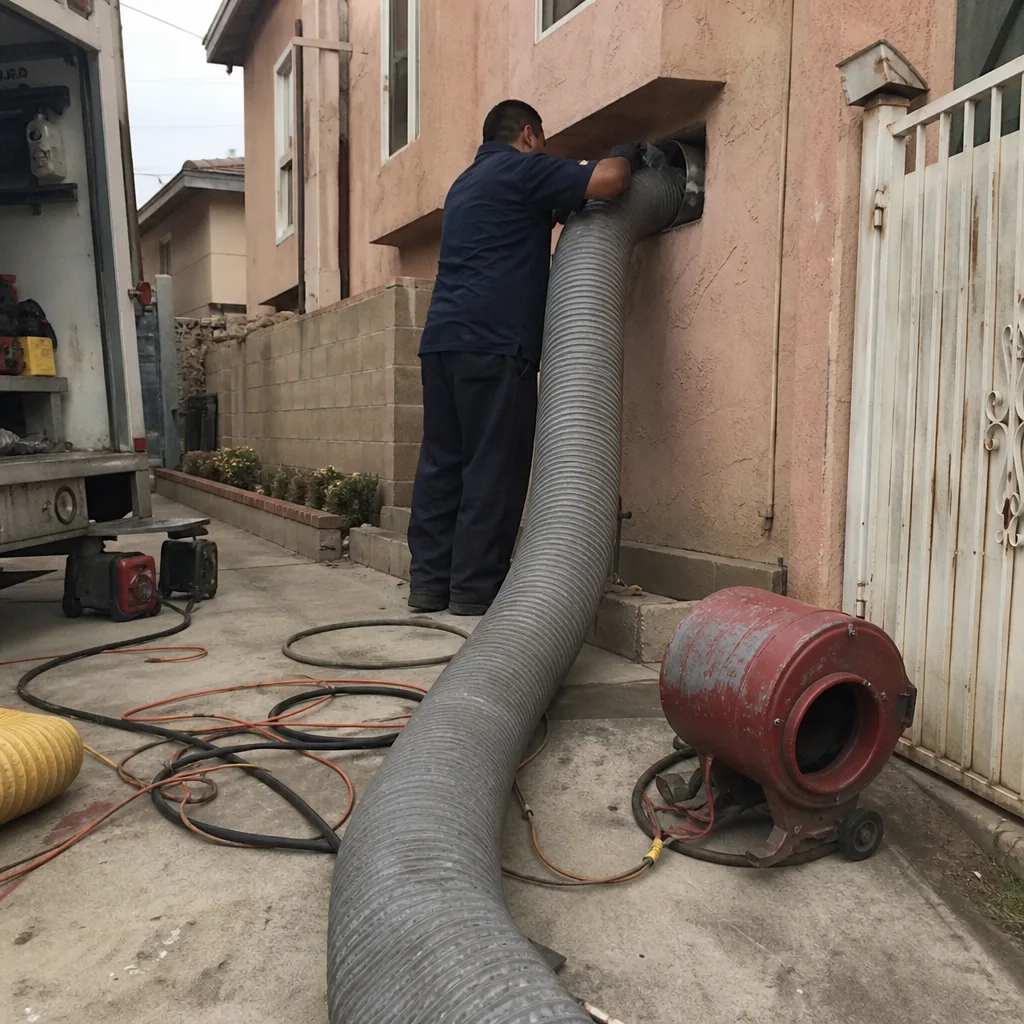
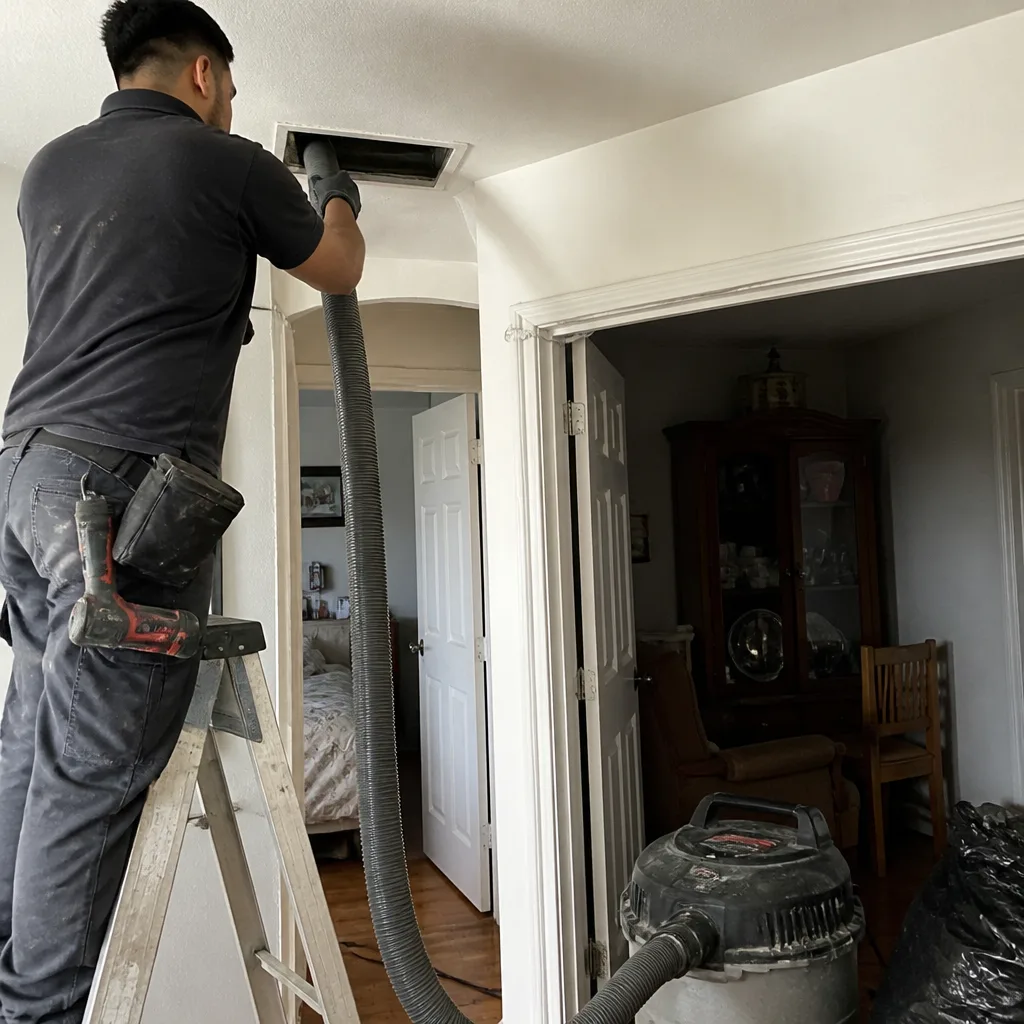
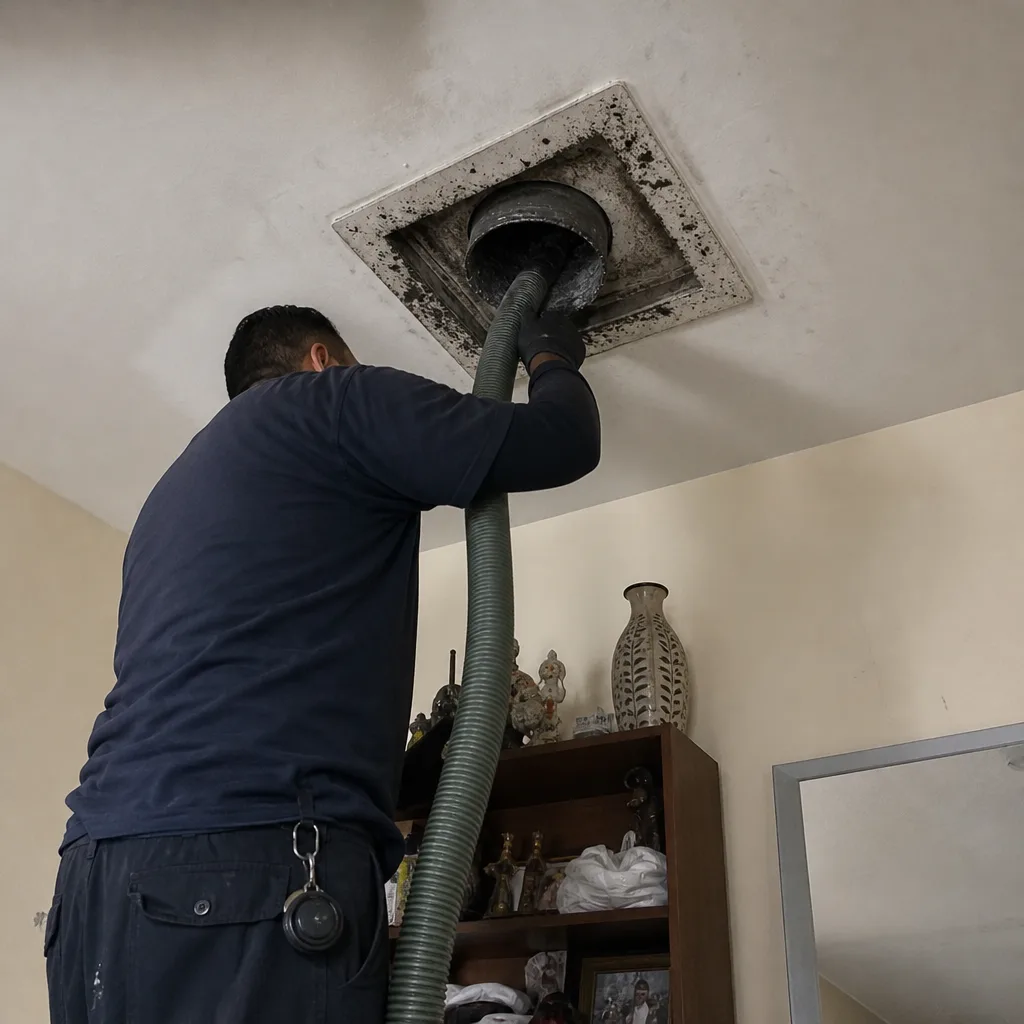
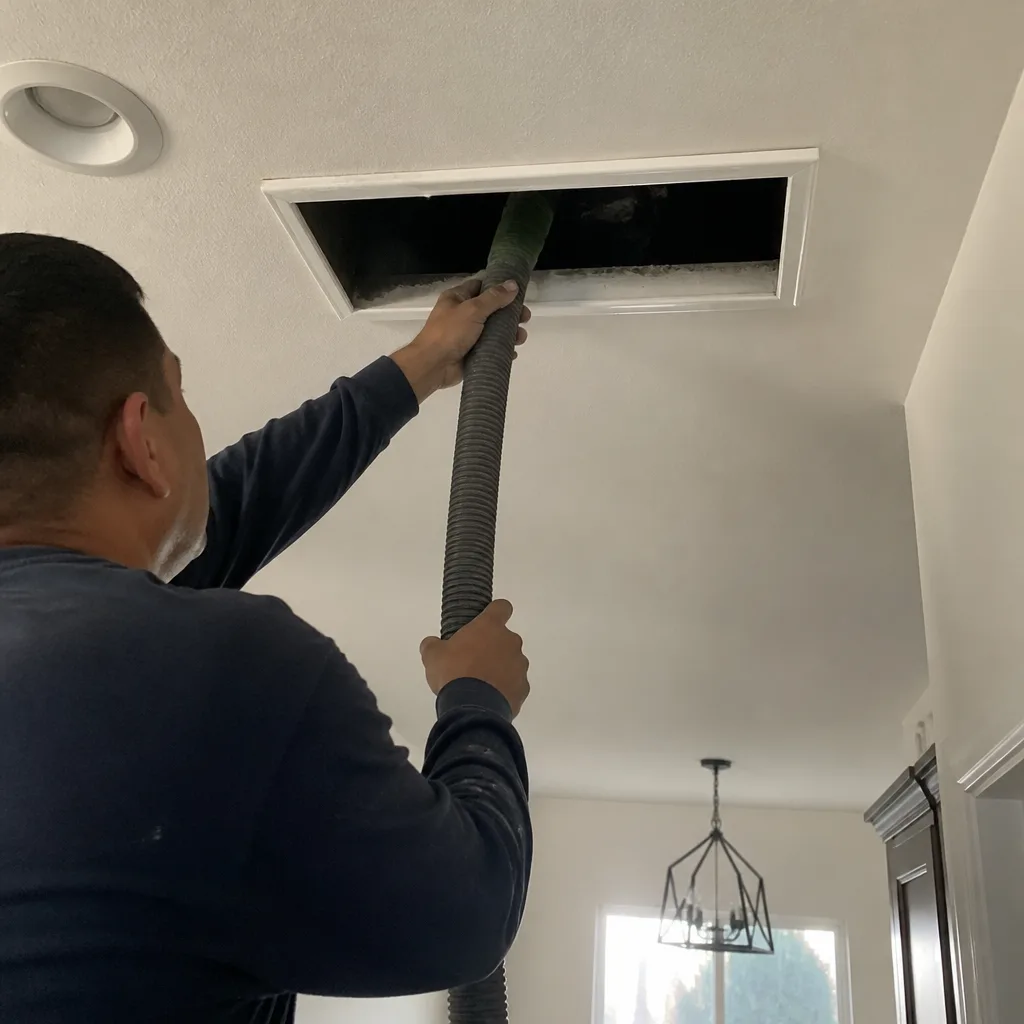
Whole-system duct and dryer vent check with before-and-after photos - you see exactly what came out of your vents
That "$99 whole-house special" is a bait ad - the real number appears once they are in your hallway, or the "clean" is a shop-vac at the register. We photograph the inside of your ducts before and after instead.
Seasonal Air Duct Cleaning Care for Boyle Heights: Year-Round Homeowner’s Guide
In Boyle Heights, the biggest threat to your ductwork isn’t what you’d expect. It’s not age, and it’s not even how often you run the AC. It’s the Santa Ana wind season, which peaks from October through March and can push outdoor particulate counts to hazardous levels within hours. Every time your HVAC system exchanges air during one of those events, it pulls in dust, pollen fragments, and fine grit that settles into your ducts and waits. This guide breaks the year into four local climate cycles and shows you exactly what your duct system faces in each one, when professional Air Duct Cleaning in Boyle Heights makes the most sense, and how to schedule maintenance so you’re never caught off guard.
Styles & brands we work with
- Whole-home duct cleaning
- Dryer vent cleaning
- Camera inspection
- Sanitizing & deodorizing
Quick Answer
The best time to clean air ducts in Boyle Heights is late February through April, after Santa Ana wind season winds down and before summer cooling demand ramps up. But the full answer is more useful: Boyle Heights doesn’t have four textbook seasons. It has four distinct air quality and HVAC stress cycles, and each one loads your duct system with different material. Timing our Air Duct Cleaning services and filter replacement around those cycles beats any arbitrary annual schedule.
Table of Contents
- The Santa Ana Reality: Why Boyle Heights Ducts Fill Faster Than You Think
- Fall (October – November): The Highest-Risk Loading Period
- Winter (December – February): Closed-House Concentration
- Spring (March – May): The Optimal Cleaning Window
- Summer (June – September): Smog, Filtration, and Filter Fatigue
- Staggering Maintenance: A 12-Month Schedule That Keeps Costs Predictable
- Common Mistakes to Avoid
- When to Call a Professional
- Frequently Asked Questions
- The Bottom Line
The Santa Ana Reality: Why Boyle Heights Ducts Fill Faster Than You Think
Santa Ana winds are the defining atmospheric event of Boyle Heights and the wider Eastside. These offshore winds sweep down from the high desert, compress and heat up as they descend the San Gabriels, and arrive here as hot, dry gusts that carry fine dust, pollen fragments, and whatever the deserts of the Mojave decide to share. What most homeowners don’t realize is that these events directly influence what ends up inside their ducts.
During a Santa Ana event, outdoor particulate concentrations can spike from moderate to hazardous in a single afternoon. Your home isn’t sealed against this. HVAC systems pull in outdoor air through fresh-air intakes and through the natural leakage every home has around doors, windows, and wall penetrations. That air moves through the return registers, across the coil, and into the supply ducts. Every particle that isn’t caught by the filter settles somewhere: on the coil, in the duct lining, on the blower fan blades, in the supply runs.
Over a single Santa Ana season, the volume of fine material that reaches the average Boyle Heights duct system is substantial. We’ve seen ducts in homes off Soto Street and around Hollenbeck Park come back from camera inspections looking like the floor of a desert arroyo: a fine layer of tan powder settled across everything. This material doesn’t just sit there, either. It’s re-entrained every time the blower kicks on, recirculating through the house until it either gets caught by the filter or settles somewhere else.
The practical takeaway is this: if you’re running your HVAC during Santa Ana events, you’re loading your duct system. The amount and speed of that loading depends on filter quality, filter seal, and whether your ducts have gaps or leaks that pull in unfiltered attic or crawlspace air. We’ll get into each of those factors in the sections that follow.
Key Takeaways:
- Santa Ana winds peak October through March and are the single biggest source of duct loading in Boyle Heights.
- Hazardous particulate levels can develop in hours, not days.
- Material that enters the ducts settles and re-entrains repeatedly, affecting air quality long after the wind event ends.
- Filter quality and duct integrity determine how much of that material actually stays in the system.
Fall (October – November): The Highest-Risk Loading Period
If there’s one stretch of the year when Boyle Heights duct systems take the hardest hit, it’s October and November. Two things happen at once. Santa Ana season ramps up, with the first major events typically arriving in late October. And at the same time, homes that ran air conditioning all summer are finally getting a break, which means the HVAC system is cycling differently: shorter cooling runs, more off time, and often the first heating use of the season.
Shorter run times matter for duct loading in a way most people don’t consider. The HVAC blower moving air across a wet cooling coil leaves moisture in the duct system, particularly in the supply plenum and the first few feet of supply runs. When the system runs long and frequently during summer, that moisture tends to evaporate between cycles. In fall, shorter cycles and cooler ambient temperatures change the evaporation math. Moisture lingers longer. And moisture makes whatever particulate has entered the ducts stick. It binds fine dust into a film that clings to metal and flex duct lining, and it creates conditions where biological growth is possible if the material already contains organic matter.
Then comes the Santa Ana event itself. A single strong wind event in October or November can move more particulate into a duct system than the entire summer’s worth of normal operation. The wind drives dust through every gap in the building envelope, and the HVAC system – running or not – holds it. When the system does kick on, the return side pulls air from the house, which includes the dust that came in through window and door gaps. The filter catches some of it. The rest moves past the filter and into the ductwork.
What makes fall the highest-risk period isn’t just the volume of material. It’s the combination: high particulate loading events overlapping with moisture-prone operating conditions and a system that’s about to shift into heating mode. If you’re going to do one thing in the fall, replace the filter with a high-quality MERV 11 or MERV 13 rated one before the first Santa Ana event. If the filter is clogged from summer operation, it isn’t just letting more through – it’s also restricting airflow, which increases energy use and shortens blower motor life.
We also recommend visually checking your supply registers in late October. Pull one or two off and look inside with a flashlight. If you see dust accumulation, especially a tan or gray film, that’s material that has already accumulated. It won’t go away on its own, and heating season will bake it into the duct lining as the system cycles warm air through the runs.
Winter (December – February): Closed-House Concentration
Winter in Boyle Heights is mild by most American standards, but it still changes how houses operate. Nights drop into the 40s. Homes stay closed up. Windows stay shut. HVAC systems cycle heat, which means the air being moved through the ducts is warmer and drier than during cooling season. And because the house is sealed up tighter, whatever the ducts contain is recirculated more often and more completely.
This is the concentration cycle. The particulate loading that happened in October and November – the Santa Ana material, the summer dust, the accumulated debris of the previous season – gets pulled back into the airstream every time the furnace or heat pump cycles. With no fresh air exchange beyond what the building envelope allows, indoor particulate concentrations can actually be higher in winter than during the dustiest summer day.
There’s a second factor that matters in Boyle Heights specifically: winter inversion layers. When the marine layer and cold air settle over the LA basin, pollution concentrates at ground level. The brown haze that sits over downtown and the Eastside on still winter mornings isn’t just an aesthetic problem. It’s particulate matter and nitrogen oxides that make their way indoors through every gap and crack. During inversion events, outdoor air quality can be poor for days at a time, and closed-house conditions mean whatever gets in stays in.
Winter is also when heating systems reveal their duct problems. Warm air moving through ducts that have gaps or disconnected sections creates pressure differentials that pull in air from attics, crawlspaces, and wall cavities. That air is unfiltered, and in older Boyle Heights homes it often carries insulation fibers, drywall dust, and whatever has accumulated in those spaces over decades. If you notice rooms that are consistently colder than others, dusty smells when the furnace kicks on, or a visible puff of dust from the registers at the start of a heating cycle, those are signs that your ducts have integrity issues. Cleaning alone won’t fix that. The gaps need to be identified and repaired, which is where Air Duct Repair in Boyle Heights comes in as a standalone service – not an upsell, but a root-cause fix for a problem that cleaning can’t solve.
Our practical winter advice is simple: run the fan on “On” mode for 15 to 20 minutes once a day, even if you don’t need heating. That keeps air moving through the system and prevents moisture and particulate from settling into a static, concentrated state. And if you haven’t replaced the filter since fall, do it in early December regardless of how it looks. Filters that look “not that bad” are often already restricting airflow enough to cost you money.
Spring (March – May): The Optimal Cleaning Window
If you only schedule professional duct cleaning once per year, late February through April is the window that makes the most sense in Boyle Heights; see our Air Duct Cleaning Cost Breakdown: The Boyle Heights Homeowner’s Reference for 2026 for pricing details. Here’s the logic: Santa Ana season is winding down, so the heaviest loading period is over. Summer cooling season hasn’t started, so the system isn’t under heavy demand. And the material that accumulated over the fall and winter has had months to settle and compact, which means the cleaning is more complete than it would be mid-season.
Spring cleaning also resets the system before the longest continuous operating stretch of the year. From June through September, your HVAC system in Boyle Heights will run more hours per day than any other season. If the ducts are clean when summer starts, everything the system moves through the house comes from the coil, the filter, and the outdoor air intake – not from months of accumulated particulate being re-entrained by summer airflow.
There’s a third argument for spring, and it’s specific to the Eastside microclimate. The transition from winter to spring in Boyle Heights brings wildflower blooms and tree pollen from the hills surrounding the LA basin. But more significantly, it brings the first sustained heat events of the year, often in April and May. When the first heat wave hits, every home on the block turns on the AC for the first time in months. That first blast of cooled air through ducts that have sat with winter’s accumulated material is a concentrated dose of particulate into the living space. Cleaning before that first heat wave prevents the “first AC day” dust event that almost every Boyle Heights homeowner has experienced.
Spring is also the right time for a full visual inspection. A professional cleaning should always include a camera inspection of the duct interiors before and after the work, because that’s the only way to verify the ducts are actually clean and to identify any damage that needs attention. Gaps at joints, collapsed flex runs, disconnected sections – these are all visible on camera inspection, and they all contribute to ongoing contamination regardless of how clean the system is. Eastgate Air Duct Cleaning home services include that inspection as standard practice, because cleaning ducts without checking their structural integrity is half a job.
Summer (June – September): Smog, Filtration, and Filter Fatigue
Summer in Boyle Heights runs hot. Inland heat from the Eastside’s position east of downtown means the AC cycles continuously from mid-June through September, often running 10 to 14 hours a day during heat waves. That means two things for your duct system: the system is moving more air than any other season, and the outdoor air it’s pulling in is loaded with summer smog.
The smog cycle is well documented. Ground-level ozone builds up during hot, sunny days, peaking in the afternoon. It’s driven by vehicle emissions, and Boyle Heights sits right in the middle of one of the busiest transportation corridors in the country – the 5, 10, 101, and 60 freeways all converge at the East LA interchange. The result is that summer outdoor air quality in this zip code is consistently among the worst in Los Angeles County. Your HVAC system is pulling that air into the house whenever it operates.
The filter is the front line of defense, which is why filter replacement frequency should increase during summer months. A MERV 11 or MERV 13 filter loaded with fine smog particulate becomes saturated faster than most homeowners expect. If you’re running the AC daily from June through September, replace the filter every 30 to 45 days. That’s twice as often as the standard 90-day guidance that works in coastal neighborhoods with cleaner air and less system runtime.
What most people don’t consider is that filter saturation has a second consequence: if the filter isn’t changed, the coil gets dirtier faster. A dirty filter restricts airflow, which reduces the air velocity across the coil, which means the coil stays wetter longer, which means more particulate sticks to it. Over a summer, a coil that started the season clean can end it with a visible film of dust, smog residue, and what we’ll call “biological material.” That material is then baked on by late-summer heat, and it becomes the source of the “dirty sock” smell that many Boyle Heights homeowners notice in August and September. Cleaning the ducts won’t eliminate that smell if the coil is the source. Both need attention, in sequence.
If you have a premium filtration system or whole-home air quality technology from Honeywell or Aprilaire, summer is the season when it earns its keep. These systems integrate with your HVAC and provide filtration or purification beyond what a standard 1-inch filter can accomplish. But they also require the same attention: check the filter or media replacement schedule on your Honeywell or Aprilaire unit before summer starts, and make sure you have replacement media on hand. A premium system with a saturated media pad is providing no benefit at all, and it’s adding airflow restriction on top of the standard filter.
One more summer consideration: the air quality in the house during summer is directly tied to duct integrity. If your ducts have gaps, the negative pressure created by the return side of the system pulls in hot attic air and whatever the attic contains. In Boyle Heights, where many homes have unsealed attics with exposed insulation, that means fiberglass particles and decades of accumulated dust entering the airstream during the hottest months. That’s not something filter replacement fixes. It’s a duct repair issue, and it’s worth checking before summer starts.
Staggering Maintenance: A 12-Month Schedule That Keeps Costs Predictable
Most homeowners get maintenance advice in the form of “do these five things every year,” with no sense of when or in what order. That’s not useful. Here’s a Boyle Heights-specific schedule that staggers costs across the year and keeps the system covered through every seasonal stress cycle. The principle is simple: no single month should include every maintenance task, and no season should pass without some form of system attention.
Step 1: Early Fall – Filter Upgrade and Visual Assessment (Late September)
Replace the summer filter with a fresh MERV 11 or higher filter. Walk the house and check every return and supply register for visible dust accumulation. This is a five-minute visual that tells you what the summer left behind.
Step 2: Mid-Fall – Pre-Santa-Ana Check (Late October)
Before the first major Santa Ana event, pull one or two supply registers and inspect with a flashlight (our Air Duct Cleaning Emergency Preparedness Guide for Boyle Heights Homes has a full checklist). If you see a visible dust film, schedule professional cleaning before winter rather than waiting for spring. The Santa Ana season will only add to whatever is already there.
Step 3: Early Winter – Filter Replacement and Fan Cycling (Early December)
Replace the filter again, even if it looks clean. Set your thermostat fan to “On” for 20 minutes daily to keep air moving and prevent stagnation. This doesn’t cost much in electricity and it reduces the concentration effect of closed-house winter conditions.
Step 4: Late Winter – Professional Duct Cleaning (February – March)
The optimal window, as outlined above. Book this service in advance so it’s done before the first spring heat wave. The cleaning should include camera verification and a complete system inspection.
Step 5: Spring – Duct Repair Assessment (April)
If the camera inspection identified gaps, disconnected sections, or damage, schedule professional Air Duct Repair in Boyle Heights before summer. A gap that’s ignored in April becomes a summer-long source of attic contamination.
Step 6: Early Summer – Filter Replacement and Coil Check (June)
Replace the filter before the sustained heat begins. Check the visible portion of the coil for accumulated film. If it’s dirty, have it addressed before the summer bake-on occurs.
Step 7: Mid-Summer – Second Filter Replacement (Mid-July)
Yes, again. Summer in Boyle Heights is hard on filters. Set a calendar reminder and don’t skip this one.
Step 8: Late Summer – Dryer Vent Check (August)
While the HVAC system is running hot, don’t forget the other ventilation system: the dryer vent. Lint accumulation in dryer vents is a documented fire hazard, and summer heat plus restricted vent airflow is precisely the condition that escalates that risk. If you haven’t had your dryer vent cleaned in the past year, August is the right time. Dryer Vent Cleaning in Boyle Heights addresses this specific fire and efficiency hazard as a dedicated service, not an afterthought.
Step 9: End of Summer – Final Filter Replacement and Seasonal Review (September)
Replace the filter one more time. Do a quick walk-through of the system: any new smells, unusual noises, or visible dust? Note it. This is your baseline for the next fall cycle.
Staggering tasks this way spreads the total annual cost across four seasons, with typically one significant expense (the professional cleaning) and several small ones (filters, inspections). No single bill is large, and no season goes without system attention.
Common Mistakes to Avoid
- Cleaning in the fall before Santa Ana season ends. You can do it, but you’re paying for a job that will be partially undone within weeks. October and November are loading months, not cleaning months. Wait until the winds taper off, or accept that you’ll need a follow-up.
- Ignoring filter replacement during summer. The single most common and most damaging mistake in Boyle Heights. A saturated filter costs you energy, airflow, and coil cleanliness. Set a calendar reminder every 30-45 days from June through September.
- Assuming duct cleaning fixes duct leaks. It doesn’t. Cleaning removes accumulated material. Gaps, disconnections, and damage require repair. If a company tells you cleaning fixes everything, they’re selling you a partial solution.
- Using cheap fiberglass filters during Santa Ana season. A basic $3 filter catches large particles and lets everything smaller pass through. During wind events, that means most of the particulate is going straight into your ducts. Upgrade to at least MERV 11 during the fall and winter.
- Running the HVAC during a heavy Santa Ana event without thinking. If the outdoor air is visibly brown or you can taste dust, your HVAC is pulling that in. On the worst days, consider setting the system to recirculate if your thermostat supports it, or running it less.
- Scheduling professional cleaning without asking about camera verification. If the company can’t show you before-and-after footage of the duct interiors, you have no way to know the work was actually done. This is a non-negotiable in an industry with a documented bait-and-switch reputation.
- Forgetting the dryer vent because “it’s not HVAC.” Your dryer vent moves more air than you think, and a restricted vent is a fire hazard that gets worse in summer heat. Treat it with the same seriousness as your HVAC ducts.
When to Call a Professional
Some situations are beyond what filter replacement and visual checks can address. Call a professional if you see visible dust blowing from registers when the system starts, if there are rooms that never reach the set temperature, if the “dirty sock” smell persists after filter changes, if you’ve had recent construction or renovation work, if anyone in the home has unexplained respiratory irritation, or if you haven’t had the ducts inspected in five or more years. Any of these indicates a system issue that needs professional equipment and training to diagnose. Eastgate Air Duct Cleaning offers free estimates in Boyle Heights – call (855) 382-4682 to schedule a system assessment.
Frequently Asked Questions
Whole-home air duct cleaning in Boyle Heights typically ranges from $350 to $650 for a standard single-family home’s duct system, with the exact price depending on the number of systems, the home’s square footage, and the accessibility of the ductwork. This price should include camera inspection before and after the work. Call (855) 382-4682 for an exact quote – estimates are free.
Cheap duct cleaning quotes almost always reflect a different scope of work: shorter cleaning time, consumer-grade equipment instead of professional systems, no camera verification, and sometimes a bait-and-switch model where the low price rises substantially once the crew is on site. The equipment we run – Rotobrush and Nikro systems, which are the same class of tools used by professional HVAC contractors – costs more to own and operate than a portable vacuum, and that difference shows up in the price. A proper cleaning uses professional-grade equipment and includes verification you can see.
The only way to verify a duct cleaning is to see inside the ducts before and after. Camera inspection should be standard on any professional job, with accessible footage or still images showing the duct interiors pre-cleaning and post-cleaning. If the company doesn’t offer this, don’t hire them. The material was in the ducts; you should be able to see that it isn’t after the work is complete.
In Boyle Heights, with its Santa Ana loading cycles and poor summer air quality, we recommend professional cleaning every 3 to 5 years for most homes, and more frequently if you have pets, smoke indoors, live near a freeway interchange, or have had recent construction or renovation work. Homes near the 5/10/101 interchange typically load faster than homes in quieter parts of the neighborhood. The annual filter schedule matters more than the cleaning frequency, but cleaning is the reset that makes the filter schedule effective.
Yes, because winter is when homes in Boyle Heights are most tightly sealed, with the least fresh air exchange of any season. Reduced ventilation means whatever is in the ducts gets recirculated more completely and more often, concentrating biological contaminants and particulate in the living space. Closed-house winter conditions are the reason we recommend cleaning after heavy Santa Ana loading, not during it.
Duct cleaning itself has a modest effect on energy efficiency, but duct integrity has a large one. A system with loaded ducts and soaked filters moves less air, and gaps in the duct runs pull in hot attic air during summer. Cleaning combined with repair, where needed, restores the system to its designed airflow, which means the HVAC doesn’t work as hard to maintain temperature. Over a Boyle Heights summer, that difference shows up on the bill. For a full assessment of your system, call (855) 382-4682 – estimates are free.
The Bottom Line
Boyle Heights doesn’t run on textbook seasons. It runs on Santa Ana loading cycles, winter inversion layers, spring pollen transitions, and summer smog. Each of these stresses your duct system differently, and each calls for a different response. Filter replacement is the constant baseline. Professional cleaning is the reset, best done in late winter or early spring. Duct repair is the root-cause fix for gaps and damage that cleaning can’t address. And the dryer vent, often forgotten, is a fire hazard that deserves the same calendar attention as the HVAC system. If you follow the seasonal pattern laid out here, no single maintenance bill will be large, no season will pass unmonitored, and the system that moves the air you breathe will stay cleaner all year. For more guides & resources, visit our blog.
Written by the team at Eastgate Air Duct Cleaning, serving Boyle Heights since 2015.
See the difference
 Before
 After
 Before
 After
 Before
 After