
Last updated November 2, 2026
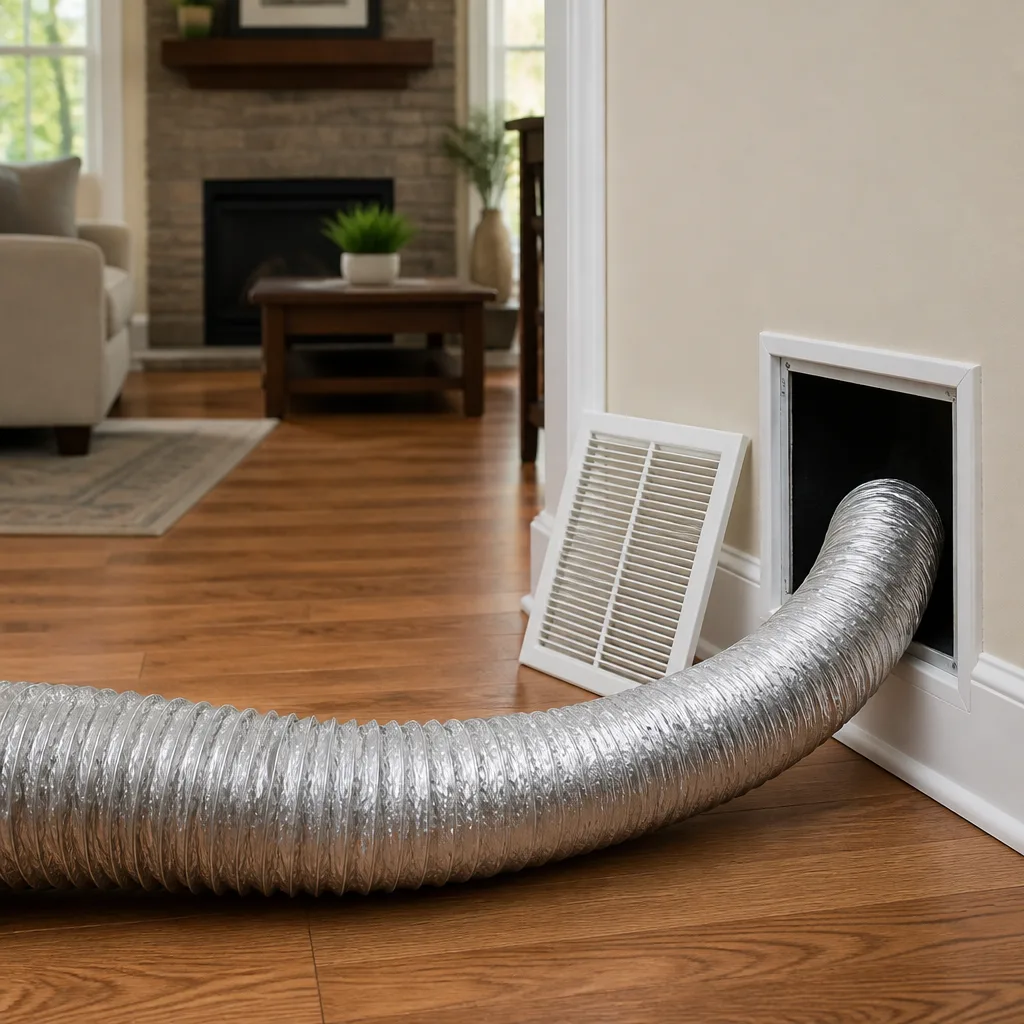 Whole-home duct cleaning
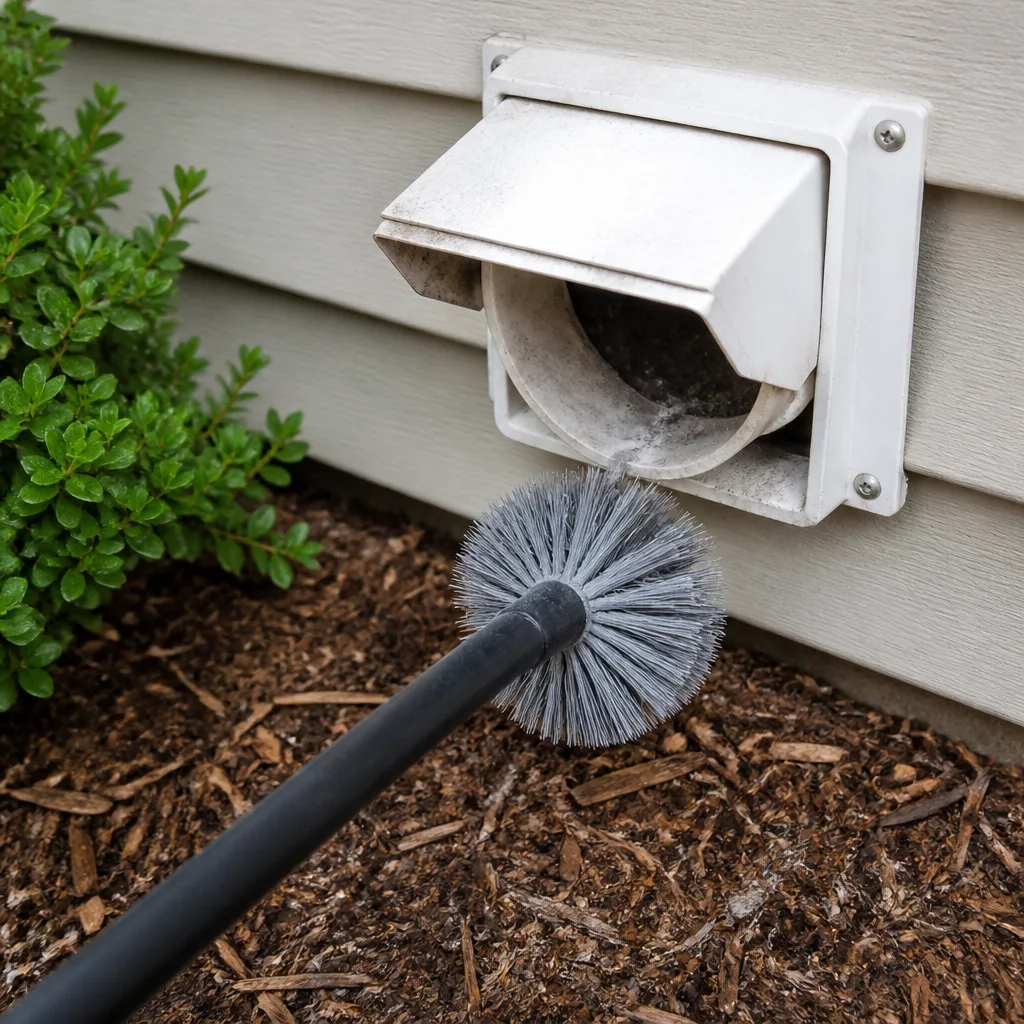 Dryer vent cleaning
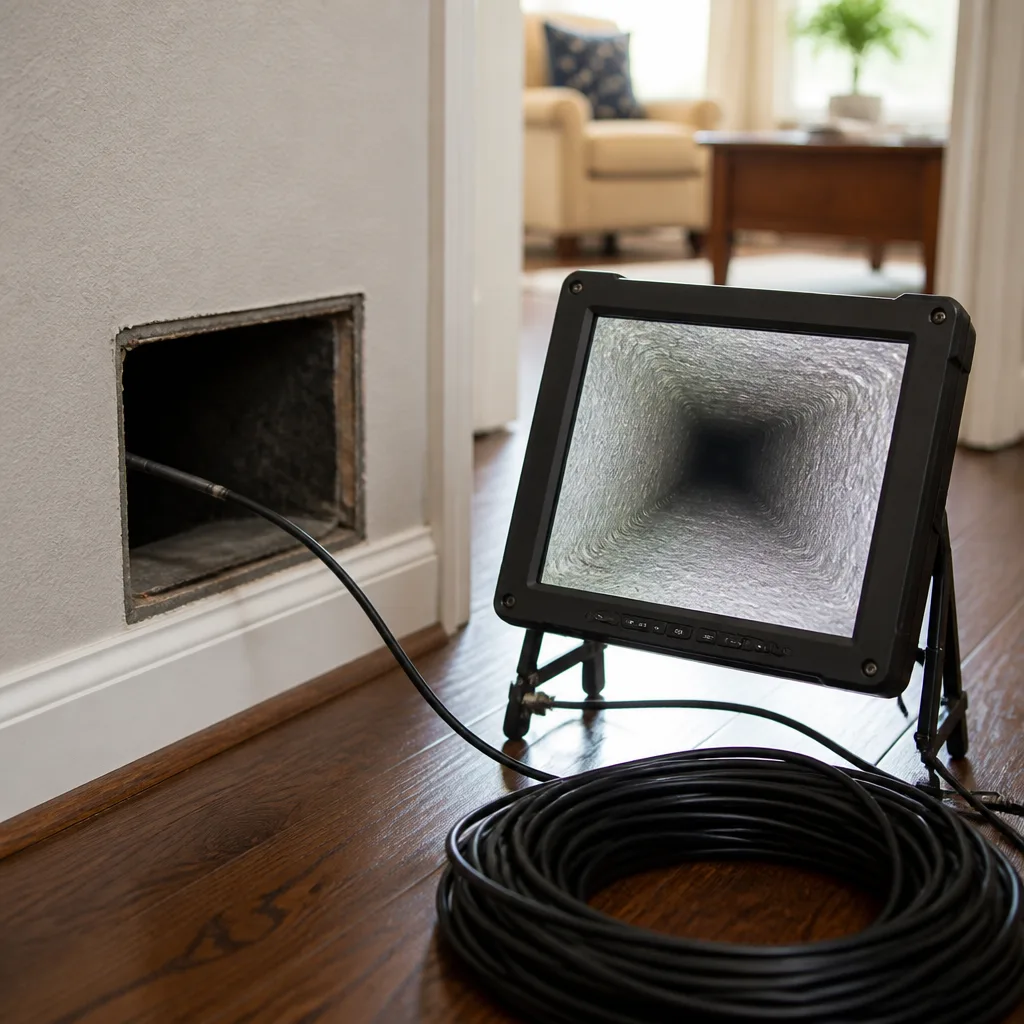 Camera inspection
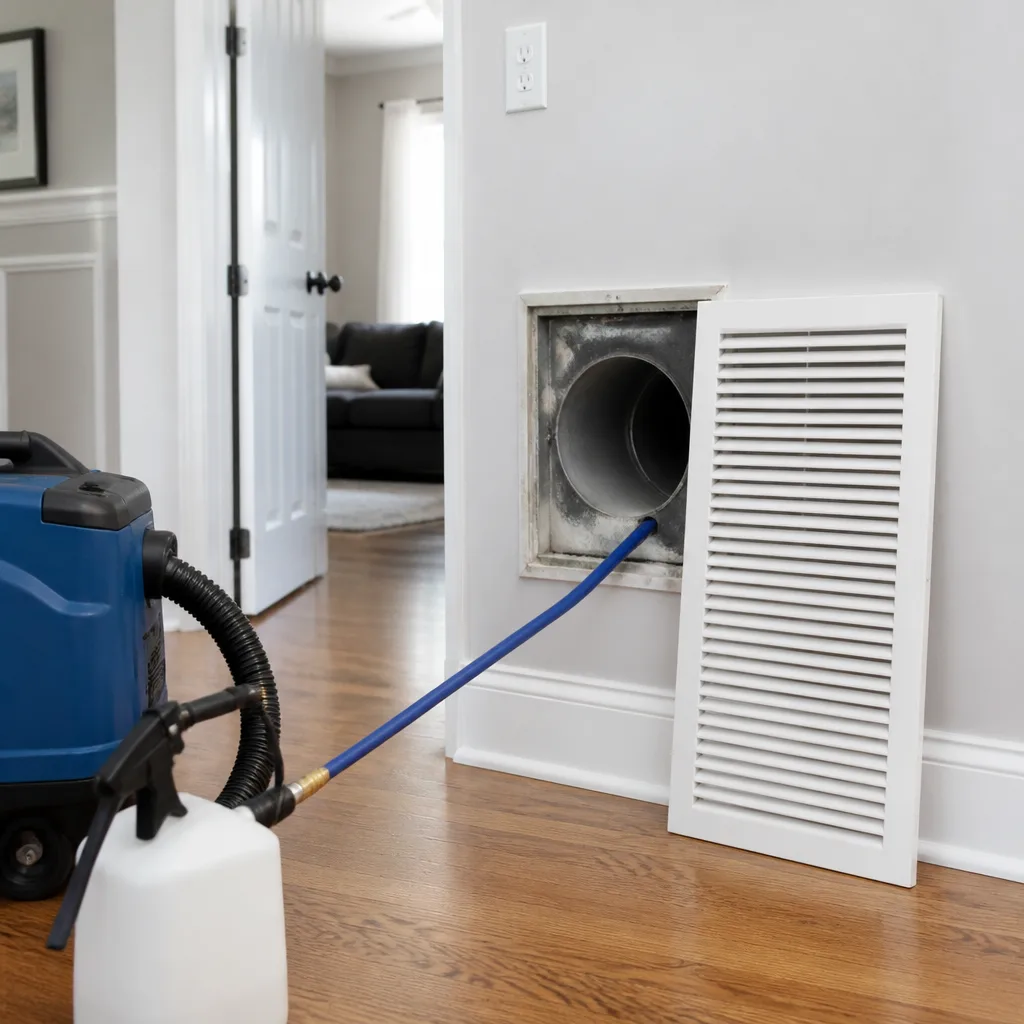 Sanitizing & deodorizing
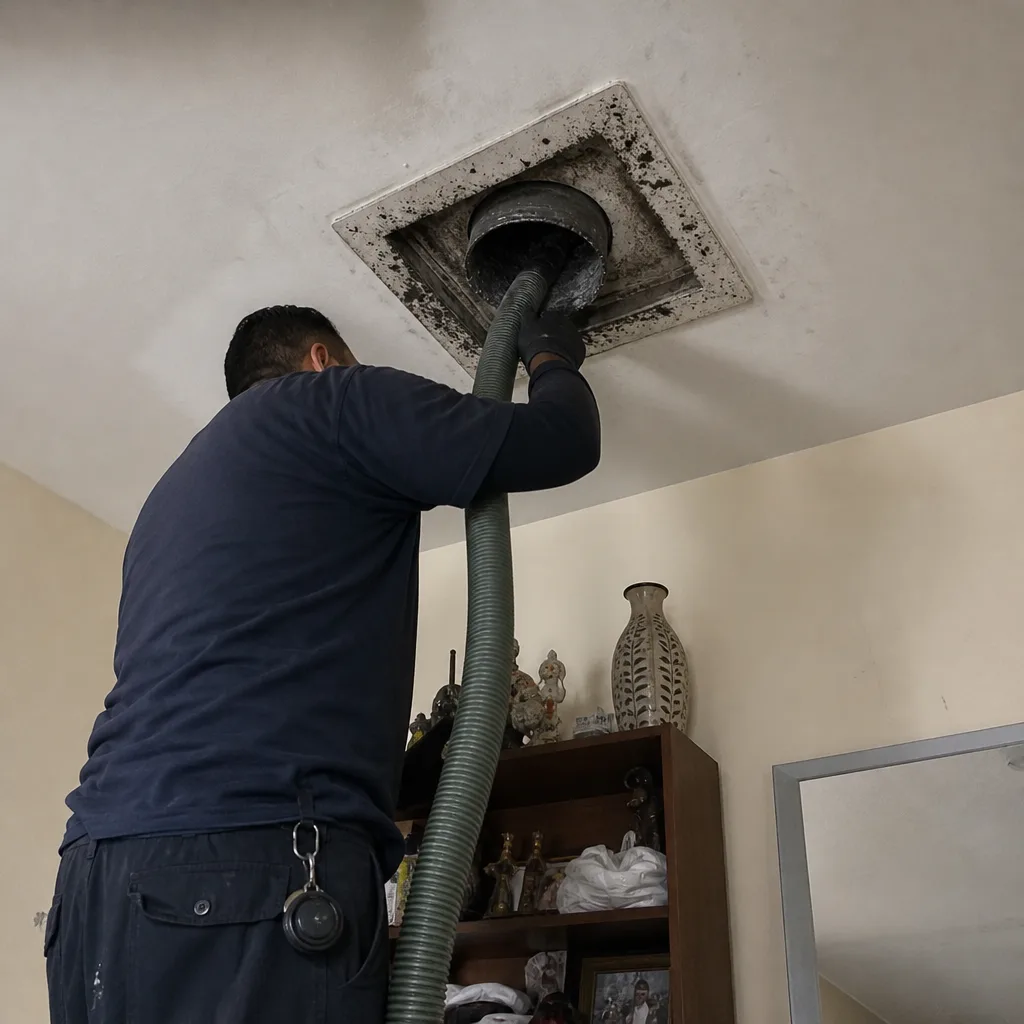
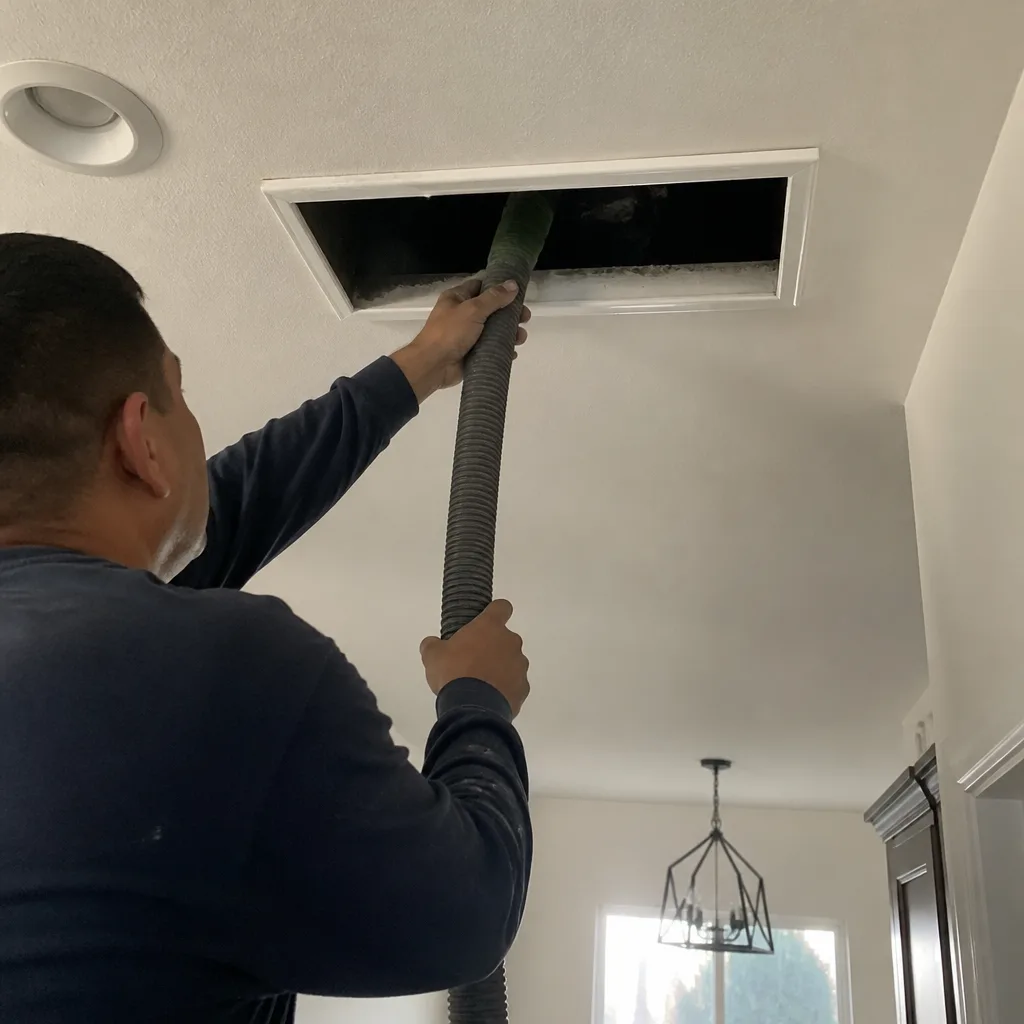
Whole-system duct and dryer vent check with before-and-after photos - you see exactly what came out of your vents
That "$99 whole-house special" is a bait ad - the real number appears once they are in your hallway, or the "clean" is a shop-vac at the register. We photograph the inside of your ducts before and after instead.
Air Duct Cleaning Emergency Preparedness Guide for Boyle Heights Homes
Most Boyle Heights homeowners think of air ducts as a maintenance item – something to clean every few years when the dust gets thick. The reality is different. Your duct system is a pressurized network that touches every room in your house, and during an emergency – a wildfire smoke event, an earthquake, a flood from a burst pipe – it does not remain neutral. It becomes either a shield that helps protect your indoor air or a delivery system that spreads contamination from one room to every other room in the home. Within 30 minutes of a nearby wildfire smoke event, an HVAC system running on a standard one-inch filter can deposit ultrafine particles throughout the entire duct network. And those particles do not disappear when the sky clears. This guide covers what Boyle Heights homeowners need to know before, during, and after an emergency that threatens the duct system. For a deeper dive into ongoing care, see our Air Duct Cleaning Maintenance Checklist for Boyle Heights Homeowners. You will learn how to shut down your system correctly, how to inspect for earthquake damage, how to protect yourself from post-flood mold in ductwork, what emergency duct cleaning actually involves, and how to document your system so insurance claims have a real baseline.
Styles & brands we work with
- Whole-home duct cleaning
- Dryer vent cleaning
- Camera inspection
- Sanitizing & deodorizing
Quick Answer
Air duct cleaning after an emergency in Boyle Heights is not the same as routine cleaning. It involves shutting down the HVAC system immediately during smoke or flood events, upgrading filtration, inspecting for structural damage after earthquakes, and documenting what happened. If you have had wildfire smoke infiltration, post-flood moisture in ductwork, or earthquake damage to flex duct connections, you need a professional assessment before running the system again.
Table of Contents
- What to Do During a Wildfire Smoke Event
- Post-Earthquake HVAC Inspection Checklist
- Flood Water and the 48-Hour Mold Window
- Emergency Duct Cleaning vs. Routine Cleaning
- Documenting Your Duct System Before an Emergency
- Why Equipment Matters in an Emergency Response
- Working with Insurance After Duct Damage
- Common Mistakes to Avoid
- When to Call a Professional
- Frequently Asked Questions
- The Bottom Line
What to Do During a Wildfire Smoke Event
Wildfire smoke is no longer a distant problem in Boyle Heights. When fires burn in the Angeles National Forest or further north, the eastern Los Angeles basin traps particulate matter against the hills, and Boyle Heights sits directly in that accumulation zone. The air quality index can spike from healthy to hazardous in a matter of hours. What most homeowners do not realize is that the HVAC system, if left running, actively pulls that smoke into the house through the return air vents and pushes it through every supply register.
The Shutdown Protocol
- Turn the HVAC system off at the thermostat. Switch from “Cool” or “Heat” to “Off.” Do not rely on “Auto” – it may still cycle the fan.
- Switch the fan to “Off” as well. The fan draws air through the return ducts. If it runs, it pulls smoke into the duct system even if the heating or cooling is not active.
- Close all windows and exterior doors. Seal obvious gaps with damp towels if smoke is heavy.
- Close the fresh air intake damper if your home has one. This is often a small vent near the furnace or in a utility closet.
- Set up a clean room. Choose one interior room, close the door, and run a portable HEPA air purifier if you own one. Do not run the central system to circulate air.
Filter Considerations
Upgrading to a high-MERV filter during a smoke event sounds logical, and it can help – but only up to a point. A MERV 13 filter captures more fine particles than a standard fiberglass filter, but it also restricts airflow. In older Boyle Heights homes, especially those with original 1950s and 1960s duct designs, a high-MERV filter can strain the blower motor and reduce system performance. The better approach is to shut the system down completely and rely on portable filtration until the smoke clears. If you do run the system, use the highest MERV filter your system can handle without overheating, and change it immediately after the event. A smoke-saturated filter becomes a source of odor and particle release.
After the Smoke Clears
Once the air quality returns to acceptable levels, resist the urge to simply turn the system back on. The ducts may now contain a fine layer of smoke residue – a mix of ash, soot, and volatile organic compounds. That residue will off-gas and circulate for weeks if the system runs without cleaning. At minimum, replace the filter, visually inspect the return registers for soot staining, and consider a professional assessment. Boyle Heights homes with older, leaky ductwork are more likely to have drawn smoke into the return side of the system, which means it is now distributed throughout the supply network. We have seen this pattern repeatedly in the neighborhoods around Hollenbeck Park and El Sereno after regional fire events. If the system smells like a campfire when the fan runs, the smoke has penetrated the duct surfaces – and cleaning is not optional, it is the only way to remove it. For homeowners uncertain about their system’s condition, our Air Duct Cleaning in Boyle Heights service assesses and addresses exactly this scenario.
Post-Earthquake HVAC Inspection Checklist
Boyle Heights sits near the Whittier Fault and the Puente Hills thrust system. Even a moderate earthquake – the kind you feel but do not see on the news – can shift a home enough to damage duct connections. The most vulnerable component in any residential HVAC system is not the furnace. It is the flex duct. Those accordion-style, foil-wrapped tubes that connect the main trunk line to individual room registers are held together with plastic zip ties and supported by thin wire straps. In a seismic event, they stretch, tear, and pull loose. A disconnected flex duct in a crawlspace or attic means your system is now conditioning a space you do not live in – and pulling in dust, insulation fibers, and whatever else lives up there.
What to Check After an Earthquake
- Walk the register test. Stand near each supply register with the system running. Is the airflow roughly equal in every room? A room that suddenly has weak airflow after an earthquake may have a disconnected or collapsed duct.
- Listen for hissing or rattling near the furnace or in attic access areas. That sound often means air is escaping at a failed connection.
- Check for new dust. A heavy layer of fine dust appearing on furniture near specific vents within days after an earthquake suggests the system is pulling air from an unconditioned space, not from the return air grilles.
- Look at the return air path. If return air grilles in hallways or walls have shifted or the drywall around them has cracked, return air may now be drawing from wall cavities.
- Inspect visible flex duct in attics, crawlspaces, or utility closets. Look for sections that have pulled apart at the seams, sagging that was not there before, or tears in the foil outer layer.
What You Cannot See
Most of the duct system in a Boyle Heights home is hidden. The parts you can see from the living room – registers and grilles – are only the exit and entry points. The miles of duct run through attics, crawlspaces, and wall cavities. What an earthquake does to hidden ductwork often goes unnoticed for months or years. The damage shows up as higher energy bills, uneven room temperatures, and dust that appears faster than it should. One homeowner near the Boyle Heights/East LA border told us their dining room never cooled properly after the 2019 Ridgecrest sequence – the house shook enough in Boyle Heights to pull a flex duct connection loose in the attic, and they lived with it for two years before a repair assessment found the gap. That is the pattern.
If the inspection reveals air loss, the fix is not cleaning. A disconnected duct needs repair. Our Air Duct Repair in Boyle Heights service addresses gaps, tears, and failed connections – the root cause, not just the surface symptom. After repair, a cleaning pass removes whatever was pulled into the open duct while it was disconnected.
Flood Water and the 48-Hour Mold Window
Flooding in Boyle Heights does not require a river overflowing. The more common scenario is a plumbing failure – a burst supply line in a wall, a failed water heater in a utility closet, or an overflowing fixture. When water enters the duct system or the spaces around it, the clock starts. Mold spores are always present in indoor air. They need moisture, a food source, and time. The duct surfaces – dust, skin cells, insect fragments – are the food source. The water provides the moisture. And time is measured in hours, not days.
The 48-hour window is the industry-accepted threshold. If wet duct surfaces remain wet for more than 48 hours, mold colonization becomes likely. In Boyle Heights, the warm temperatures most of the year accelerate that timeline. A damp duct system in a hot attic can begin supporting mold growth in as little as 24 to 36 hours.
Immediate Steps After Water Intrusion
- Shut the HVAC system off immediately. A running system spreads moisture and aerosolized spores. The blower is a distribution machine – do not let it operate in a water-damaged environment.
- Stop the water source. Shut off the main water valve if needed.
- Identify what got wet. Water in the flood pan under the unit? Water inside the return air plenum? Water pooled in a crawlspace around duct runs? The location determines the scope of the problem.
- Extract standing water. Use a wet-dry vacuum for accessible water. Do not attempt to dry inside ducts with household fans – that just blows moisture deeper into the system.
- Leave the system off until a professional assessment. Running the system to “dry it out” is the single worst action you can take. It forces damp air through the entire network.
What Happens When You Run a Wet System
If the blower runs after water intrusion, the damage compounds quickly. Moist air travels through every supply branch. Dust on the duct walls absorbs the water and becomes a growth medium. Wet dust is also heavier and sticks harder – it compacts onto surfaces and becomes significantly more difficult to remove. The system can also carry moisture to areas that were originally dry, extending the contamination footprint. In our experience, a plumbing leak that was caught early and treated with a system shutdown often requires only drying and a targeted cleaning. A leak that ran through the system for days before anyone noticed can require disassembly and deep cleaning of the entire duct network.
This is where equipment matters. The same Abatement Technologies negative air and HEPA filtration equipment used in professional contamination remediation can be deployed to create a containment zone around the affected area while ductwork is cleaned. It is a fundamentally different approach than running a spinning brush through a pipe. The distinction matters when the health stakes are high.
Emergency Duct Cleaning vs. Routine Cleaning
Routine duct cleaning is a maintenance task. You schedule it, a crew comes in, they clean the duct surfaces, and the system runs better. Emergency duct cleaning is a response to a contamination event. The scope is different. The documentation is different. And the urgency is different.
What Emergency Duct Cleaning Involves
- Contamination assessment first. Before any cleaning begins, the system needs evaluation: where is the contamination, what type is it, and how far has it traveled through the duct network.
- Source removal, not just surface cleaning. If the contamination source was a wildfire smoke event, the residue may be a fine soot film on every duct surface. If it was a flood, the problem may be saturated fiberglass duct liner, which in many cases cannot be cleaned and must be removed and replaced.
- Containment during the process. Emergency cleaning often uses negative air machines and HEPA-filtered containment to prevent the cleaning process itself from spreading contaminants into living spaces. This is not standard for routine cleaning.
- Documentation. Emergency cleaning should generate a detailed record: what was found, where it was found, what was done, equipment used, and post-cleaning verification. If an insurance claim is involved, this documentation is the core of the claim.
- Verification after cleaning. Post-cleaning inspection should confirm the contamination is gone, not just that the ducts look cleaner. Depending on the contaminant, this may include visual inspection, surface sampling, or air sampling.
Why a Standard Cleaning May Not Be Enough
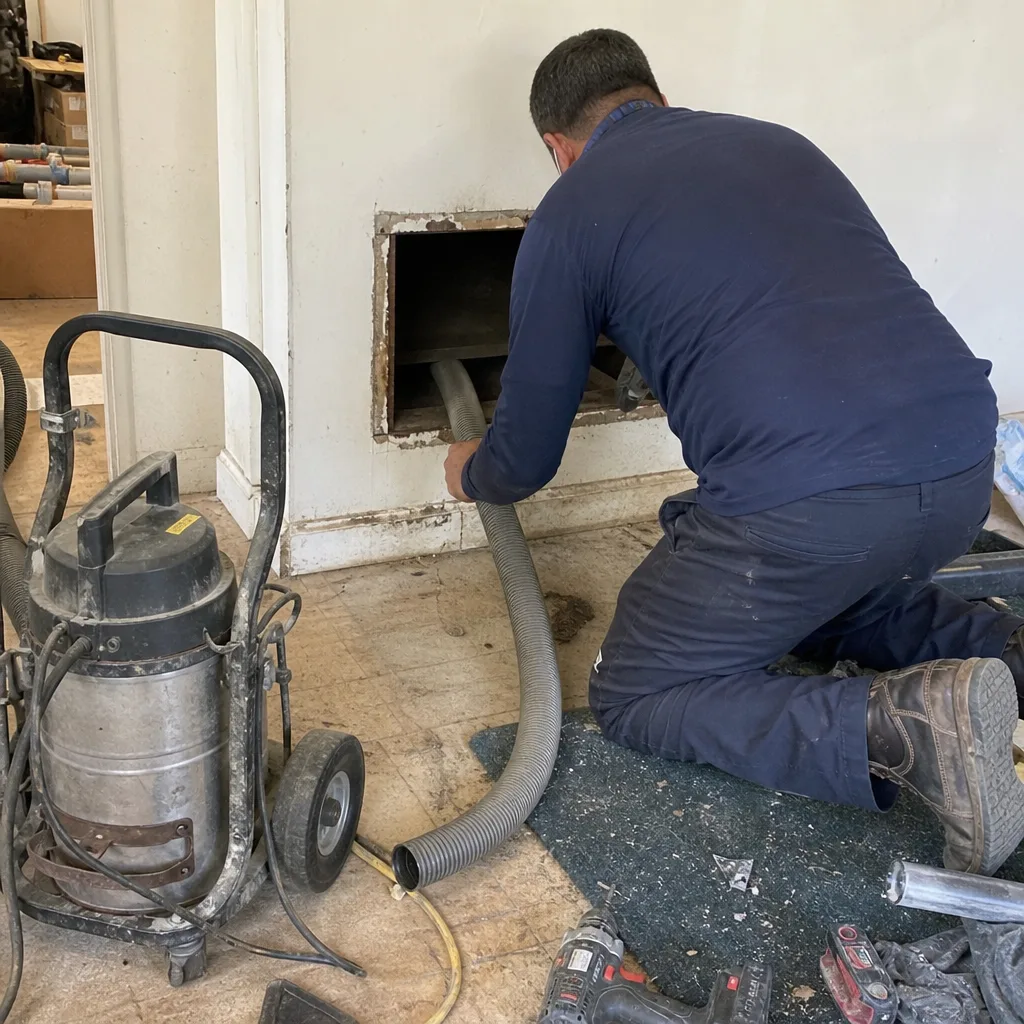
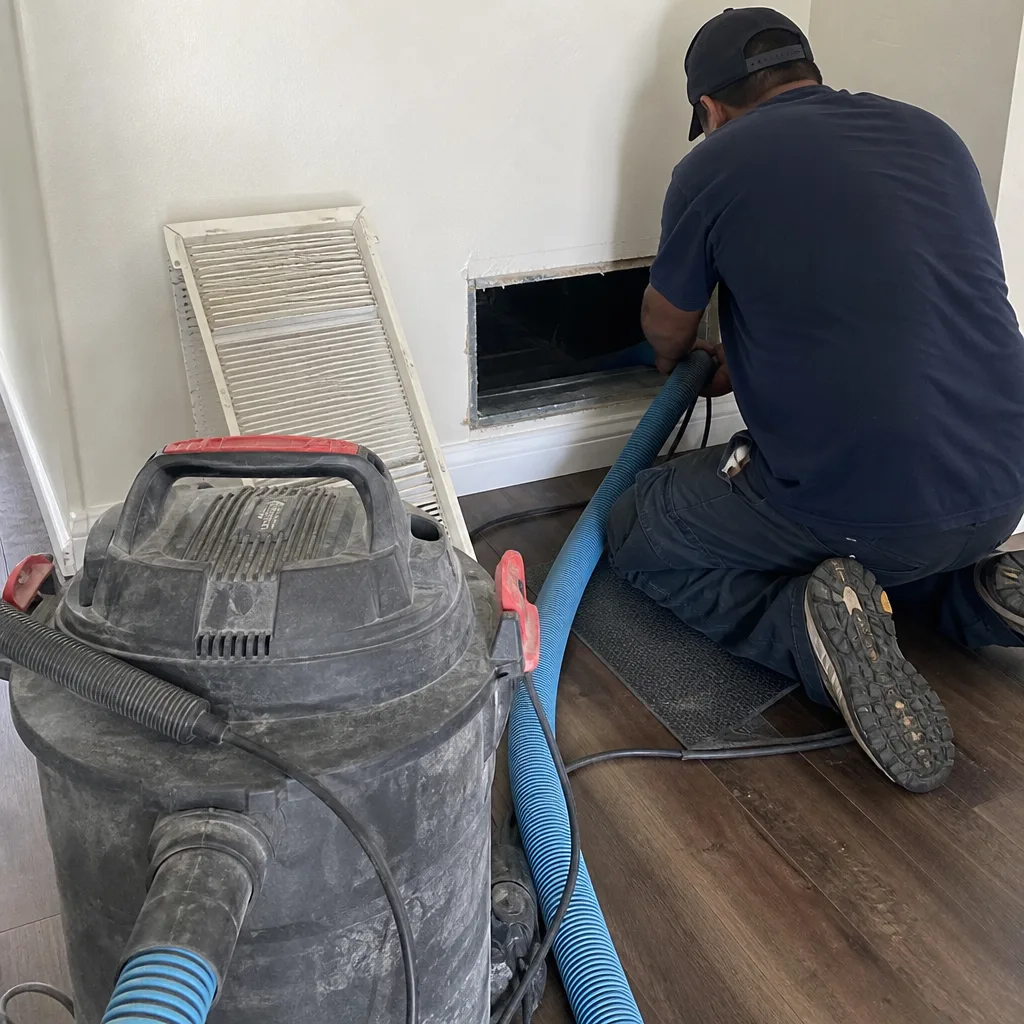
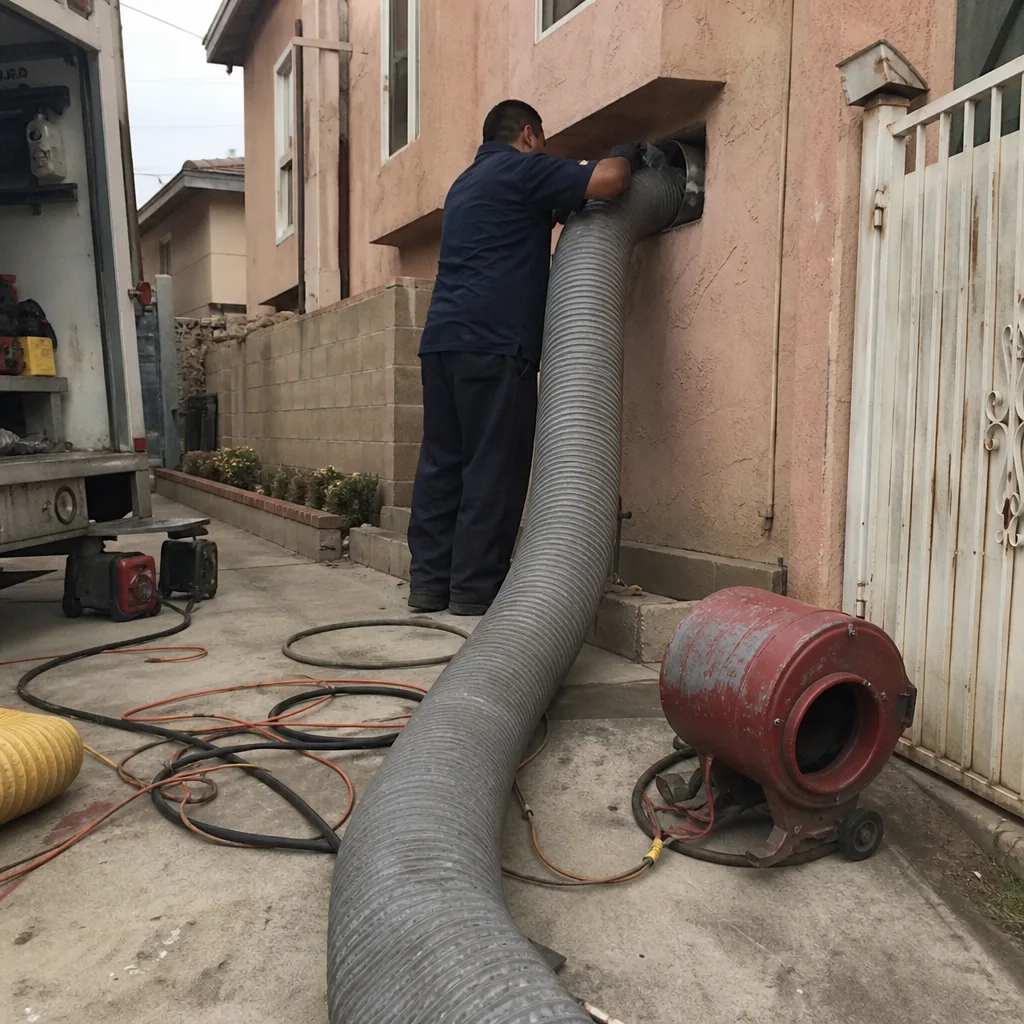
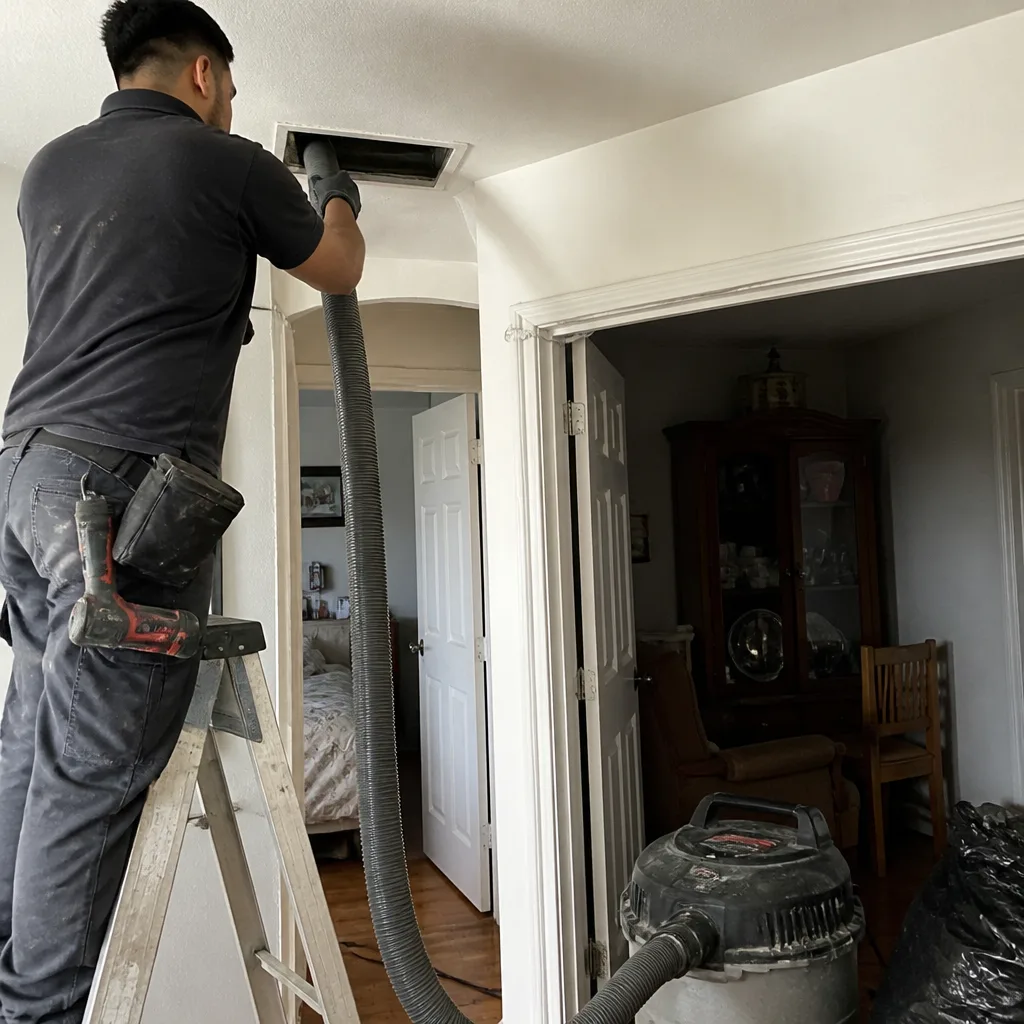
A routine cleaning pass with a basic brush and vacuum system is designed for dust and debris removal. It is not designed for smoke residue that has bonded to duct walls, for water-saturated insulation, or for mold-contaminated surfaces. In those cases, cleaning without the right equipment can actually make the problem worse by agitating contaminants and pushing them into the occupied space. The professional-grade distinction matters here. Industry-standard brush and vacuum systems like Rotobrush and Nikro platforms are the same class of equipment used by professional HVAC contractors and remediation crews. This is not a consumer-grade vacuum attached to a hose – it is a powered agitation and capture system designed to remove adhered particulate from duct surfaces while containing the debris.
After severe contamination events, a follow-up treatment using Guardsman protective chemistry can help manage residual surface particulates and keep cleaned ducts cleaner longer. It is not a substitute for cleaning, but it is a meaningful enhancement after a smoke or moisture event.
Documenting Your Duct System Before an Emergency
Most homeowners cannot describe what their duct system looked like the day before a problem. That is a problem when it comes to insurance claims and contractor assessments. Without a baseline, you cannot prove what changed. The time to document is now, before anything happens.
What to Record
- Photograph every register and return grille. Open the grilles where possible and take photos of the visible duct interior. Date-stamp the photos.
- Record the filter type and date. Note what filter you use, its MERV rating, and when it was last changed. This proves proper maintenance in the event of a dispute.
- Keep service records. Any prior cleaning or repair invoices establish a maintenance history. An insurance adjuster will look for this.
- Note unusual sounds or smells. If your system makes a particular noise or smells a certain way, write it down. Post-emergency, you can compare.
- Photograph the furnace and air handler area. Include the plenum connections and any visible duct runs in the utility closet or garage.
Why This Matters for Insurance
After a wildfire smoke event or a flood, the insurance adjuster will ask what the duct system looked like before. If you can show photos from six months earlier showing clean ducts and a fresh filter, the claim has a foundation. Without that, you are asking the insurance company to take your word for it – and insurance companies are structured to not take your word for it. This is especially true in Boyle Heights, where older housing stock and localized smoke events create an environment where adjusters see frequent duct-related claims. A documented baseline changes the conversation from “prove you had damage” to “here is the evidence of what changed.”
The documentation should also include a professional assessment. If you have never had a company actually look at the ducts – not just clean them, but assess their condition – you do not know what your baseline is. Our Eastgate Air Duct Cleaning home team performs this kind of assessment as part of every service. We have worked with homeowners throughout Boyle Heights who had never once looked at the inside of their return air plenum.
Why Equipment Matters in an Emergency Response
When a homeowner calls about smoke damage or post-flood contamination, the question they rarely ask is the one that matters most: what equipment will you be using on my system? It matters because not all duct cleaning is the same. The difference between a discount service and a specialist is often measured in equipment class.
Consumer-grade duct cleaning often involves a vacuum system and a basic brush. It can remove loose debris in a clean, dry duct. It is not designed for adhered smoke particulate, water-damaged materials, or situations where contamination needs to be contained during removal. In an emergency, those limitations become safety problems. Stirring up smoke residue or mold-contaminated dust without proper capture can make indoor air quality worse, not better.
Professional-grade systems operate on a different principle. Rotobrush and Nikro platforms combine powered agitation with high-capture vacuum systems that pull dislodged particulate directly into containment. When the situation calls for it, Abatement Technologies negative air machines and HEPA filtration create a controlled containment environment – the same approach used in hospital and remediation settings. This is not marketing language. It is a material difference in how contamination is handled during the cleaning process.
It is also worth acknowledging what we do not do. We do not offer mold remediation. We are not an HVAC installation company. What we do is clean and repair duct systems. When a post-flood situation requires mold remediation, we can identify that need and recommend a qualified remediation specialist. Our scope is the duct system itself – cleaning it, repairing it, and keeping the air moving through it as clean as the system’s condition allows.
For homeowners with premium indoor air quality systems – Aprilaire filtration units, whole-home dehumidifiers, or humidity control components – emergency preparation means understanding that these devices are part of the ducted air system. They interact with the airflow. If the ducts are contaminated, the premium filtration components downstream are processing that contaminated air. Cleaning the ducts without checking these components is half a job.
Working with Insurance After Duct Damage
Duct damage and contamination claims are not straightforward. Insurance policies vary widely in how they treat smoke, water, and earthquake damage – and earthquake damage is typically excluded from standard homeowners policies without a separate earthquake rider. That does not mean you are without recourse, but it does mean you need to understand your policy before the emergency, not after.
What to Do When Filing a Claim
- Notify your insurer immediately. Delay sends a signal that the damage was not urgent.
- Do not begin cleaning or repairs before documentation. An adjuster needs to see the condition. If you clean first, the evidence is gone. The exception is an active safety hazard – in that case, document thoroughly with photos and video before any work begins.
- Get a professional assessment in writing. A detailed report from a duct specialist is stronger evidence than a homeowner’s description. It should include photos, findings, and a recommended scope of work.
- Do not accept the first offer if it is insufficient. The adjuster’s job is to settle for as little as the policy allows. A professional assessment gives you a benchmark to argue against.
Boyle Heights Realities
Boyle Heights has a high proportion of older homes. Duct systems in these homes are often original or decades old. When an insurance adjuster looks at a 60-year-old duct system, their inclination is to attribute problems to age and deferred maintenance rather than the emergency event. This is where the pre-emergency documentation we discussed earlier becomes the difference between a denied claim and an approved one. A homeowner who can show that the duct system was in good condition before the fire or flood has a much stronger position.
If your system needs cleaning or repair after an event and you are navigating an insurance claim, we can provide detailed documentation of what we find. We have worked with Boyle Heights homeowners on claims ranging from smoke damage after regional fires to water damage from burst pipes. The key is getting a professional assessment before the evidence disappears.
Common Mistakes to Avoid
- Running the HVAC system during a smoke event. The fan pulls smoke into the return air and distributes it through the supply ducts. The system becomes a particulate distribution network, and the smoke residue sets into every surface.
- Using the HVAC system to dry out a flood. This spreads moisture and contaminants through the entire duct system. The blower turns a localized water problem into a whole-house problem.
- Waiting more than 48 hours to address moisture in ducts. After the 48-hour mark, mold colonization risk rises sharply. In Boyle Heights’ warm climate, that window is often shorter.
- Ignoring airflow changes after an earthquake. A room that suddenly gets less airflow is probably a disconnected duct, and every day the system runs with an open duct in a crawlspace or attic it pulls in whatever is there.
- Selecting a cleaning company based on price alone. The cheapest quote in Los Angeles is almost always using the cheapest equipment. In an emergency situation, that can mean contamination is stirred up rather than removed.
- Neglecting to document the pre-emergency condition. No baseline photos plus no service records usually equals a lower settlement on insurance claims. You cannot argue damage if you cannot show what it looked like before.
- Skipping dryer vent inspection after an earthquake. The same seismic forces that disconnect air ducts can also loosen dryer vent connections. A disconnected dryer vent in a wall cavity is a fire hazard. Our Dryer Vent Cleaning in Boyle Heights service includes inspection of the full vent run.
When to Call a Professional
Some situations are within a homeowner’s capacity to assess. Others are not. Call a professional if you have had a wildfire smoke event and can smell smoke when the system runs, if water has entered the duct system or the spaces around it, if an earthquake has caused visible or suspected duct disconnection, if you see visible mold growth or heavy staining around registers, or if the system has not been professionally assessed in years and you have no baseline documentation. These are not routine situations, and the consequences of getting them wrong are measured in indoor air quality and health. Eastgate Air Duct Cleaning offers free estimates in Boyle Heights – call (855) 382-4682 to schedule an assessment. If you are not sure whether your situation requires professional attention, a phone call costs nothing and gives you a clearer picture.
Frequently Asked Questions
Wildfire smoke can contaminate duct systems within 30 minutes of the HVAC system running during a smoke event. Ultrafine particles pass through standard one-inch filters and deposit on duct surfaces throughout the home. The contamination remains after outdoor air clears, and it recirculates when the system runs again until the ducts are cleaned.
No. Household vacuum systems and DIY brush kits cannot reach the interior surfaces of a duct system, and they lack the capture capacity to contain the contaminants they dislodge. Attempting DIY cleaning after a contamination event can make the problem worse by aerosolizing smoke residue or mold-contaminated dust into living spaces. Professional-grade Rotobrush and Nikro systems with proper capture are the minimum standard for this kind of work.
Emergency duct cleaning in Boyle Heights typically ranges from $500 to $1,500 depending on the home size, the extent of contamination, and whether containment equipment is required. Smoke residue remediation across a full system costs more than a targeted cleaning after a localized water event. Call (855) 382-4682 for an exact quote. Estimates are free, and the price is agreed before any work starts.
Coverage depends on your specific policy and the nature of the event. Smoke damage from wildfires is often covered under standard policies. Flood damage from burst pipes is typically covered. Earthquake damage is generally excluded without a separate earthquake rider. The key to a successful claim is documentation: pre-event photos, maintenance records, and a professional written assessment of the damage.
The signs are reduced airflow from specific registers, new or unusual rattling sounds from the walls or attic, increased dust accumulation near specific vents, and visible sagging or separation in exposed duct sections. Flex duct connections are the most vulnerable component, and they can pull loose without any visible damage to the home’s structure. If you notice these signs after seismic activity, have the system professionally inspected.
Yes. Lint accumulation in dryer vents is a documented fire hazard, and the older housing stock in Boyle Heights often means longer, less direct vent runs to exterior walls – which accumulate lint faster. An earthquake can also loosen vent connections inside wall cavities, creating an additional hazard. Dryer vent cleaning should be treated as a safety service, not an upsell.
The honest answer is that it depends on the extent of the mold and the duct material. Cleaning can remove surface mold from metal duct surfaces. But mold that has penetrated porous materials like fiberglass duct liner or flex duct often requires replacement of those materials, not cleaning. A professional assessment will determine what can be cleaned versus what needs to be repaired or replaced. We are not a mold remediation company, but we will tell you honestly what your system needs and refer you to a qualified remediation specialist if the situation exceeds our scope.
The Bottom Line
The duct system in your Boyle Heights home is infrastructure, not an afterthought. During emergencies, it can either protect your indoor air or distribute contamination throughout the house in minutes. The difference comes down to preparation: shutting the system down correctly during smoke and flood events, inspecting for seismic damage after earthquakes, documenting your system before anything goes wrong, and calling a specialist who deploys professional-grade equipment when problems occur. Most of the worst outcomes we see come from one action – running the system when it should have been off, or waiting so long that the problem compounded. The fixes are usually straightforward when caught early. If you have been through a smoke event, a flood, or a significant earthquake and you have not had your duct system assessed, now is the time. Call (855) 382-4682 to schedule a free estimate with a specialist who will tell you what your system actually needs.
Written by the team at Eastgate Air Duct Cleaning, serving Boyle Heights since 2015. Explore our more guides & resources for homeowners.
See the difference
 Before
 After
 Before
 After
 Before
 After