
Abatement Technologies Air Duct Cleaning in Boyle Heights: A Homeowner’s Guide
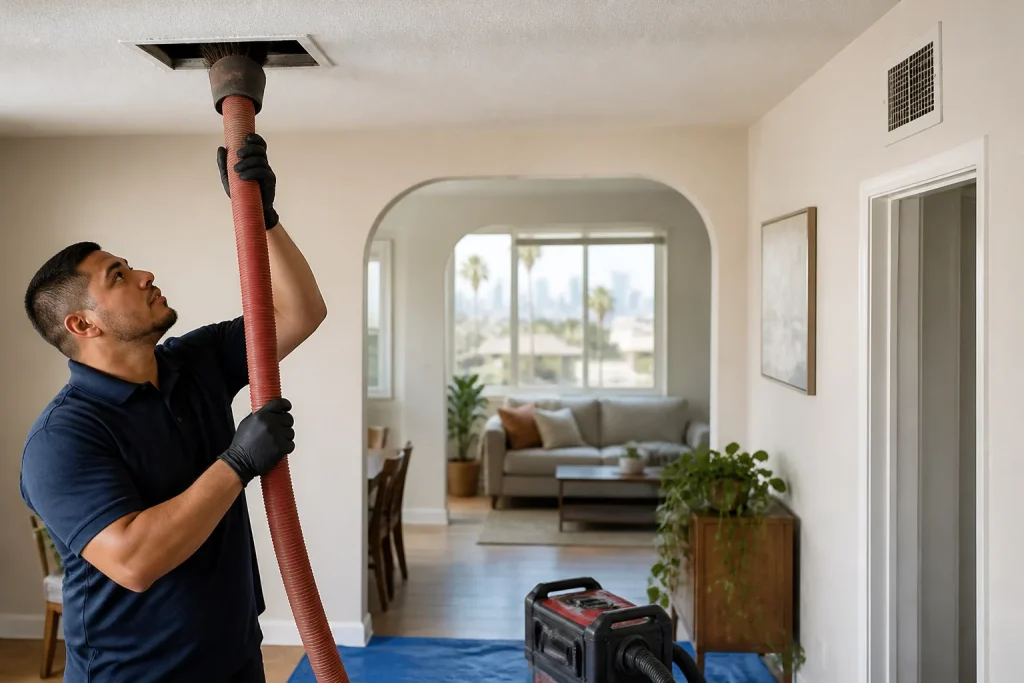
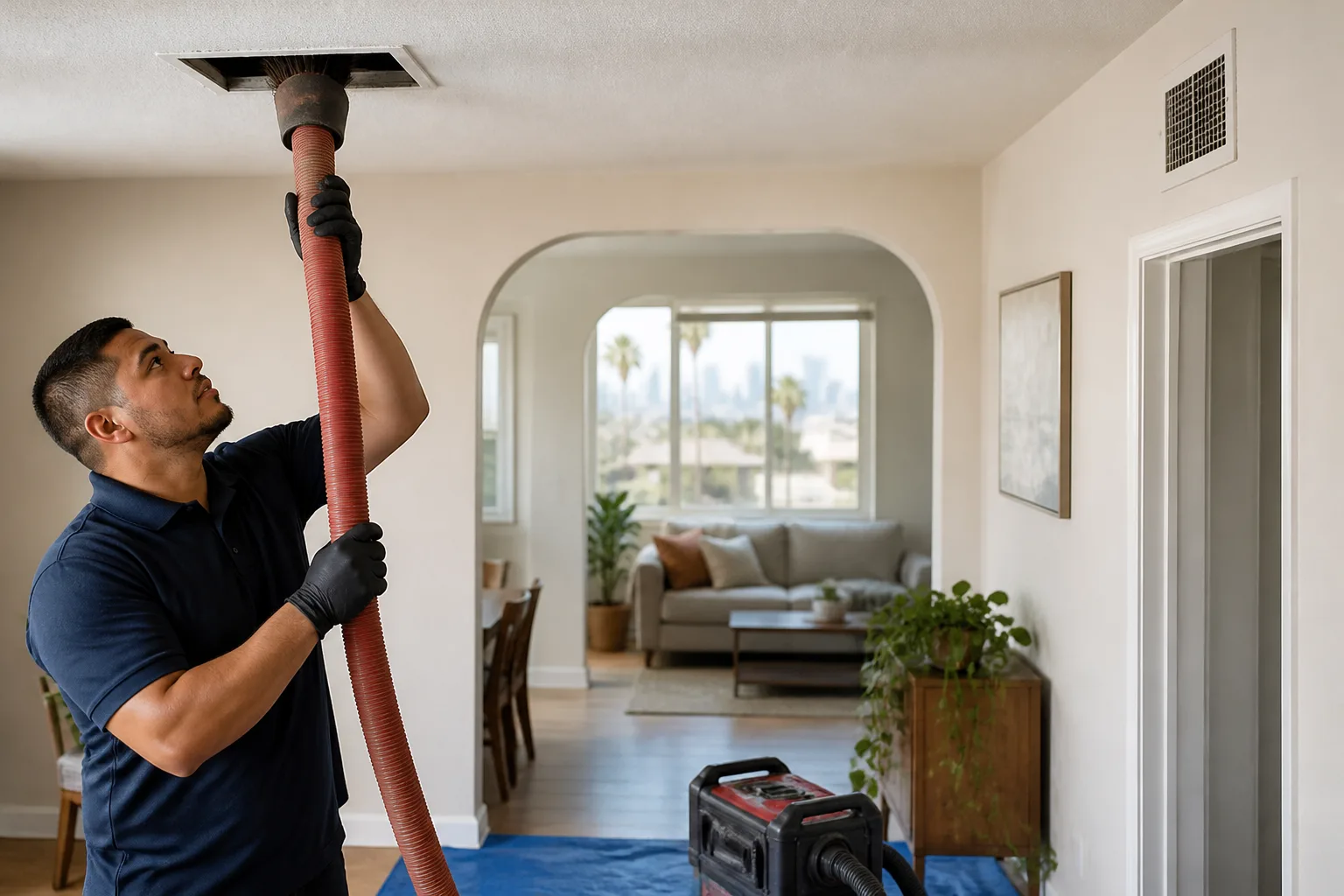
Abatement Technologies air duct cleaning in Boyle Heights means the contractor has invested in HEPA-filtered negative air machines rather than a portable shop vac. The equipment alone doesn’t guarantee a good cleaning, but it’s a strong signal about what the contractor considers standard. If you’d rather skip the research and have a specialist handle it, call Eastgate Air Duct Cleaning at (855) 382-4682 for a free estimate.
What Abatement Technologies Equipment Is Actually Built to Do
Most homeowners never see the machine doing the work. They see the van, the hoses, maybe a logo. But the equipment class matters more than any of that. Abatement Technologies builds negative air machines and HEPA-filtered air scrubbers, the same category of gear used on asbestos abatement jobs and hospital contamination control. The machines pull air through a sealed filtration path and capture particles down to 0.3 microns at 99.97% efficiency. That’s the HEPA standard, and it’s a specific engineering benchmark, not marketing language.
Here’s what that means in practical terms for a Boyle Heights home:
- Containment: The machine creates negative pressure inside the duct system, so loosened debris flows toward the capture point instead of drifting into living spaces.
- Filtration: Exhaust air leaving the machine has passed through a HEPA filter. Dust that would otherwise recirculate into your bedrooms gets trapped.
- Airflow volume: These units move serious CFM (cubic feet per minute). A residential system in Boyle Heights, often a 3 to 4 ton HVAC setup, needs enough airflow to pull debris through 40 to 80 feet of duct runs. Small portable units simply can’t sustain that pull over distance.
We run Rotobrush and Nikro cleaning systems alongside negative air setups on jobs where particulate loading is heavy. The combination matters. A brush and vacuum system agitates debris off duct walls, and the negative air machine ensures what gets knocked loose goes somewhere controlled. One without the other leaves either stuck-on debris or airborne dust.
The Setup Sequence Most Contractors Skip
A contractor can own an Abatement Technologies unit and still deliver a mediocre cleaning. The machine doesn’t compensate for a bad process. What separates a real cleaning from a surface-level pass comes down to setup discipline, and homeowners can watch for it.
Here’s the correct sequence for negative air duct cleaning, in order:
- Seal supply and return registers: Every register except the one being worked gets sealed. This concentrates airflow through a single path and forces the negative air machine to pull from deeper in the system.
- Position the negative air unit: The machine connects to the duct system, typically at the air handler or a main trunk line, and exhausts HEPA-filtered air outside or into a controlled area.
- Confirm negative pressure before agitating: The technician should verify the system is under negative pressure before any brush or air whip enters the duct. If air is blowing out of the open register instead of pulling in, debris will escape into the home.
- Agitate and capture simultaneously: Cleaning tools work section by section while the negative air machine pulls loosened material downstream. Skipping this simultaneous phase is where most shortcuts happen.
- Final pass and filter inspection: After cleaning, the technician should show you the pre-filter and HEPA filter. A pre-filter caked with debris is tangible proof the system captured what was removed.
If a crew shows up in Boyle Heights, hooks a large vacuum to your return, and starts cleaning without sealing registers or establishing negative pressure, the equipment brand is irrelevant. You’re getting a partial cleaning at best.
Why This Equipment Class Matters in Boyle Heights Specifically
Boyle Heights sits in a particulate-heavy environment. The neighborhood is bordered by multiple freeways, the 5, the 10, the 101, the 60, and sits downwind of industrial corridors along the Los Angeles River. Fine dust, brake particulates, and soot find their way into homes through windows, doors, and HVAC intake points. Once inside, those particles settle in ductwork and recirculate every time the system runs.
In our experience, Boyle Heights homes accumulate a specific type of debris: fine, dark particulate that clings to duct walls and requires real agitation to remove. A truck-mount vacuum with a large hose can pull high volume, but without HEPA filtration, it may exhaust fine particles right back into the home or the neighbor’s yard. A portable shop vac simply lacks the airflow and filtration to handle a full system.
The comparison breaks down like this:
- Abatement Technologies negative air + HEPA: Engineered for containment and filtration. Designed for environments where airborne particulate is a genuine concern.
- Truck-mount vacuum: High suction power, but filtration quality varies. Some units filter well; many don’t. The exhaust point matters.
- Portable shop vac: Fine for a workshop. Not built for full duct system cleaning. Limited CFM, limited filtration, and the filter clogs quickly with fine Boyle Heights dust.
Homeowners in older Boyle Heights housing stock should also consider that many homes built before 1980 have duct systems that have never been thoroughly cleaned. The accumulation in those systems is different from a five-year-old tract home in a newer development. It’s denser, more compacted, and requires real mechanical agitation paired with adequate capture.
Questions to Ask Any Contractor Who Claims Remediation-Grade Equipment
Plenty of companies now mention HEPA filtration in their marketing. The phrase has become a checkbox. But equipment ownership and equipment competence are different things. Here’s what to ask before work begins:
- “Will you establish negative pressure before cleaning begins?” If they hesitate or describe a simple vacuum-and-brush approach, that’s an answer.
- “What CFM does your negative air machine produce?” A unit rated for 500 to 2,000 CFM covers most residential systems. If they can’t answer, they likely don’t run this equipment regularly.
- “Where does the exhaust air go?” HEPA-filtered exhaust can be recirculated indoors safely. Unfiltered or poorly filtered exhaust must go outside. If they’re not sure, that’s a red flag.
- “Can I see the filters after you’re done?” A legitimate contractor will show you the filter loading. It’s the single most direct proof of capture.
- “Do you seal registers and clean section by section?” A full-system cleaning takes time. A one-hour job for a whole house means shortcuts. Every time.
We pulled a six-foot section of collapsed flex duct out of a home near Mariachi Plaza last year. The homeowner had paid another company to “clean” the system two years prior. The duct had been disconnected the entire time, pulling attic air. The cleaning crew never mentioned it. That’s the difference between running equipment and actually inspecting the system. If you’re in Boyle Heights and suspect your ducts are in rough shape, look at our Air Duct Repair in Boyle Heights page to understand what a proper inspection should catch.
Equipment Grade Meets Technician Training: Why One Without the Other Fails
A HEPA-filtered negative air machine in untrained hands produces the same result as a shop vac in trained hands: mediocre. The equipment is a floor, not a ceiling. The technician’s understanding of airflow dynamics, duct system layout, and contamination patterns determines whether the machine gets used correctly.
Here’s what we see as the common failure modes:
- Technician runs negative air but never seals registers: The machine pulls air from the path of least resistance, which is the nearest open register. The rest of the system sits untouched.
- Technician agitates aggressively but cycles the negative air unit incorrectly: Debris gets knocked loose faster than the capture system can remove it. The dust settles back into the ducts or blows into rooms.
- Technician cleans but doesn’t inspect: After the cleaning, no one checks for disconnected sections, crushed flex duct, or return leaks. The system gets “clean” but still pulls attic air, garage air, or crawlspace air.
That last point is why air duct repair matters as a standalone service. Cleaning addresses surface debris. Repair addresses the structural failures that let contamination in continuously. In Boyle Heights, where many homes have accessible attics and crawlspaces, disconnected or damaged duct sections are common. A cleaning without an inspection misses the actual problem.
We also work on systems that integrate Honeywell and Aprilaire whole-home air quality components. If a homeowner has invested in a media filter cabinet or an electronic air cleaner, the cleaning process needs to account for those components. A technician who doesn’t understand how those systems interact with the ductwork can damage them or clean around them improperly. That’s why we train on the equipment we service, not just the equipment we clean with.
How This Applies to Your Boyle Heights Home
If you’re scheduling air duct cleaning in Boyle Heights, you’re making a decision about indoor air quality, system efficiency, and honesty of service. The contractor’s equipment list matters because it tells you what they consider standard. A company running Abatement Technologies negative air machines has invested tens of thousands of dollars in professional-grade gear. That investment signals something about how they approach the work.
But equipment verification only takes you so far. The process matters more. Watch the setup. Ask questions. If a contractor can’t explain the sequence of their own cleaning process, the brand on their truck doesn’t matter.
For the full picture of what a proper cleaning involves in this neighborhood, see our Air Duct Cleaning in Boyle Heights page. If dryer vents are also on your mind, Dryer Vent Cleaning in Boyle Heights covers a fire hazard most people ignore until it’s too late.
When to Call a Pro
If you’ve read this far and realized you don’t want to spend your Saturday verifying negative pressure readings and filter loading, that’s a reasonable conclusion. A thorough duct cleaning with proper containment is not a DIY job. It requires commercial equipment, training, and time. For Boyle Heights homeowners who want the work done correctly the first time, call Eastgate Air Duct Cleaning home at (855) 382-4682. We’ll walk you through what a real cleaning looks like, and give you an honest assessment of what your system actually needs.
The Bottom Line
Abatement Technologies equipment represents a specific performance standard in the air duct cleaning industry: HEPA filtration at 99.97% efficiency down to 0.3 microns, negative air containment, and airflow volumes designed for serious particulate capture. In a neighborhood like Boyle Heights, with its freeway-adjacent air and older housing stock, that equipment class makes a measurable difference. But the machine only works if the technician uses it correctly. Sealed registers, verified negative pressure, simultaneous agitation and capture, and a post-job filter inspection are non-negotiables. Equipment without process is theater. Process without equipment is ineffective. If you’re in Boyle Heights and need help, Eastgate Air Duct Cleaning offers free estimates. Call Eastgate Air Duct Cleaning home at (855) 382-4682.
Frequently Asked Questions
Abatement Technologies builds HEPA-filtered negative air machines that create negative pressure inside your duct system, pulling loosened debris toward a capture point and filtering exhaust air to remove 99.97% of particles down to 0.3 microns. This prevents dust from recirculating into your living spaces during cleaning. For a cleaning in Boyle Heights using this equipment class, call (855) 382-4682.
The contractor should seal all registers except the one being worked, connect the negative air unit to the duct system, verify negative pressure before agitating debris, clean section by section, and show you the loaded pre-filter afterward. If any of those steps are skipped, the equipment isn’t being used as designed. If you’re in Boyle Heights and want a cleaning done right, call (855) 382-4682.
For homes in high-particulate areas like Boyle Heights, yes. The filtration and containment capabilities are designed for environments where fine dust is a constant issue. A portable shop vac cannot match the airflow volume or filtration quality. The cost difference reflects the equipment investment the contractor has made. For an honest quote in Boyle Heights, call (855) 382-4682.
Owning the equipment is not the same as using it correctly. Technician training determines whether the negative air setup is done properly. Ask the contractor to walk through their cleaning sequence before work begins. If they can’t explain the process clearly, the equipment brand on the truck doesn’t matter. For a trained, professional cleaning in Boyle Heights, call (855) 382-4682.
Homes near freeways and industrial corridors accumulate fine particulate faster than homes in less exposed areas. In Boyle Heights, we typically see systems benefit from a thorough cleaning every 3 to 5 years, with more frequent attention if there are pets, smokers, or recent renovation work. For a system-specific assessment, call (855) 382-4682 for a free estimate.
Written by the team at Eastgate Air Duct Cleaning, serving Boyle Heights since 2015.
Need Air Duct Cleaning Help?
Call Eastgate Air Duct Cleaning - licensed & insured, with free written estimates in Boyle Heights.
(855) 382-4682