
Last updated November 2, 2026
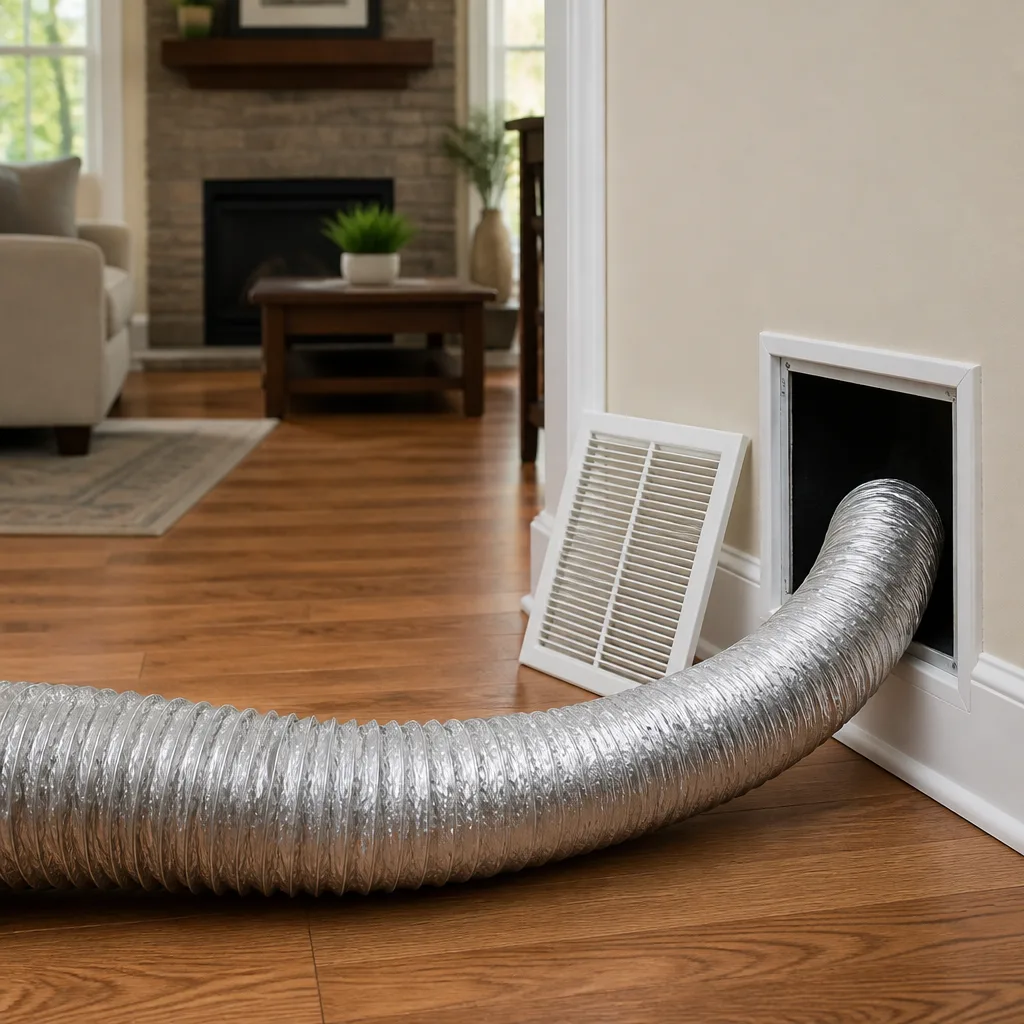 Whole-home duct cleaning
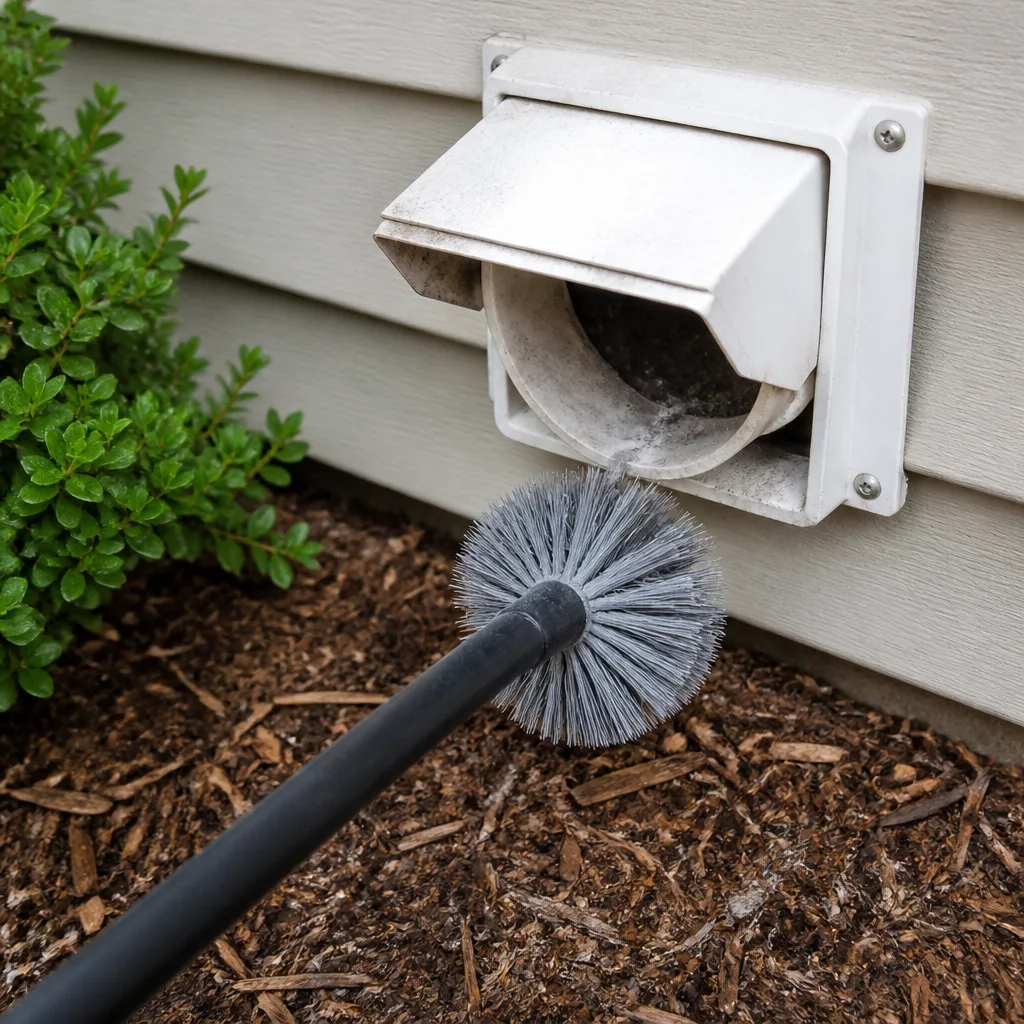 Dryer vent cleaning
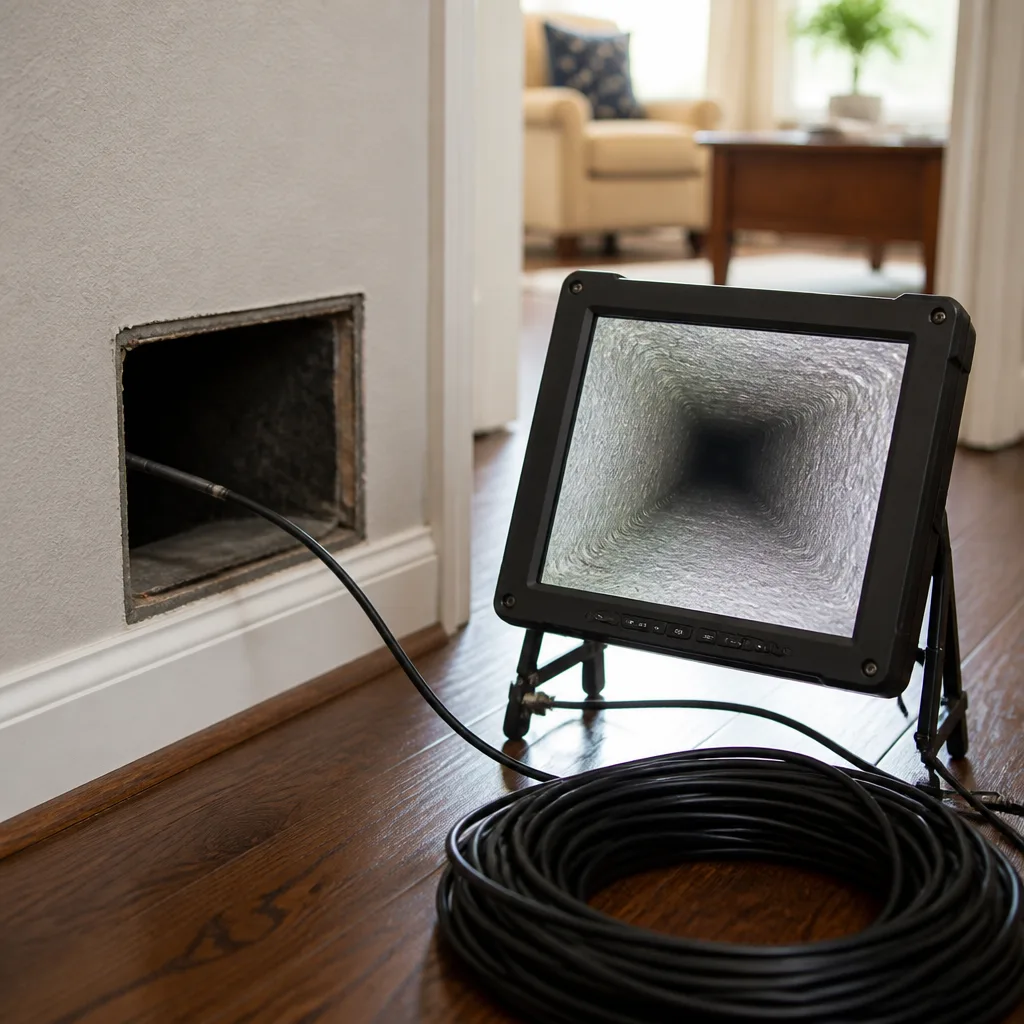 Camera inspection
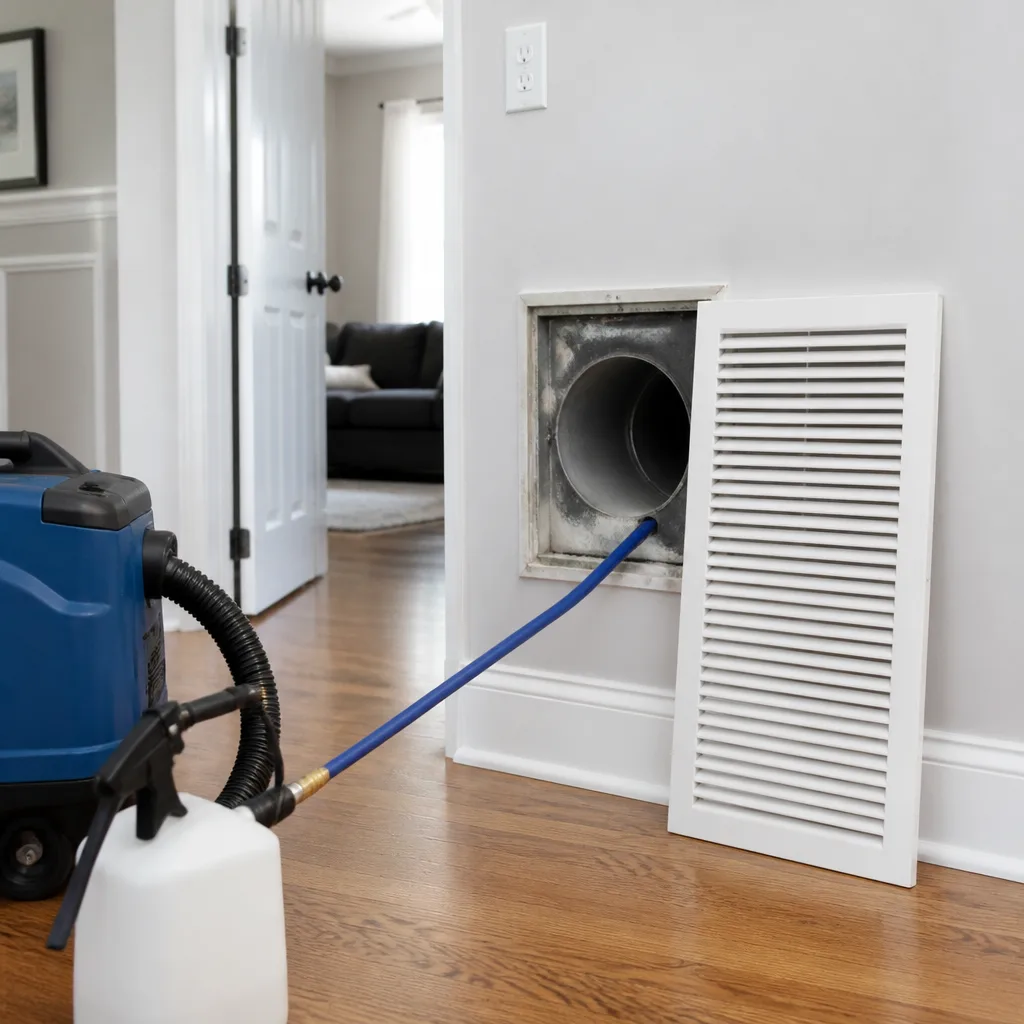 Sanitizing & deodorizing
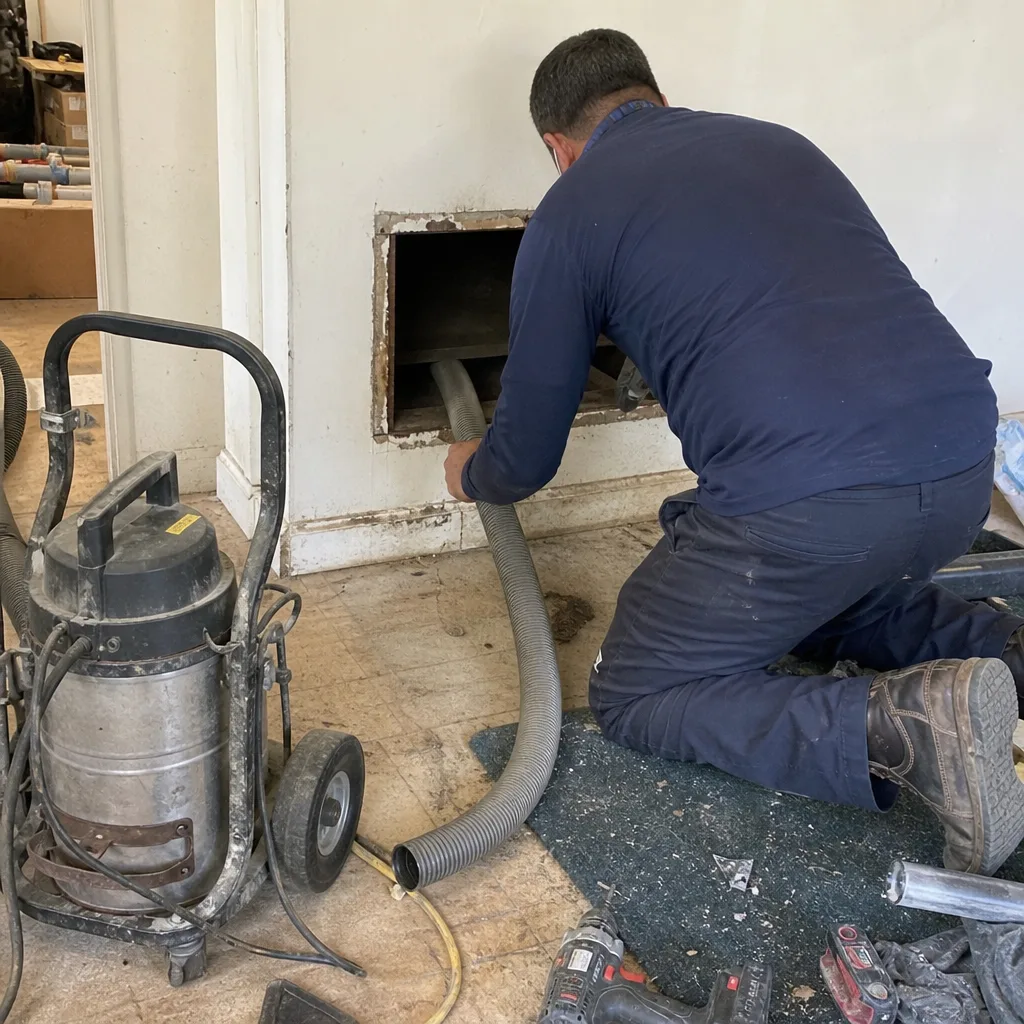
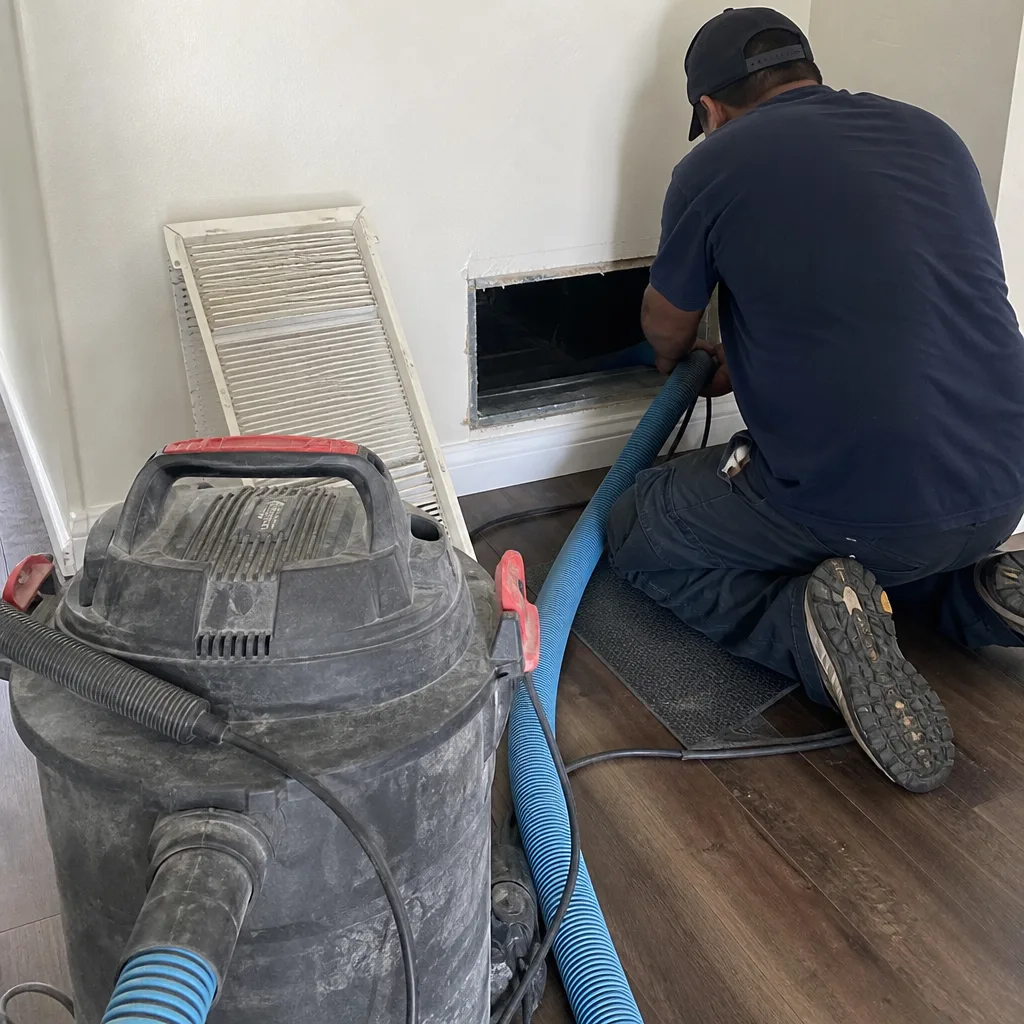
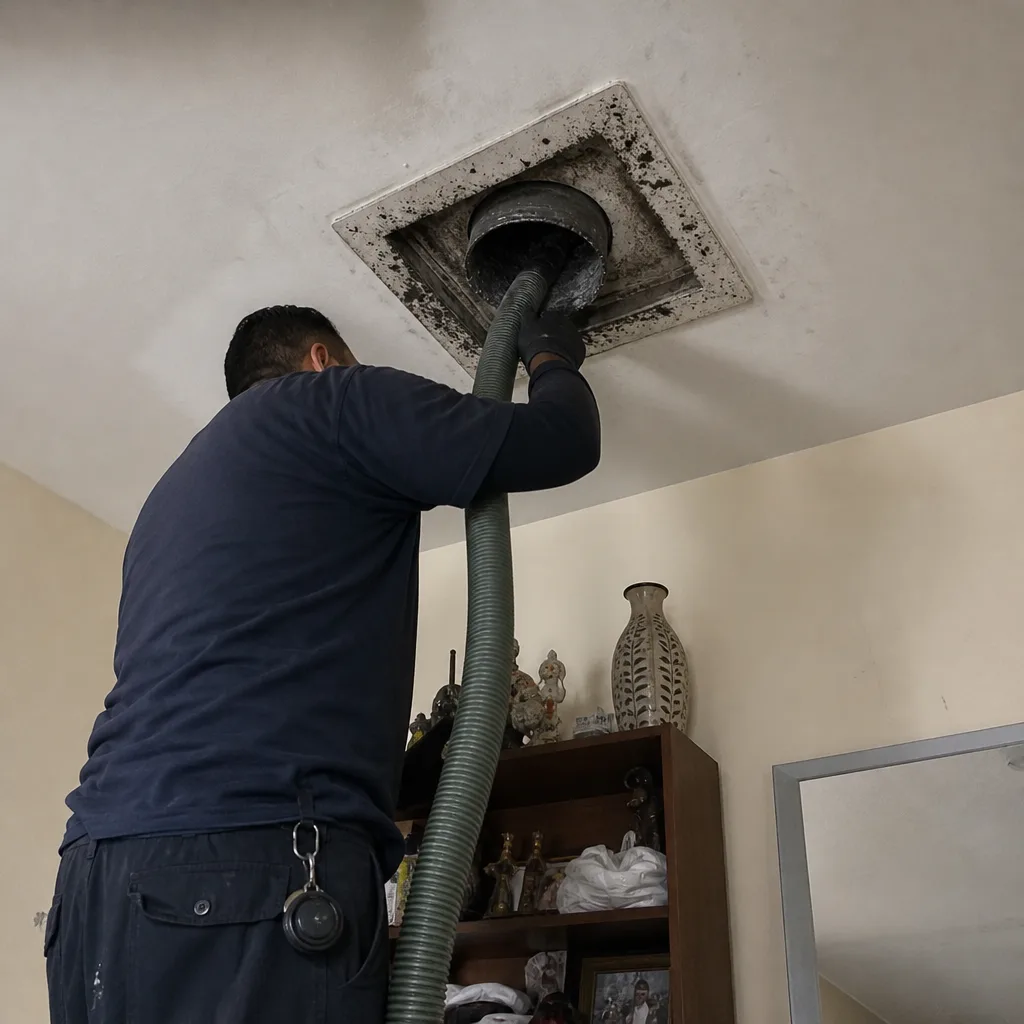
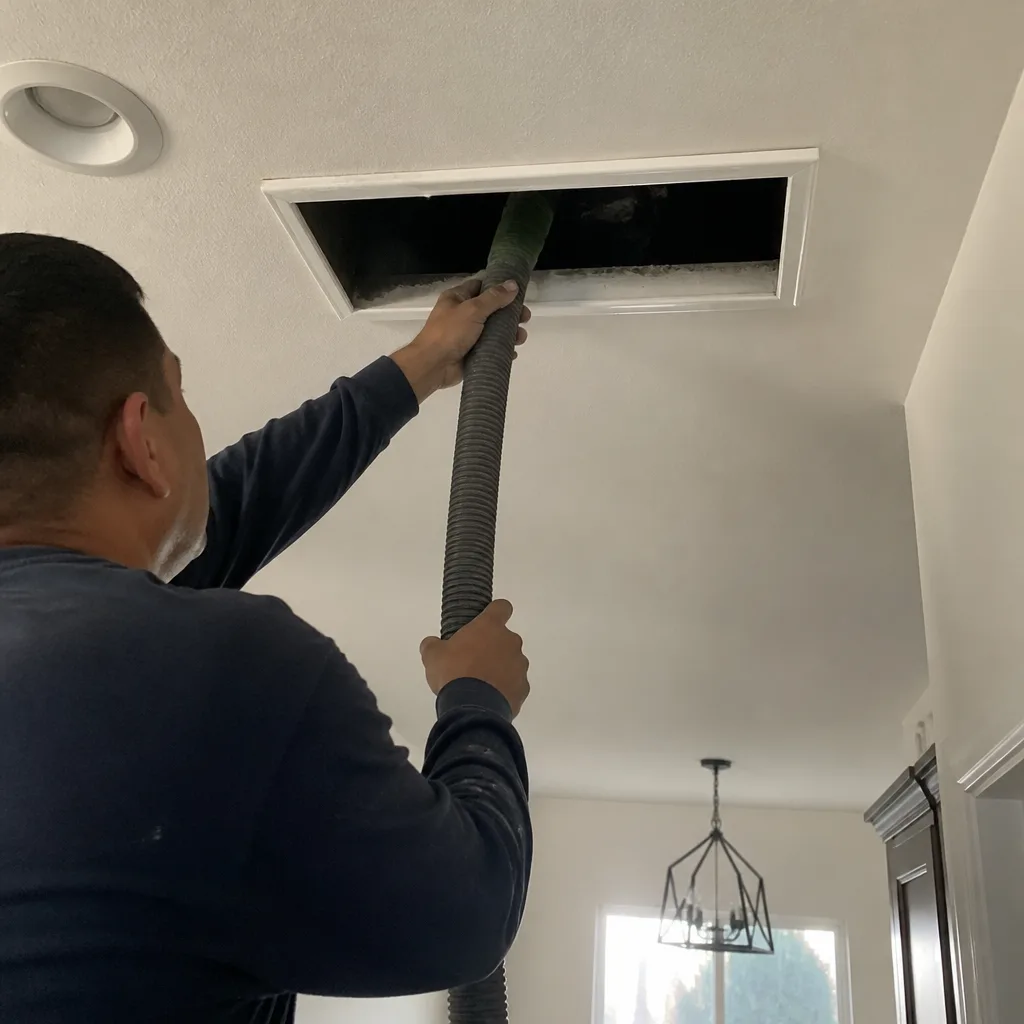
Whole-system duct and dryer vent check with before-and-after photos - you see exactly what came out of your vents
That "$99 whole-house special" is a bait ad - the real number appears once they are in your hallway, or the "clean" is a shop-vac at the register. We photograph the inside of your ducts before and after instead.
The Complete Air Duct Cleaning Guide for Boyle Heights Homeowners
Boyle Heights sits in a geographic pocket shaped by freeways, the Los Angeles River, and a century of layered housing stock. The 710 and 5 freeways bracket the neighborhood on two sides, channeling a steady stream of diesel particulate, brake dust, and tire wear into the air that eventually moves through your HVAC return registers. What most air duct cleaning guides miss is that the particulate load in Boyle Heights doesn’t behave like it does in West LA or the Valley. It’s denser, stickier, and reloads faster. Our Air Duct Cleaning services map the complete process to the specific conditions of Boyle Heights: the freeway adjacency, the pre-1980 housing stock, and the urban density that changes how often you actually need service, what a full inspection must include, and why cleaning alone sometimes isn’t enough. You’ll learn what a real cleaning involves, what it costs in this market, how to verify the work, and when duct repair is the actual fix.
Quick Answer
Air duct cleaning in Boyle Heights should include a full-system inspection, negative air pressure extraction using professional-grade equipment, and verification of duct seal integrity before and after cleaning. Because of the 710 and 5 freeway particulate load, Boyle Heights homes typically benefit from cleaning every 2 to 3 years rather than the national 3-to-5-year average, and pre-1980 homes often have flex duct degradation that requires repair work a cleaning alone cannot address.
Styles & brands we work with
- Whole-home duct cleaning
- Dryer vent cleaning
- Camera inspection
- Sanitizing & deodorizing
Table of Contents
- Why Freeway Particulate Changes Everything in Boyle Heights
- What a Full-Spectrum Inspection Covers Before Equipment Turns On
- Negative Air Extraction vs. Contact Vacuuming: Which Your Ducts Need
- Why Pre-1980 Boyle Heights Housing Often Has Duct Damage Hiding
- The Complete Cleaning Process, Step by Step
- A Realistic Maintenance Timeline for Boyle Heights Air Quality
- Common Mistakes to Avoid
- When to Call a Professional
- Frequently Asked Questions
Why Freeway Particulate Changes Everything in Boyle Heights
Boyle Heights is one of the highest diesel particulate exposure zones in Los Angeles County. The 710 Freeway, which cuts along the neighborhood’s western edge, is a designated goods-movement corridor carrying thousands of diesel trucks daily. The 5 Freeway adds another layer on the north side. Caltrans and regional air quality monitoring consistently show elevated PM2.5 and PM10 concentrations near these corridors, and diesel particulate matter (DPM) is the dominant component.
Here’s what that means for your ducts. Diesel particulate is not the light, fluffy household dust you see on furniture. It’s a fine, slightly oily soot that adheres to surfaces. When it enters your HVAC system through the return air intake, it coats the interior of duct walls, blower fans, and coil surfaces. Within six months of a cleaning in Boyle Heights, a measurable film of diesel soot can accumulate on duct interiors in homes near the freeway. That same timeline might take two years in a coastal neighborhood like Santa Monica.
Urban density compounds the problem. Boyle Heights has a high proportion of older homes on small lots, many with window-mounted or wall air conditioning units that pull outside air directly. When those units run, they’re drawing in whatever is in the immediate air envelope: freeway exhaust, construction dust from flips and rehabs, and particulate from the constant traffic on Soto, Cesar Chavez, and Whittier Boulevard. Once that particulate enters the living space, your central HVAC system recirculates it through the ductwork. The return registers act like a capture point, pulling particulate-laden air into the system and depositing it throughout the duct run.
What this means practically: in Boyle Heights, you’re not just cleaning the dust that accumulates from normal living. You’re removing a carbon-heavy, combustion-derived particulate load that behaves differently and reloads faster. A cleaning that’s purely cosmetic, which is what a discount shop-vac job delivers, removes surface dust but leaves the adhered soot film that continues to off-gas and recirculate. That’s why the method matters, and we’ll get into that below.
What a Full-Spectrum Inspection Covers Before Equipment Turns On
A complete air duct cleaning doesn’t begin with a vacuum. It begins with a systematic inspection that maps the actual condition of your system. In our experience working air duct cleaning in Boyle Heights, we regularly find issues during inspection that change the entire job scope: disconnected sections behind walls, crushed flex duct in crawl spaces, or return plenums pulling air from an attic with exposed insulation. None of those issues get fixed by cleaning alone.
A full-spectrum inspection before any cleaning equipment is powered up should cover:
- Duct material identification: Galvanized sheet metal, flex duct, fiberboard, or a mix. Each requires different cleaning pressure and agitation methods. Flex duct, common in 1970s additions and retrofits across Boyle Heights, can’t withstand the aggressive brushing that metal duct can.
- Duct age and condition: Metal ducts from the 1940s and 1950s may have rust or failing seams. Flex duct older than 15 to 20 years often shows liner tears or collapsed sections.
- Seal integrity at joints and boots: Gaps where ducts meet register boots, wall stacks, or the plenum are leakage points. In a depressurized return system, those gaps pull attic or crawl space air, including insulation fibers and pest debris, directly into the air stream.
- Return air path and filter location: Many Boyle Heights homes have undersized or poorly sealed filter slots. A filter that doesn’t seat properly lets unfiltered air bypass it entirely, loading the duct interior at a much higher rate.
- Visible mold, pest activity, or standing water: These are red flags that require either duct repair or replacement, not just cleaning. Rodent intrusion in crawl spaces and attics is a known issue in older Boyle Heights housing stock, and duct runs in those spaces are frequent entry points.
- Registers and grilles: Bent, painted-over, or blocked registers reduce airflow and create turbulence that concentrates particulate deposition in specific duct sections.
This inspection phase is what separates a real service from a surface wipe. It’s also where the repair conversation happens. When our Eastgate Air Duct Cleaning home team inspects a Boyle Heights home and finds a dislodged duct section or a collapsed flex run, the honest recommendation is repair first, clean second. Cleaning a broken system is wasted effort.
Negative Air Extraction vs. Contact Vacuuming: Which Your Ducts Need
The technical difference between professional air duct cleaning methods matters in Boyle Heights because of the particulate type we discussed earlier. Diesel soot and fine urban particulate don’t come off with a surface pass. You need the right extraction approach, and you need agitation that dislodges the adhered film.
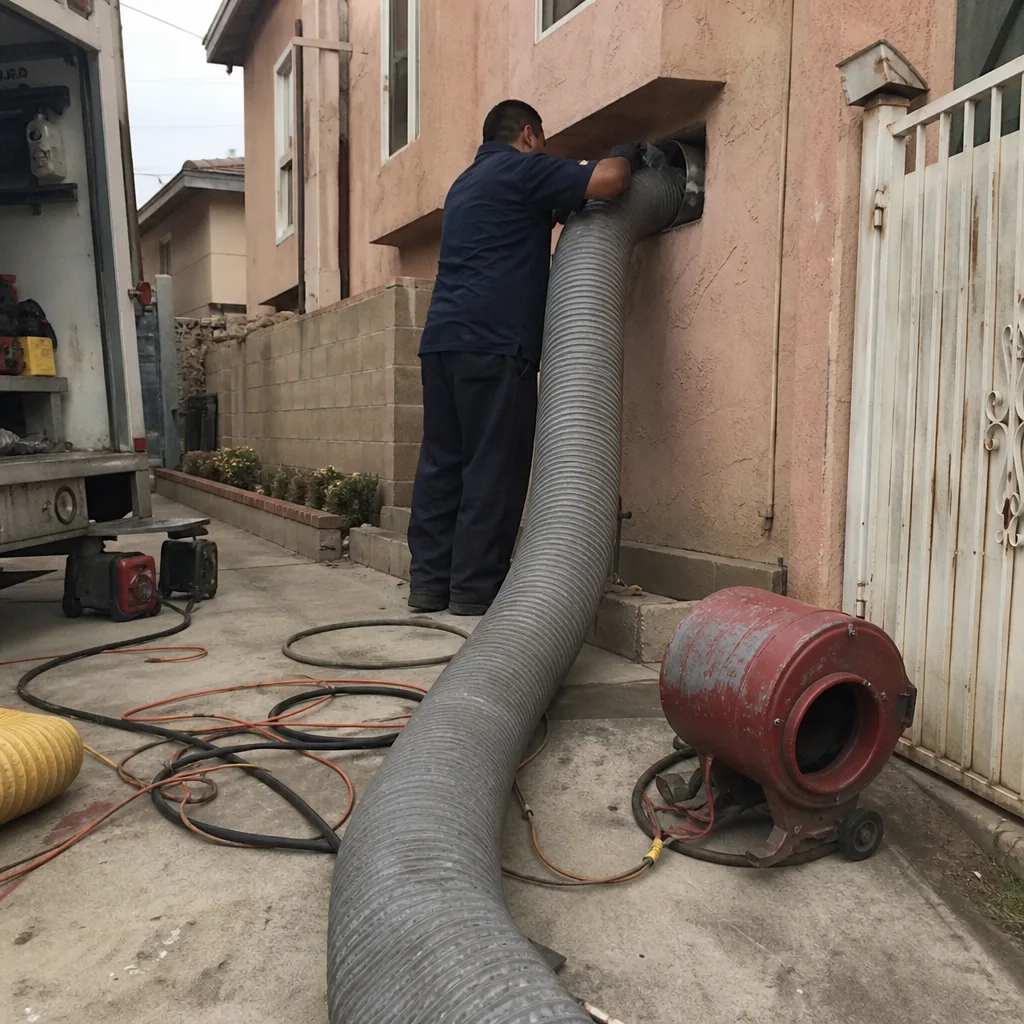
Negative air extraction is the industry-standard method. A high-powered vacuum unit is connected to the duct system, typically at the plenum or a cut-in access point, creating continuous negative pressure inside the ductwork. That negative pressure means that any particulate dislodged during agitation is pulled toward the vacuum rather than pushed into the living space. The system essentially isolates the duct interior from the home’s air envelope while cleaning is underway. This is the method used with professional equipment from brands like Rotobrush and Nikro, which are standard tools in the HVAC and remediation industries.
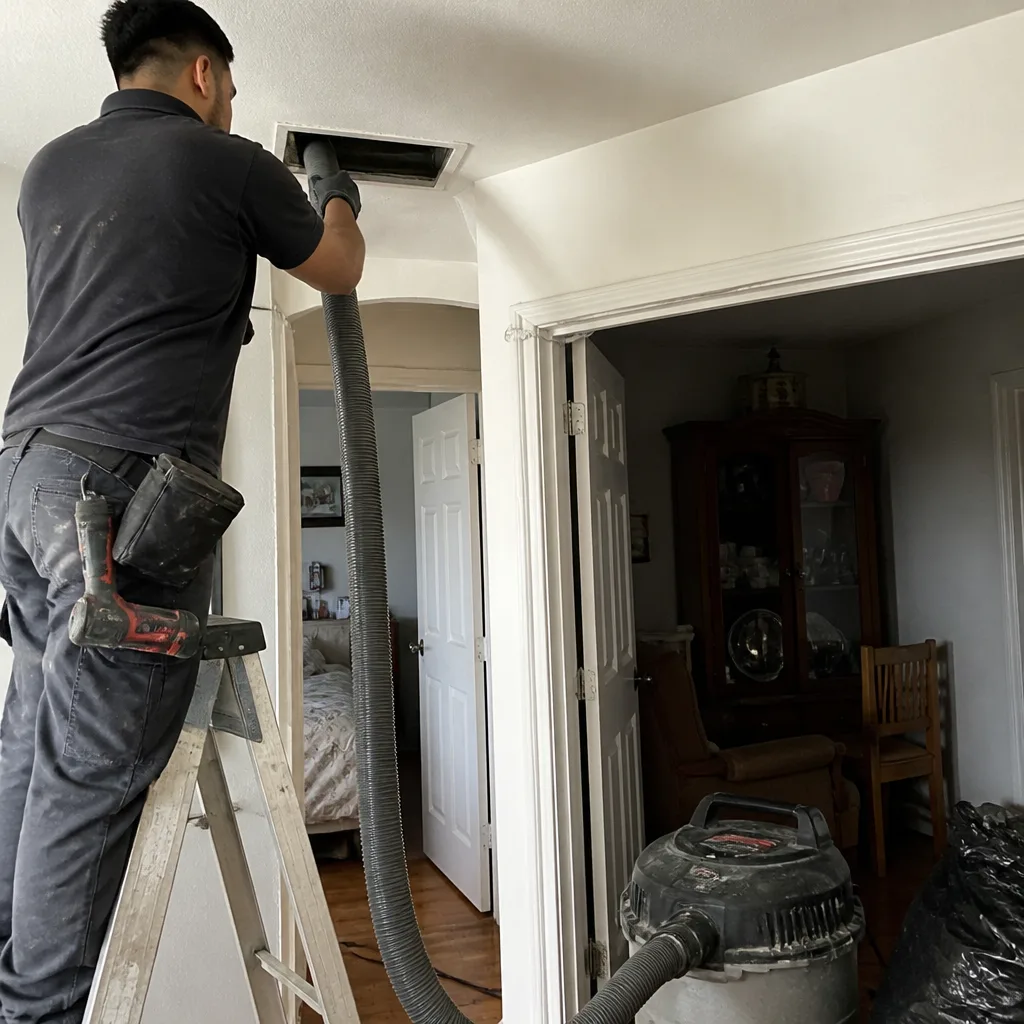
Contact vacuuming is what most homeowners picture: a technician moving a vacuum hose through the duct run from the register side. It’s effective for surface debris in short, accessible duct runs, but it doesn’t create true negative pressure. In longer runs or systems with multiple takeoffs, contact vacuuming leaves particulate in the sections the hose can’t physically reach or where the airflow isn’t strong enough to pull it.
Which method your Boyle Heights home needs depends on the configuration:
- Short, accessible runs with metal duct: Contact vacuuming with agitation tools can be sufficient for maintenance cleaning when the system is in good condition.
- Long central trunk lines, multiple branch runs, or flex duct: Negative air extraction is the appropriate method. The negative pressure creates real airflow through the entire system, not just the section nearest the hose.
- Homes near the 710 or 5 with heavy diesel soot: Negative air extraction with mechanical agitation is the only method that reliably removes the adhered particulate film. Without agitation, the soot stays bonded to duct walls and within months you’re back to square one.
Some systems also call for specialized filtration. For homes with documented contamination issues, equipment from Abatement Technologies, the same class of gear used in professional remediation projects, provides HEPA filtration and true containment. That’s beyond a standard cleaning, but it’s the right tool when a Boyle Heights home has had a pest intrusion, a fire event nearby, or extended construction exposure.
Why Pre-1980 Boyle Heights Housing Often Has Duct Damage Hiding
Boyle Heights has a building stock that skews dramatically older than most of Los Angeles. A substantial share of the neighborhood’s single-family homes and duplexes were built before 1960, and the 1970s brought a wave of additions and split-system retrofits that introduced flex duct into homes that originally had none.
Flex duct, which is a flexible plastic and wire-helix tube wrapped in fiberglass insulation, was widely used in the 1970s and early 1980s because it was cheap and easy to route through tight attic and crawl spaces. But it degrades. The inner liner is a thin plastic film that becomes brittle with age and heat exposure. In Boyle Heights attics, which regularly reach 130+ degrees in summer, that liner can crack, tear, or separate from the wire helix within 15 to 20 years of installation.
When flex duct fails, it doesn’t just leak air. It creates direct paths for attic insulation, rodent droppings, and the hot, particulate-laden air of an unfinished attic to enter your conditioned air stream. Here’s the critical point: cleaning a failed flex duct does nothing for you. The particles you remove during cleaning are replaced within days because the duct remains broken. This is where air duct repair in Boyle Heights becomes the actual fix. We’ve opened access panels in Boyle Heights attics and found flex duct sections that were completely collapsed, pinched by framing, or chewed through by rodents. The homeowner had been paying for repeated cleanings without addressing the root cause.
Metal duct systems from the 1940s and 1950s have their own issues. Seams were originally sealed with materials that dry out and crack over time. Joints loosen. In crawl spaces under older Boyle Heights homes, metal ducts can rust from ground moisture, developing pinholes that leak conditioned air and pull in crawl space air. A good inspection identifies these before cleaning, so the repair happens in the right order: fix the failure points, then clean the system so it stays clean.
The Complete Cleaning Process, Step by Step
Here’s what a full-spectrum air duct cleaning looks like when it’s done properly in a Boyle Heights home. This is the process we follow, and it’s what you should expect from any service you hire.
- System mapping and inspection. Every register, return, the plenum, the air handler or furnace location, and the duct layout are identified. The inspection covers everything listed above: material, condition, seal integrity, filter fit, and any contamination red flags.
- Pre-cleaning photos. Before anything is touched, photos are taken inside the ductwork. You should see these. If a company won’t show you what your ducts look like before work, that’s a signal to ask why.
- System isolation. The air handler or furnace is powered down. Registers in the home are covered or sealed as needed for the extraction method being used.
- Negative air connection. The vacuum unit is connected to the duct system, typically at the plenum. The unit is sized for the system’s cubic footage. This creates the negative pressure that contains the job.
- Mechanical agitation. This is the step that actually removes the adhered particulate. Rotating brushes or compressed air tools (the Rotobrush and Nikro systems are both built for this) work through each branch run and the trunk line, dislodging the soot film and debris while the negative air pulls it toward the vacuum.
- Register and grille cleaning. Each supply and return register is cleaned, and the register boots where the duct meets the register are checked and sealed if gaps are found.
- Post-cleaning verification. Photos are taken again inside the ducts. You compare before and after. This is the verification that the job was real, and it’s the single most important protection against the industry’s bait-and-switch problem.
- Seal repair and duct assessment. Any gaps found during the process are sealed, and if the inspection turned up damaged sections that require more than a sealing pass, the repair scope is documented and discussed. The cleaning reveals what the surface was hiding.
Some Boyle Heights homeowners also ask about protective treatments after cleaning. Products like Guardsman can be applied as a post-cleaning microbial and protective treatment to duct interiors. It’s not a substitute for proper cleaning, but it can help prevent regrowth and resoiling in high-particulate environments like freeway-adjacent Boyle Heights. It’s one of the tools we integrate when the home’s conditions call for it.
A Realistic Maintenance Timeline for Boyle Heights Air Quality
The standard industry answer is that air ducts should be cleaned every 3 to 5 years. That’s a national average that doesn’t account for where you live. Boyle Heights is not an average air quality environment.
Here’s a realistic timeline based on what we observe in this specific neighborhood:
- Homes within a quarter mile of the 710 or 5 freeways: Every 2 to 3 years. The diesel particulate load simply builds faster. Homes in this band consistently show visible duct soiling at the 24-month mark.
- Homes more than a quarter mile from freeways but on major arterial streets (Soto, Cesar Chavez, Whittier): Every 3 to 4 years. Traffic particulate from stop-and-go corridors still contributes, though less intensely.
- Interior residential streets away from major corridors: Every 4 to 5 years, assuming a good quality filter is installed and changed regularly.
- Homes with pets, smokers, or ongoing renovation work anywhere in the building: Every 2 to 3 years regardless of freeway proximity. Pet dander and construction dust are heavy contributors on their own.
- After a nearby fire event or prolonged smoke exposure: A cleaning is warranted regardless of schedule. Smoke particulate adheres aggressively to duct surfaces and continues to recirculate long after the outdoor air clears.
These are not manufacturer averages. They’re based on observed particulate accumulation rates in Boyle Heights specifically, where the freeway geometry channels a steady stream of diesel exhaust across a neighborhood with limited air dispersion. The Los Angeles Basin inversion layer is the compounding factor: on many mornings, particulate settles and lingers rather than dispersing upward, and your HVAC system is actively pulling that air through returns every time it cycles.
One more local factor: many Boyle Heights homes run window or wall AC units during summer rather than central air, which means the central system sits idle for months. Ducts in an idle system are still accumulating particulate, but it’s not being blown through the house during cooling season. When the heat comes on in fall, that entire accumulated load gets pushed into the living space at once. That’s why fall is the busiest season for air duct cleaning in Boyle Heights.
Common Mistakes to Avoid
- Choosing a service based on a per-vent coupon price. This is the classic bait-and-switch in this industry: a low teaser rate per vent turns into a far larger invoice once the van arrives. Legitimate services quote one flat price for the whole system based on its actual size and condition.
- Skipping the inspection phase. Any company that opens a register and starts vacuuming without mapping the system and checking duct condition is doing cosmetic work. In Boyle Heights homes with older duct runs, skipping inspection means missing broken flex duct or failing seals that make the cleaning pointless.
- Confusing dryer vent cleaning with air duct cleaning. They are different services with different tools and different purposes. A dryer vent cleaning in Boyle Heights targets the narrow vent line from your dryer to the exterior outlet, where lint accumulates and creates a documented fire hazard. Air duct cleaning addresses the HVAC supply and return system. Some companies package them, but know the difference so you’re clear on what you’re actually paying for.
- Assuming a visual inspection from the register is sufficient. You cannot see a broken section of flex duct in an attic from a living room register. Access points and camera inspection are required to actually verify condition throughout the system.
- Replacing filters without addressing duct condition. A high-quality filter protects the system downstream of the filter, but if the return plenum or return ducts have gaps, unfiltered air is bypassing the filter entirely. The filter is one component of a sealed system, not a substitute for one.
- Waiting until there’s a visible problem. By the time dust is visibly coating registers or blowing through vents when the system starts, your ducts have been holding and recirculating that material for a long time. The goal is scheduled maintenance, not crisis response.
- Hiring a cleaning company that can’t do repairs. In Boyle Heights, the odds that a pre-1980 home has some degree of duct damage are high. If your cleaner doesn’t have repair capability, any damage found will be left for a second company to address, or never addressed at all.
When to Call a Professional
Some systems can wait, and some can’t. Call a professional if you see visible mold growth on or around registers, which indicates a moisture problem inside the duct system that cleaning alone won’t solve permanently. Call if you’ve had a rodent or pest intrusion in attic or crawl space areas where ducts run, since droppings and nesting material inside ducts are health hazards that require proper removal and then sealing of entry points. Call if your system has never been inspected and the home predates 1980, because the probability of hidden flex duct failure or seal degradation is high enough that a professional assessment is warranted regardless of your cleaning history. Call if you’ve renovated recently and construction dust was pulled into the return system, or if a fire occurred nearby and smoke entered the home. And call if you simply don’t know the last time the ducts were looked at, which is the case for most homeowners we meet in Boyle Heights. Eastgate Air Duct Cleaning offers free estimates in Boyle Heights, call (855) 382-4682.
Frequently Asked Questions
Air duct cleaning in Boyle Heights typically ranges from $450 to $900 for a complete single-system cleaning, depending on system size, number of registers, duct condition, and whether any repair work is identified during inspection. Whole-system flat pricing is the industry standard for legitimate providers; be wary of per-vent pricing, which is the primary vehicle for bait-and-switch tactics. Call (855) 382-4682 for an exact quote, estimates are free.
Cheaper quotes usually mean one of three things: the company is selling a low teaser rate per vent that will escalate once the job starts, the equipment is a consumer-grade vacuum rather than professional extraction gear, or the company is skipping the inspection and repair assessment entirely. The difference between a $99 whole-house coupon and a legitimate flat-rate quote is that the former cannot possibly cover the labor, equipment, and time required for a real cleaning. A shop vac run through a register is not air duct cleaning.
You should receive before-and-after photos from inside the duct system. A legitimate professional service photographs the duct interior before work begins and photographs again after extraction and agitation are complete, and those photos should be shown to you on site. If a company cannot or will not show you the before-and-after, you have no way to verify that anything was removed. This is the single most important verification step in the process.
In Boyle Heights, homes near the 710 or 5 freeways should plan for air duct cleaning every 2 to 3 years. Homes further from freeways can extend to 3 to 5 years. The national 3-to-5-year average doesn’t reflect the diesel particulate load of freeway-adjacent neighborhoods in this part of Los Angeles, where observed duct soiling happens measurably faster than in coastal or inland areas away from truck corridors.
Air duct cleaning removes accumulated particulate, soot, pet dander, and debris from the air distribution system, which reduces the recirculation of those materials through your living space. If your symptoms are tied to duct-acumulated irritants, cleaning can reduce the exposure. But cleaning cannot address allergens entering from outside, from pets actively in the home, or from moisture problems that generate mold at the source. The realistic framing is that clean ducts are one component of indoor air quality, not a cure for all respiratory concerns.
It can, but only when combined with a sealed system. Heavy duct soiling restricts airflow and forces the blower to work harder, but the larger energy loss in older Boyle Heights homes usually comes from duct leakage at joints, boots, and plenums. A cleaning that includes inspection and sealing of gaps addresses both airflow restriction and leakage. A cleaning that ignores seal integrity misses the bigger opportunity for efficiency improvement.
The Bottom Line
Air duct cleaning in Boyle Heights is not a generic service, because Boyle Heights is not a generic air environment. The freeway particulate from the 710 and 5, the pre-1980 housing stock with aging flex duct and failing seals, and the density of an urban neighborhood all converge to create duct conditions that load faster and fail more completely than the national averages would suggest. A real cleaning starts with a full inspection, uses negative air extraction with professional-grade tools from brands like Rotobrush and Nikro, and ends with verification you can see. Where the inspection finds damage and some Boyle Heights duct system will have damage, air duct repair is the fix, not another cleaning. The right service in this neighborhood is one that can do both, with the equipment to do either properly. If you’re ready to find out what’s actually in your ducts, call (855) 382-4682 for a free estimate.
Written by the team at Eastgate Air Duct Cleaning, serving Boyle Heights since 2015. Explore more guides & resources.
See the difference
 Before
 After
 Before
 After
 Before
 After