
Last updated November 3, 2026
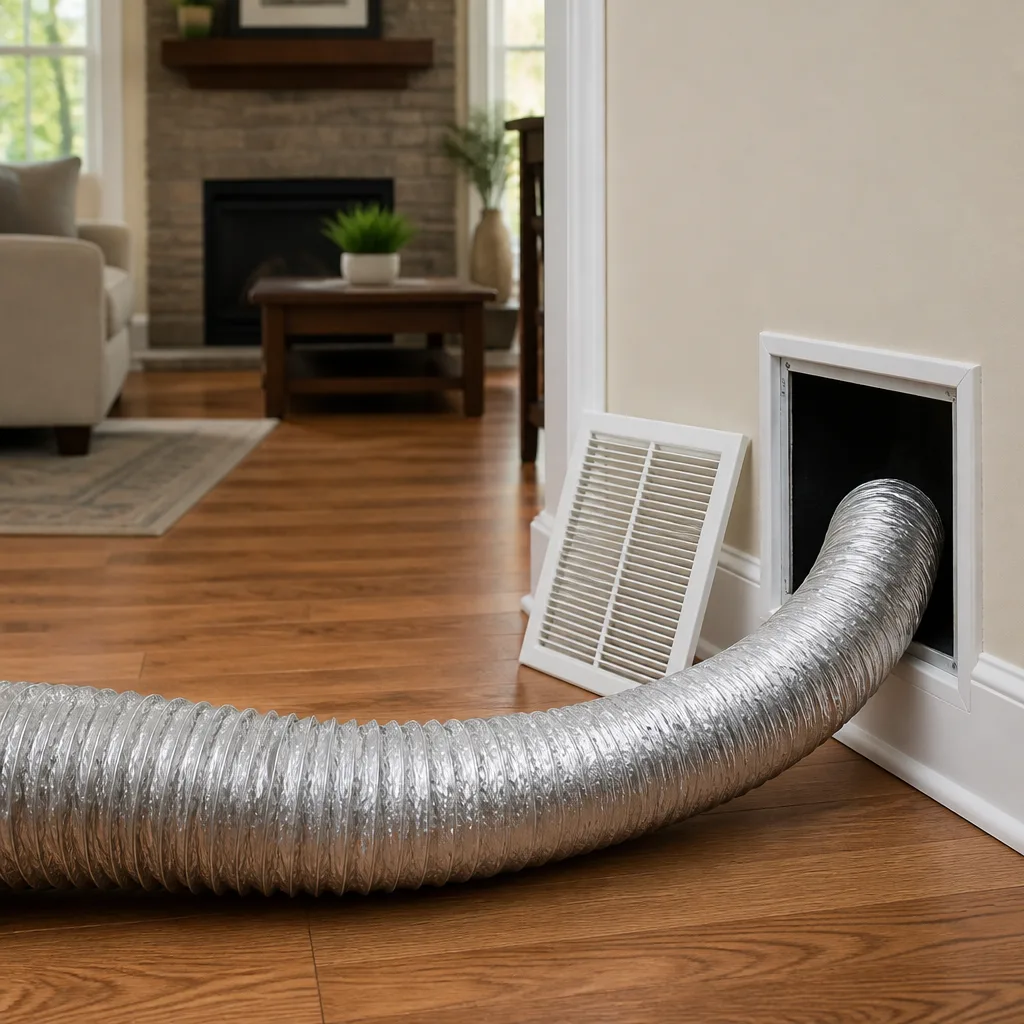 Whole-home duct cleaning
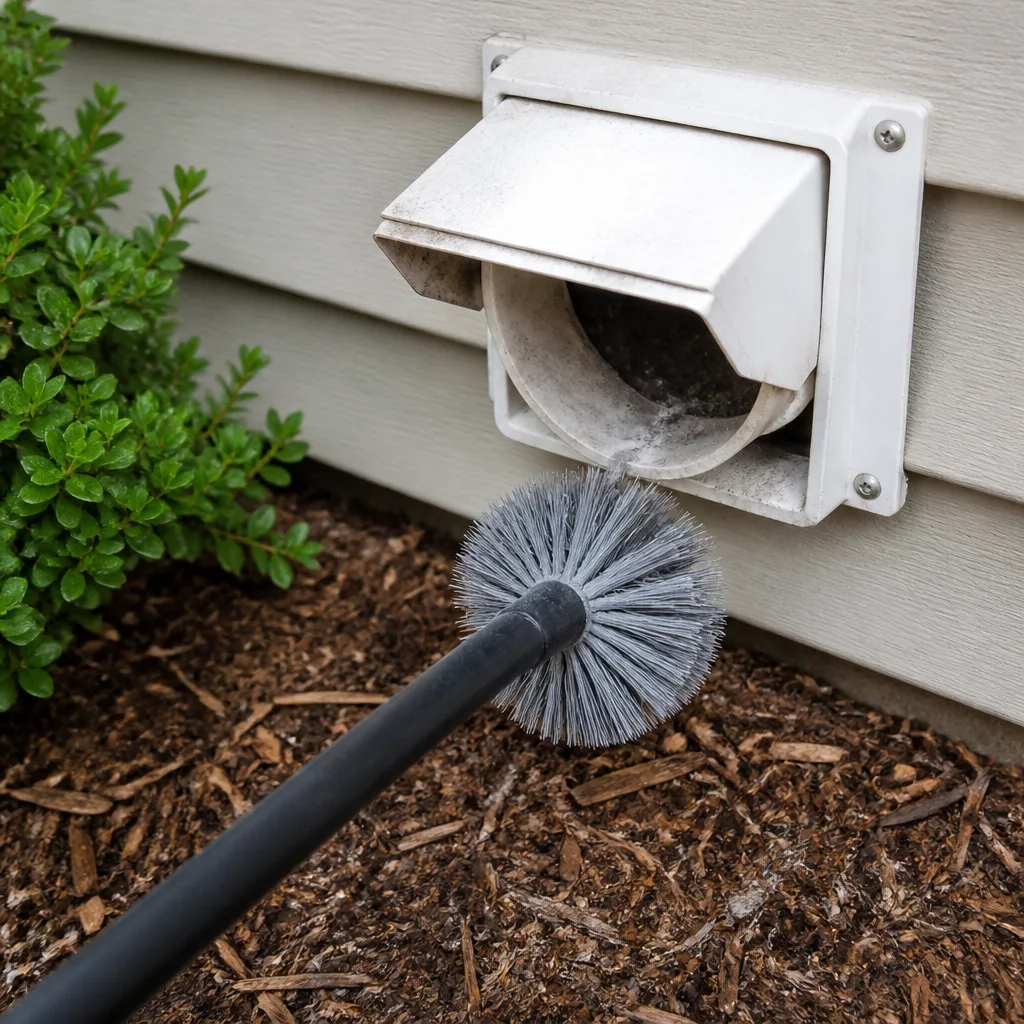 Dryer vent cleaning
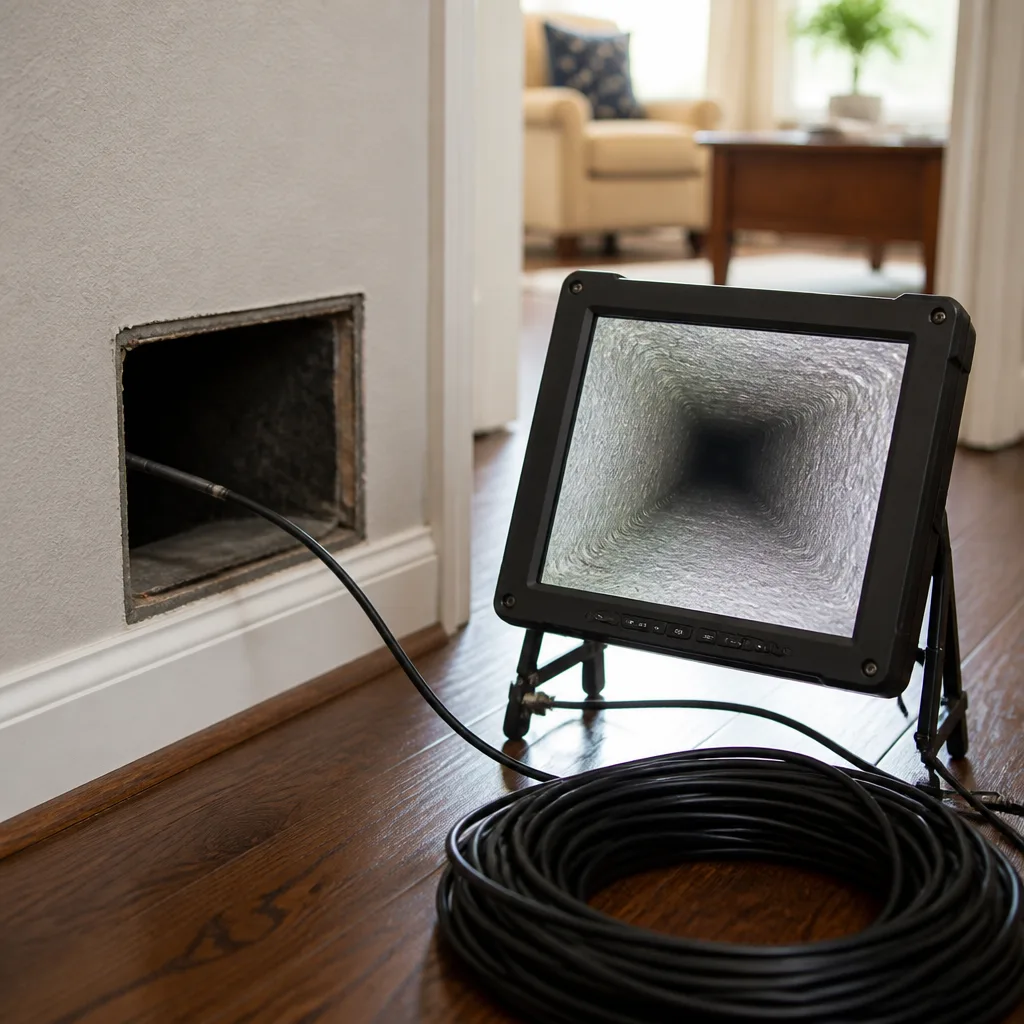 Camera inspection
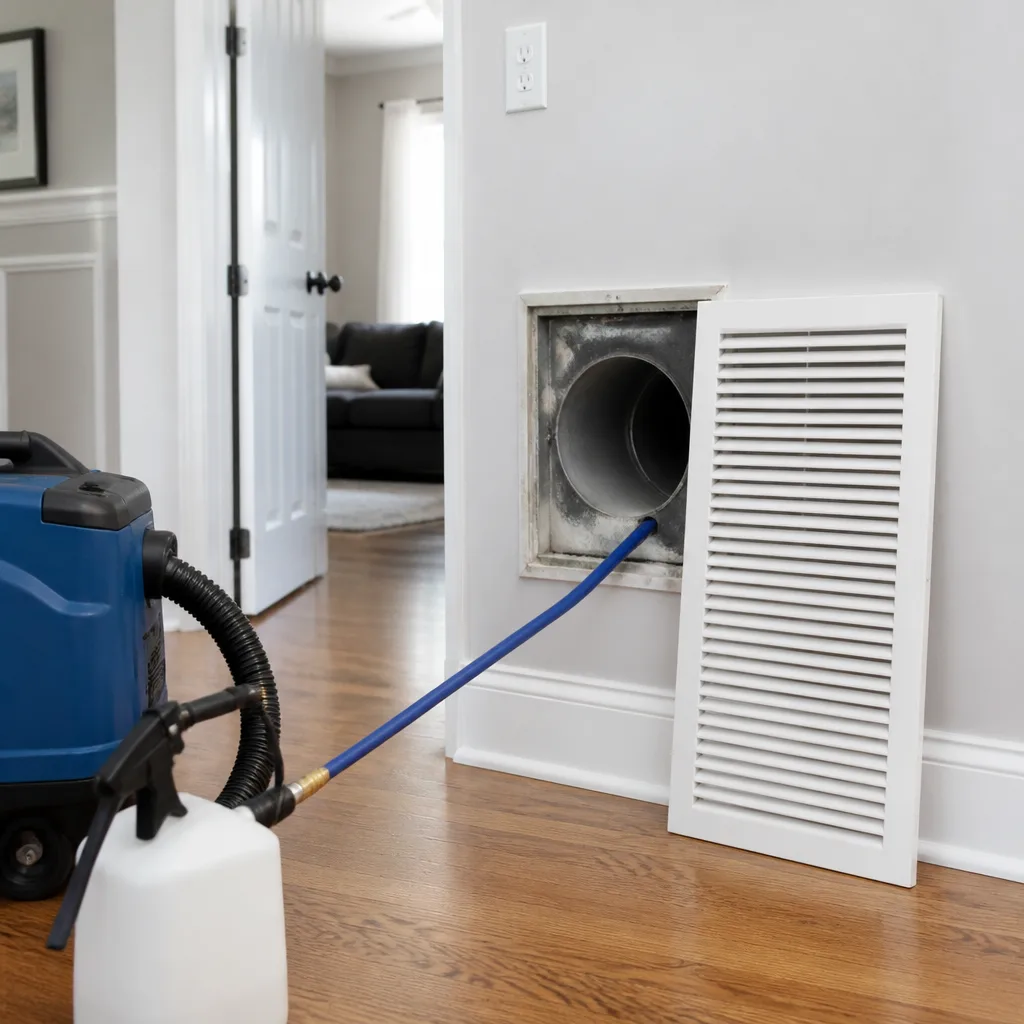 Sanitizing & deodorizing
Whole-system duct and dryer vent check with before-and-after photos - you see exactly what came out of your vents
That "$99 whole-house special" is a bait ad - the real number appears once they are in your hallway, or the "clean" is a shop-vac at the register. We photograph the inside of your ducts before and after instead.
Choosing the Right Air Duct Cleaning Brand: A Buyer’s Guide for Boyle Heights
Here’s something most homeowners in Boyle Heights never consider: the two most consequential choices an air duct cleaning contractor makes happen before they ever arrive at your home. The first is what vacuum system they load into the truck. The second is what agitation method they pair with it. Those two equipment decisions determine whether your ducts actually get clean or just get stirred up. Our Complete Air Duct Cleaning Guide for Boyle Heights Homeowners explains what actually matters when choosing an air duct cleaning company, and why the word “brand” means something different in this industry than it does when you’re buying a dishwasher.
Quick Answer
The right Air Duct Cleaning services brand for your Boyle Heights home is one built on professional-grade equipment – specifically source-removal systems like Rotobrush and Nikro paired with HEPA filtration – rather than a recognizable company logo. Look for a contractor who can name their equipment, explain their process against NADCA’s ACR standard, and show you proof of both. The company name matters less than the tools in the truck.
Styles & brands we work with
- Whole-home duct cleaning
- Dryer vent cleaning
- Camera inspection
- Sanitizing & deodorizing
Table of Contents
- The Equipment Brand Is the Real Brand
- Source-Removal Cleaning: What Actually Works
- The NADCA ACR Standard: Your Evaluation Framework
- Local Boyle Heights Contractor vs. National Franchise
- Certifications and Training: What They Mean in California
- The Equipment Show-and-Tell Test
- Beyond Cleaning: Repair Capability Changes Who You Should Call
- Dryer Vents: The Fire Hazard Most Duct Cleaners Ignore
The Equipment Brand Is the Real Brand
When we talk about “choosing a brand” in air duct cleaning, we’re not talking about a logo on a van. We’re talking about the equipment manufacturers whose systems actually do the work. In Boyle Heights, where housing stock ranges from 1920s bungalows to mid-century multi-family buildings, the ductwork varies wildly. What doesn’t vary is the physics of cleaning it properly.
Professional-grade duct cleaning equipment falls into a few categories. The brands that set the standard are Rotobrush and Nikro for source-removal systems, and Abatement Technologies for negative air machines and HEPA filtration. These are not consumer tools. You can’t rent them at a hardware store. They’re the same class of equipment used by remediation professionals and HVAC contractors who handle contamination scenarios that go well beyond dust.
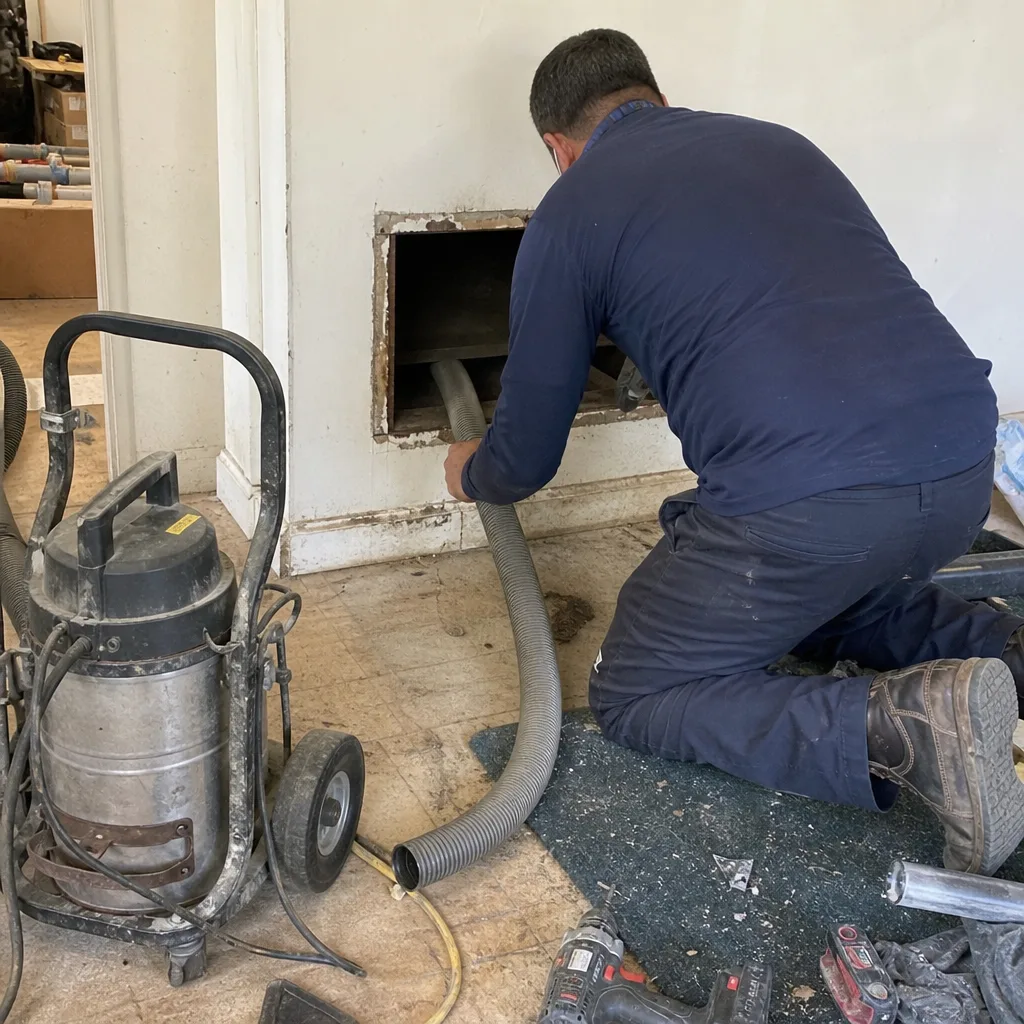
A contractor using Rotobrush equipment is running a system designed specifically for duct cleaning – a rotating brush assembly paired with a high-powered vacuum that captures debris at the point of contact. Nikro systems, similarly, are built for professional duct and ventilation cleaning with industrial-grade suction. Abatement Technologies gear is what you see on job sites where air quality is a documented safety concern – hospitals, mold containment projects, post-fire cleanup.
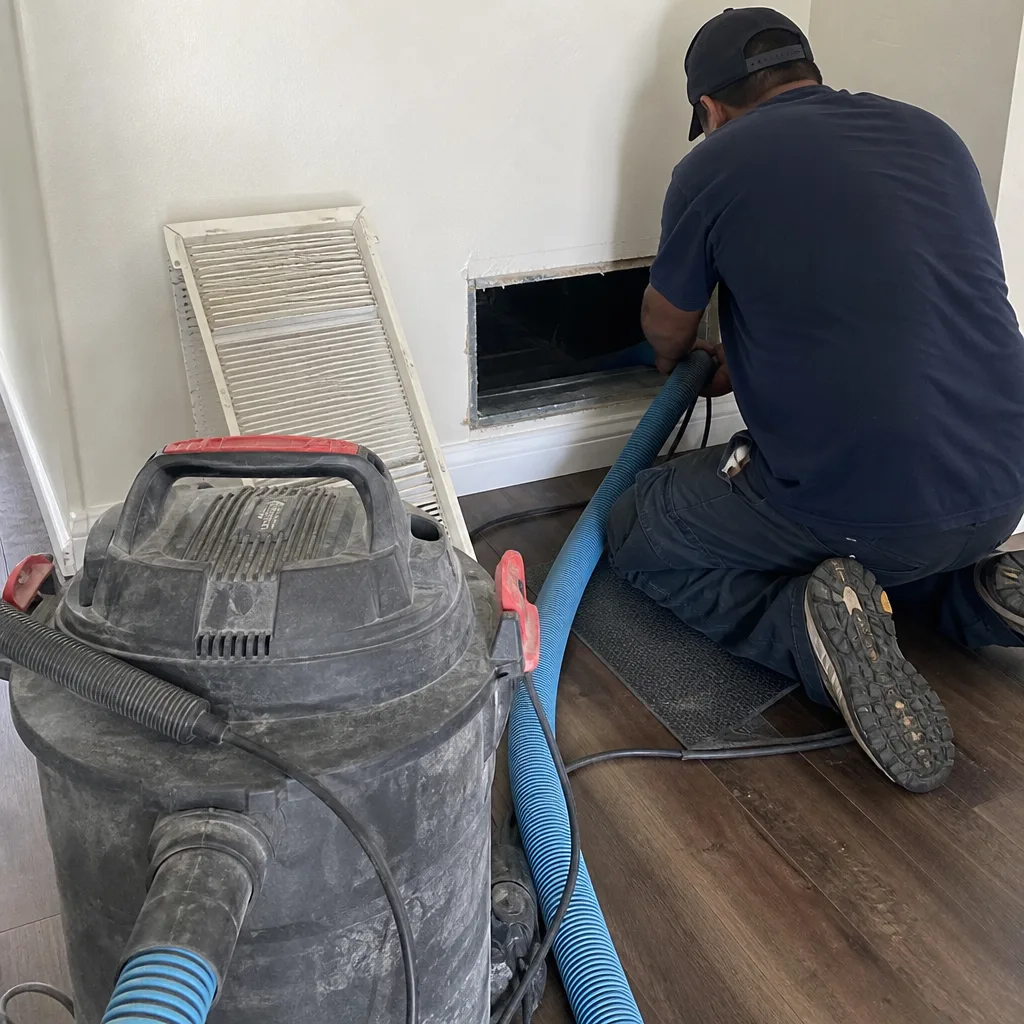
The difference between this equipment and what a discount operation might use is measurable. A shop vac with a long hose attachment can reach a few feet into a duct. A professional system is designed to reach the full length of the duct run, agitate debris off the walls, and capture it immediately. One removes dust. The other rearranges it. In Boyle Heights, where older homes often have decades of accumulated debris in ductwork, the distinction matters.
At Eastgate Air Duct Cleaning, we run Rotobrush and Nikro systems on every job. We also deploy Abatement Technologies equipment for situations that call for negative air pressure and true HEPA filtration. That’s the equipment standard homeowners should be asking about – not the company’s marketing.
Source-Removal Cleaning: What Actually Works
Source-removal cleaning is the industry term for what actually gets ducts clean: mechanical agitation that dislodges debris from duct surfaces, combined with vacuum capture that removes it from the system. If a cleaning method doesn’t do both, it’s not cleaning. It’s just moving dust around.
Here’s how a proper source-removal cleaning works, step by step:
- System inspection. The contractor looks at the duct layout, identifies access points, and checks for damage, gaps, or disconnected sections. In Boyle Heights homes, it’s common to find ductwork that hasn’t been touched since installation – sometimes 40 or 50 years ago.
- Negative pressure setup. The vacuum system is connected to the ductwork to create negative air pressure. This means air flows inward, not outward, so debris can’t escape into the home during cleaning. Abatement Technologies negative air machines are the professional standard here.
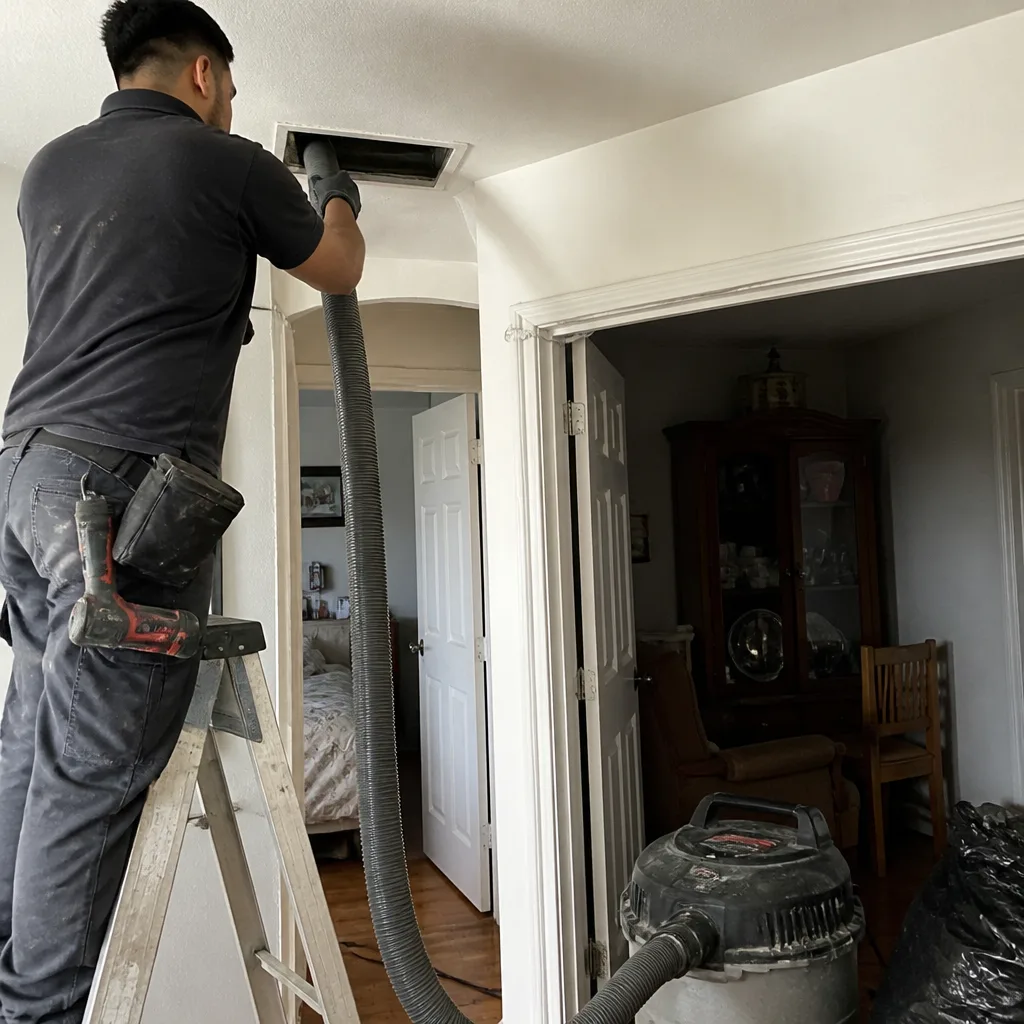
- Mechanical agitation. Rotating brushes or air whips are inserted through access points to dislodge debris from duct walls. This is the step that separates real cleaning from a superficial pass. The agitation method needs to match the duct material – flexible ducts require different treatment than rigid metal.
- Debris capture. The dislodged debris is pulled into the vacuum system and captured, not redistributed. HEPA filtration on the vacuum prevents fine particles from exhausting back into the living space.
- System verification. A proper contractor verifies the work – showing you before-and-after photos of the duct interior. If a company won’t show you what the ducts looked like before and after, that’s a red flag.
The bait-and-switch reputation in this industry comes from companies that skip steps three and five. They might run a vacuum for 20 minutes and call it done. Or they’ll quote a low price over the phone and then inflate it once they’re standing in your hallway. In Boyle Heights, where many homes are older and ductwork is often in rough shape, the opportunity for upsell pressure is real. A contractor who names their equipment and walks you through the process is harder to fool.
The NADCA ACR Standard: Your Evaluation Framework
NADCA – the National Air Duct Cleaners Association – publishes a standard called ACR: Assessment, Cleaning, and Restoration. It’s the closest thing this industry has to a benchmark, and it’s the framework a Boyle Heights homeowner can use to evaluate any contractor before booking.
The ACR standard breaks the work into three phases:
A is for Assessment. Before any cleaning happens, a contractor should inspect your system. That means looking at the supply and return ducts, the air handler, coils, blower, and the condition of the ductwork itself. Assessment isn’t a sales pitch – it’s a diagnostic step. A contractor who doesn’t assess before quoting is guessing.
C is for Cleaning. The cleaning phase uses source-removal methods to extract debris from the entire system. NADCA specifies that cleaning should include the ducts, the air handler, coils, blower, and drain pan – not just the visible vent covers. A contractor who only cleans the registers is doing surface work, not system work.
R is for Restoration. This is the step most homeowners don’t know to ask about. Restoration means addressing what the assessment found: sealing gaps, repairing disconnected sections, replacing damaged flex duct. Cleaning removes debris; restoration fixes the reason debris accumulated or the reason the system leaks conditioned air into the attic or crawlspace.
Ask any contractor you’re evaluating: “Do you follow NADCA’s ACR standard?” The answer tells you a lot. Some will say yes and mean it. Some will say yes and then describe a process that skips restoration entirely. Some won’t know what ACR means – which is useful information in itself.
Local Boyle Heights Contractor vs. National Franchise
Boyle Heights sits in a unique position in the Los Angeles market. It’s a dense, older neighborhood with a mix of single-family homes, duplexes, and apartment buildings. The ductwork in a 1930s Craftsman is nothing like the ductwork in a 1990s remodel. A contractor who knows this neighborhood knows what to expect before they arrive.
National franchises operate differently. They run on brand recognition, standardized pricing, and local subcontractors who may or may not have deep experience with Southern California housing stock. The franchise model isn’t inherently bad – but it introduces a layer between you and the person actually doing the work. That person might be a subcontracted crew working under a franchise name, with equipment that varies from one job to the next.
A locally established Boyle Heights contractor with documented equipment investment has a different incentive structure. Their reputation lives or dies within a few square miles. They can’t burn through a neighborhood and move on – their next job comes from the same block. When you’re evaluating a local contractor, ask about their equipment directly. A company that owns Rotobrush and Nikro systems has made a five-figure investment in doing this work correctly. A company that rents equipment or uses portable consumer-grade vacuums has made a different calculation.
There’s also the practical matter of response. A local contractor knows Boyle Heights permitting requirements, parking realities, and the quirks of older LA construction. A franchise crew driving in from another part of the county might not. For a service that requires a truck loaded with professional equipment, a large vacuum hose run into your home, and an hour or two of methodical work, local familiarity matters.
Certifications and Training: What They Mean in California
Certifications in air duct cleaning are real and they mean different things. Here’s what actually matters for a Boyle Heights homeowner evaluating a contractor:
NADCA ASCS (Air Systems Cleaning Specialist). This is the primary certification for air duct cleaning technicians. It requires passing an exam on HVAC system cleaning and demonstrating knowledge of the ACR standard we covered above. If a contractor claims NADCA certification, ask to see the credential. ASCS is the certification that maps directly to duct cleaning work.
IICRC (Institute of Inspection, Cleaning and Restoration Certification). IICRC certifications are broader, covering cleaning and restoration disciplines. For air duct work, the relevant IICRC certification is in HVAC system cleaning. IICRC-certified technicians have training in the standards and practices of the restoration industry at large.
EPA RRP (Renovation, Repair, and Painting). This one matters specifically for older Boyle Heights homes. If your home was built before 1978, lead paint may be present. The EPA’s RRP rule requires that any contractor disturbing painted surfaces in pre-1978 housing be RRP-certified. Duct cleaning can disturb painted registers, returns, and surrounding surfaces. An RRP-certified contractor knows how to work safely in a lead-paint-era home. This is not optional for older Boyle Heights housing stock.
California also has its own contractor licensing requirements. Any contractor performing work on your home should be licensed by the California Contractors State License Board. Ask for the license number and verify it. This isn’t a duct-cleaning-specific credential – it’s the baseline for any contractor working in the state.
A certification isn’t a guarantee of quality. But the absence of certifications, combined with vague equipment descriptions and a refusal to show proof, is a pattern worth noticing.
The Equipment Show-and-Tell Test
Here’s a simple evaluation method that works better than any review site: ask the contractor to show you their equipment and explain their process before you book. This is the show-and-tell test, and it’s remarkably effective.
Here’s the step-by-step version:
- Ask what equipment they use. If the answer is “commercial-grade equipment” or “the best tools available” without naming brands, that’s a non-answer. A contractor running Rotobrush or Nikro systems will name them. A contractor running a shop vac attached to a drill brush won’t want to.
- Ask to see the equipment. A legitimate contractor has no problem showing you photos of their rig, or describing what’s in the truck. They’re proud of the investment. A contractor who deflects this question is hiding something.
- Ask how they’ll agitate the debris. This is the question that separates source-removal cleaning from surface work. If they describe rotating brushes, air whips, or mechanical agitation, you’re talking to someone who does real cleaning. If they describe “powerful suction” without agitation, they’re describing a vacuum pass.
- Ask how they’ll verify the work. Before-and-after photos of your actual ductwork should be standard. If they won’t commit to showing you the inside of your ducts after cleaning, walk away.
- Ask about restoration findings. What happens if they find a disconnected duct section or a gap? A contractor with air duct repair capability will have an answer. A cleaning-only crew will shrug.
This process takes five minutes on the phone. It will tell you more than 50 online reviews. When we talk to Boyle Heights homeowners about air duct cleaning in Boyle Heights, we’re happy to answer every one of these questions. A contractor who isn’t happy to answer them is telling you something.
Beyond Cleaning: Repair Capability Changes Who You Should Call
Here’s a scenario we’ve seen in Boyle Heights more times than we can count: a homeowner hires a duct cleaning company. The crew arrives, runs their equipment, and leaves. The ducts are cleaner. But the homeowner notices something during the walkthrough – an air leak, a disconnected section, a crushed flex duct. The cleaning crew shrugged. “We just clean,” they said. “You’ll need someone else for that.”
That’s the problem with hiring a cleaning-only company: they’re structurally incapable of fixing what they find. And in older Boyle Heights homes, duct damage is common. Decades of temperature swings, rodents in crawlspaces, sloppy remodels – all of it takes a toll on ductwork. Cleaning gets the debris out. It doesn’t seal the gap that’s pulling attic air into your system the moment the cleaning crew drives away.
A contractor who offers air duct repair in Boyle Heights as a standalone service is a different kind of operator. They assess, they clean, and if they find a problem, they can fix it on the spot. That’s the difference between surface work and system work. We clean it. If it’s broken, we fix it. That’s not a tagline – it’s a service model.
It also changes the value equation. A cleaning-only company might quote a lower price, but if the cleaning reveals a disconnected section they can’t repair, you’re now coordinating two contractors and paying two minimums. A company with repair capability can handle it in one visit. For Boyle Heights property managers overseeing multiple units, that difference compounds.
Dryer Vents: The Fire Hazard Most Duct Cleaners Ignore
Dryer vents are the least glamorous part of the air duct industry, and the most consequential. The U.S. Fire Administration reports that failure to clean dryer vents is a leading cause of residential dryer fires. Lint accumulation in the vent restricts airflow, the dryer overheats, and the lint – which is highly flammable – ignites.
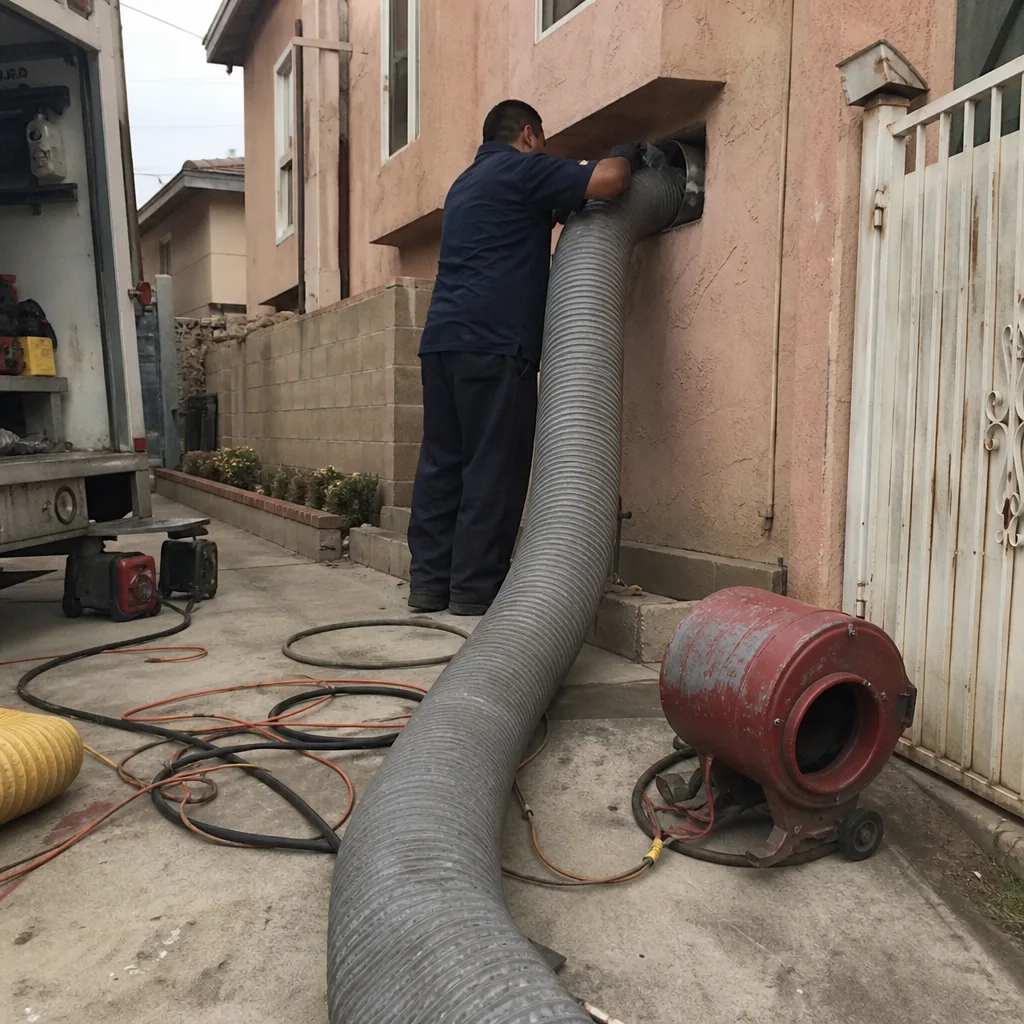
Here’s the thing: most air duct cleaning companies don’t clean dryer vents. It’s a separate service, requiring separate tools and separate knowledge. The vent run from your dryer to the exterior is narrow, often long, and frequently blocked by lint, bird nests, or debris. Cleaning it properly requires the right equipment and the patience to do the job right.
At Eastgate Air Duct Cleaning, dryer vent cleaning in Boyle Heights is a dedicated service, not an add-on. We treat dryer vents as a fire-risk reduction measure, not an upsell. The same professional-grade equipment we use for duct cleaning gets adapted for dryer vent runs. If a contractor doesn’t offer dryer vent cleaning at all, that’s a gap in their service model. If they offer it as a $49 add-on to a duct cleaning package, that’s a signal it’s not being done properly.
Boyle Heights homes with older dryer installations often have longer vent runs than modern code allows. That means more surface area for lint accumulation, more bends where debris gets trapped, and more fire risk. A proper dryer vent cleaning addresses the entire run, not just the first few feet behind the dryer.
Common Mistakes to Avoid
- Choosing by company name alone. The brand that matters is the equipment brand, not the logo. A nationally recognized name with subcontracted crews and consumer-grade tools won’t clean your ducts as well as a local Boyle Heights contractor running Rotobrush systems. Ask about equipment, not branding.
- Falling for a per-vent price. A quote of “$X per vent” is a classic bait-and-switch opener. By the time the crew is in your home, the vent count has tripled and the “system cleaning” is extra. Honest contractors quote a whole-system price before work begins.
- Skipping the verification step. If a contractor won’t show you before-and-after photos of your actual ducts, you have no way to verify the work was done. In Boyle Heights homes with decades of buildup, verification isn’t optional.
- Ignoring the restoration findings. Cleaning-only companies will clean around duct damage. A disconnected section, a crushed flex run, a gap at the plenum – these problems need repair, not a vacuum pass. Hire someone who can fix what they find.
- Treating dryer vent cleaning as optional. Lint-clogged dryer vents cause fires. A duct cleaning company that doesn’t address the dryer vent is leaving a documented hazard in place. Ask about it specifically.
- Hiring a contractor who can’t name their equipment. “Commercial-grade” is not an equipment brand. Rotobrush, Nikro, Abatement Technologies – these are names. If a contractor can’t name what’s in their truck, that’s a signal about what’s actually in there.
- Skipping the certification check. In California, contractor licensing is the baseline. NADCA ASCS certification is the duct-cleaning-specific credential. In a pre-1978 Boyle Heights home, EPA RRP certification matters for lead-safe work practices. Ask for all three.
See the difference
 Before
 After
 Before
 After
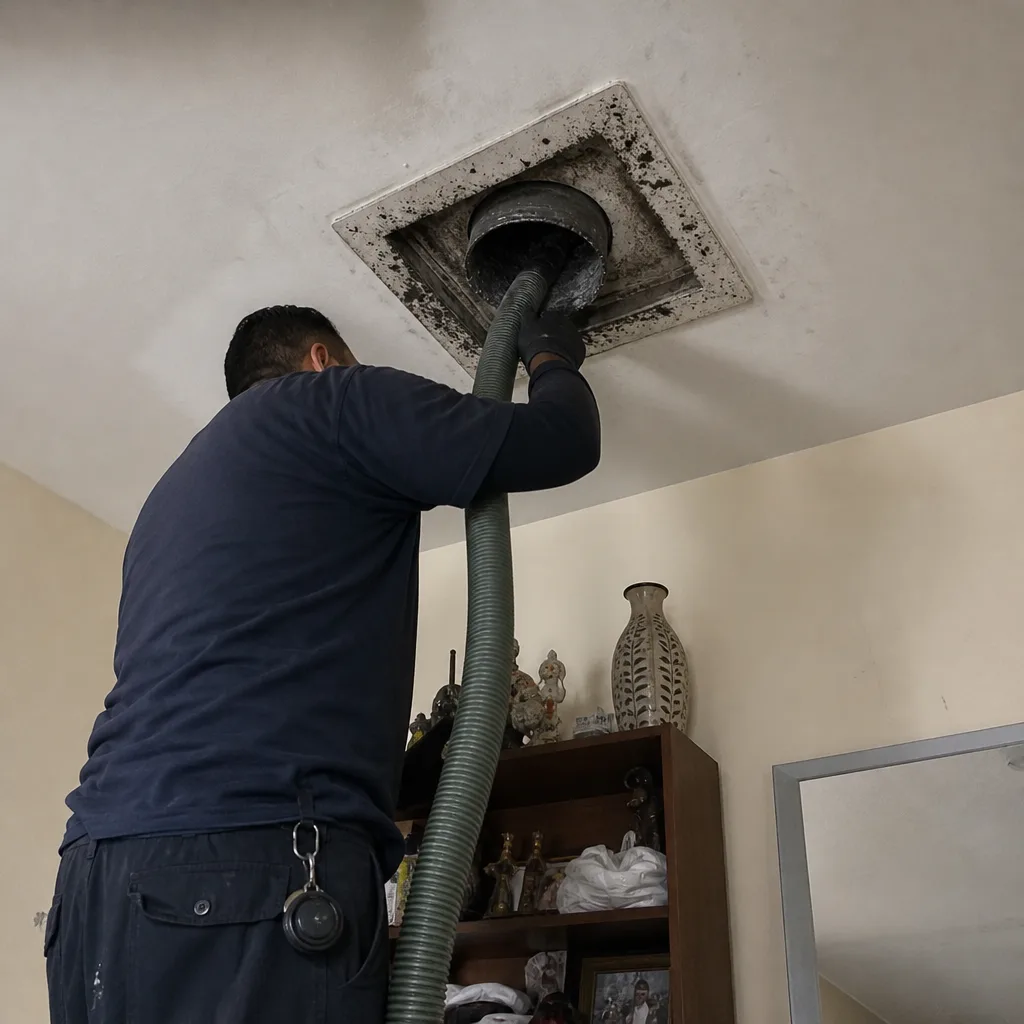 Before
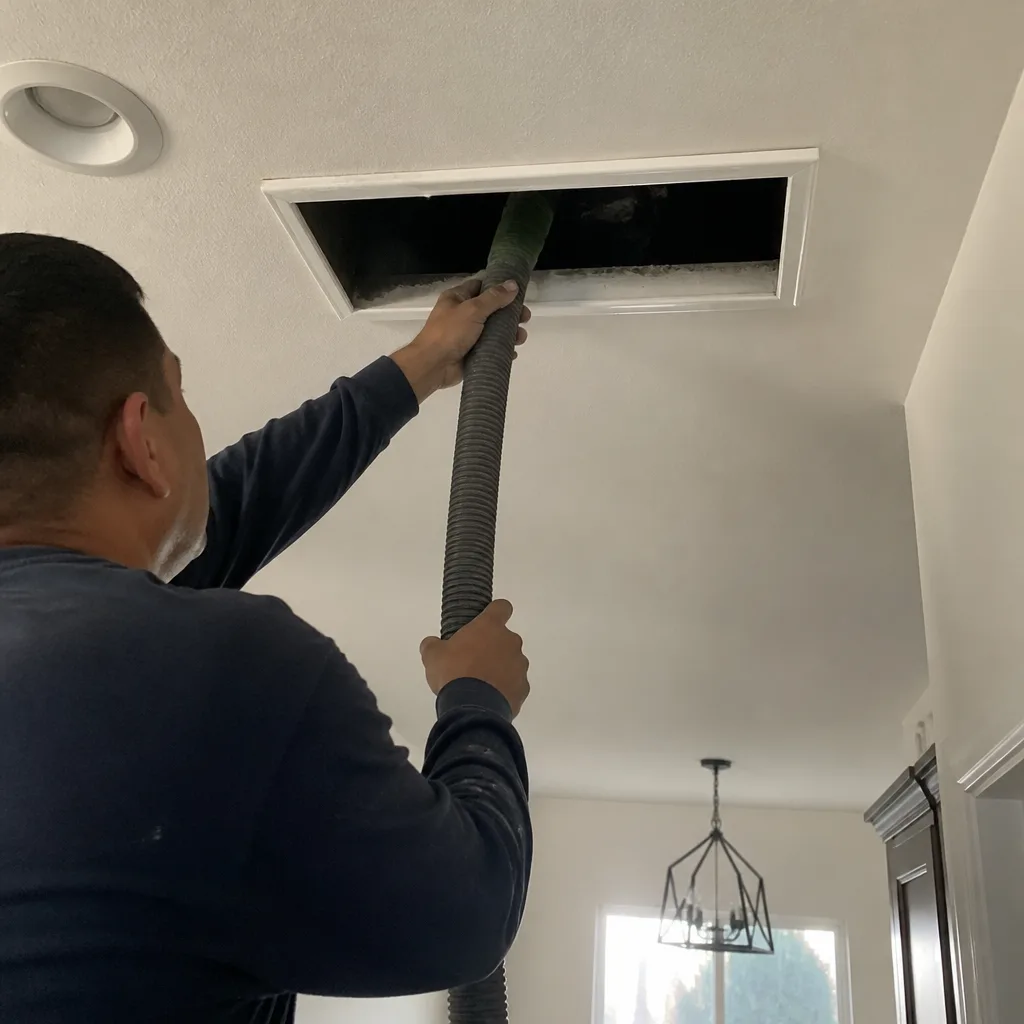 After
When to Call a Professional
You should call a professional when you can see dust accumulating on registers shortly after cleaning, when rooms smell musty when the HVAC runs, when your energy bills climb without explanation, or when you’ve lived in your Boyle Heights home for five years or more without a duct inspection. See our more guides & resources for additional warning signs. You should also call if you can’t remember the last time your dryer vent was cleaned – that’s a fire-risk issue, not a housekeeping issue. If your ducts have visible damage, disconnected sections, or gaps at the connections, you need repair capability, not just cleaning. Eastgate Air Duct Cleaning offers free estimates in Boyle Heights – call (855) 382-4682 to schedule an assessment.
Frequently Asked Questions
Whole-system air duct cleaning in Boyle Heights typically ranges from $350 to $800 for a single-family home, depending on the size of the system, the number of returns, and the condition of the ductwork. Homes with multiple HVAC systems, inaccessible crawlspaces, or heavy buildup will fall at the higher end or beyond. Be wary of any quote under $200 – it’s almost certainly a surface pass or a bait price that will escalate once the crew arrives. Call (855) 382-4682 for an exact quote based on a real assessment of your system.
The cheaper quotes come from companies using portable consumer-grade vacuums and minimal agitation, or from companies using a low headline price to get in the door before upselling. Professional source-removal equipment costs tens of thousands of dollars, and that investment is reflected in honest pricing. A $99 whole-house deal in Boyle Heights is a math problem – the company can’t afford to do real work at that price, so they either don’t do real work or they inflate the price once they’re in your home.
Ask for before-and-after photos of your actual ductwork, taken from inside the ducts. A professional contractor using source-removal equipment can show you the difference – clean metal or flex surfaces where debris was previously visible. If a company won’t or can’t show you verification photos, you have no way to confirm the work.
Most Boyle Heights homes benefit from air duct cleaning every 3 to 5 years, though homes with pets, smokers, recent renovations, or high dust levels may need it more frequently. The NADCA standard doesn’t mandate a specific interval – the right cadence depends on your home’s conditions. A professional assessment will tell you where your system stands.
Not necessarily – but you should hire a contractor who can perform repairs if the assessment finds damage, as detailed in our Complete Guide to Air Duct Cleaning in Boyle Heights. In older Boyle Heights homes, disconnected sections, gaps, and crushed flex duct are common. Cleaning alone will not fix these. A contractor with repair capability can address them in the same visit, saving you a second service call.
No. Dryer vent cleaning is a separate service with separate equipment and a separate purpose – fire risk reduction. Many air duct cleaning companies don’t offer it at all. If dryer vent cleaning matters to you, ask specifically whether the contractor provides it as a dedicated service before you book. Call (855) 382-4682 to schedule both air duct and dryer vent cleaning in Boyle Heights.
The Bottom Line
Choosing an air duct cleaning brand in Boyle Heights comes down to equipment, process, and capability – not name recognition. Look for a contractor who names their equipment brands, follows the NADCA ACR standard, holds the relevant certifications, and can show you before-and-after proof of the work. In older Boyle Heights homes, repair capability matters as much as cleaning, and dryer vent cleaning is a fire-safety service that shouldn’t be ignored. The right contractor will answer your questions directly and show you their tools without hesitation. Eastgate Air Duct Cleaning is built on that standard – professional-grade equipment, documented process, and the capability to clean and repair in one visit.
Written by the team at Eastgate Air Duct Cleaning, serving Boyle Heights since 2015.