
Last updated November 2, 2026
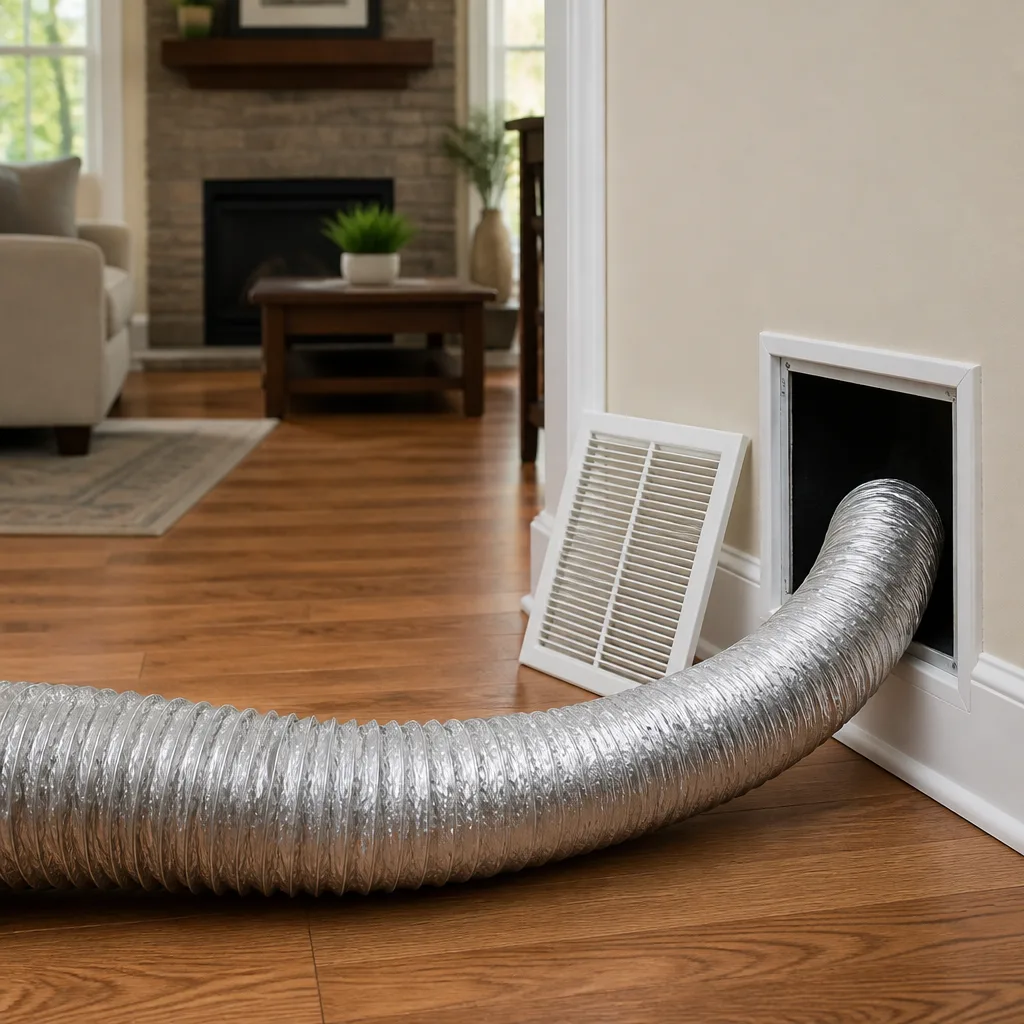 Whole-home duct cleaning
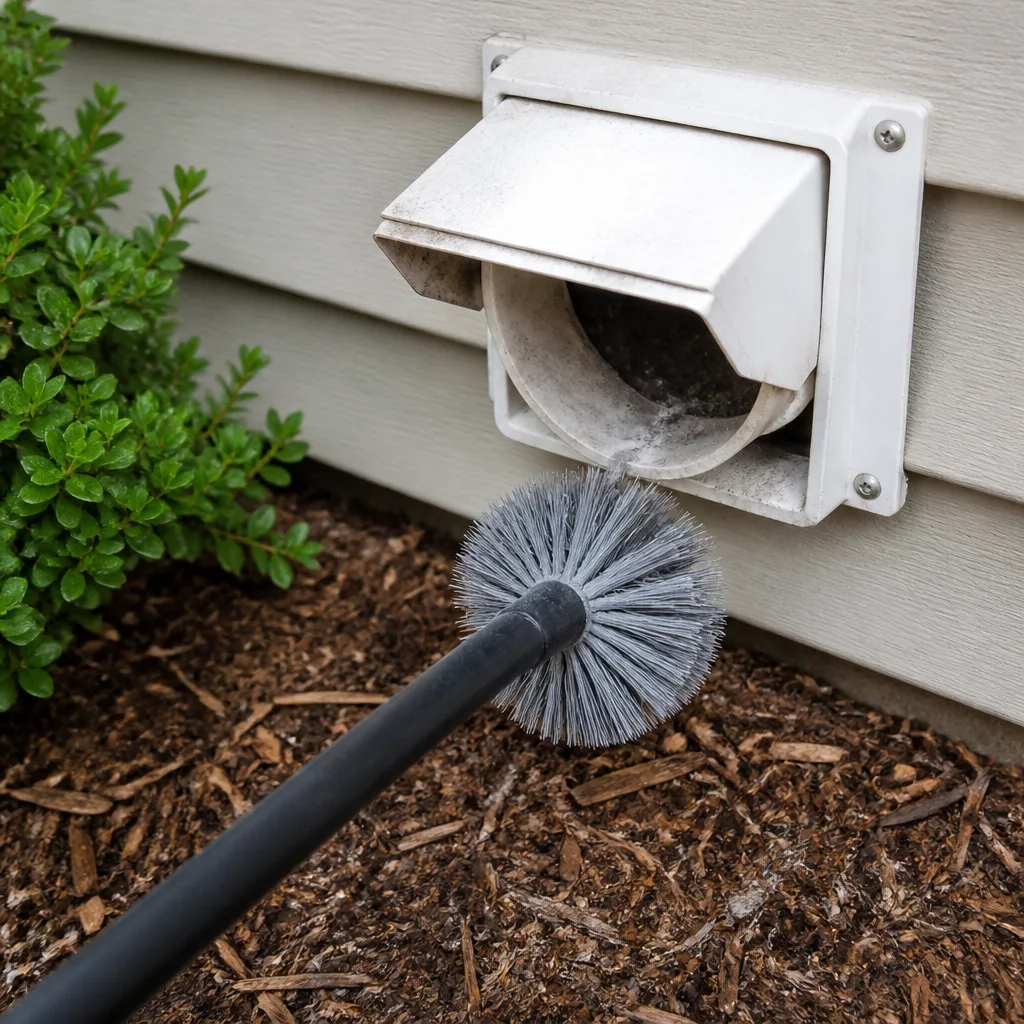 Dryer vent cleaning
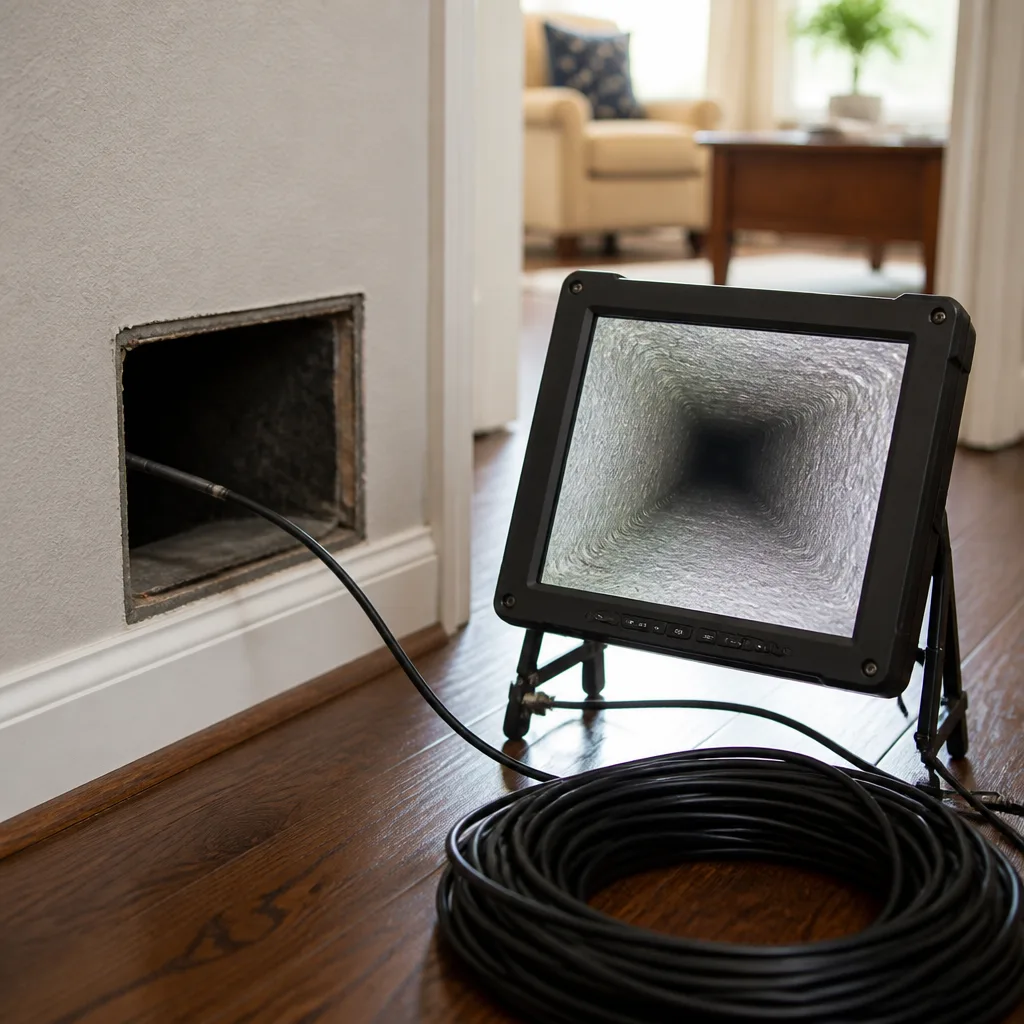 Camera inspection
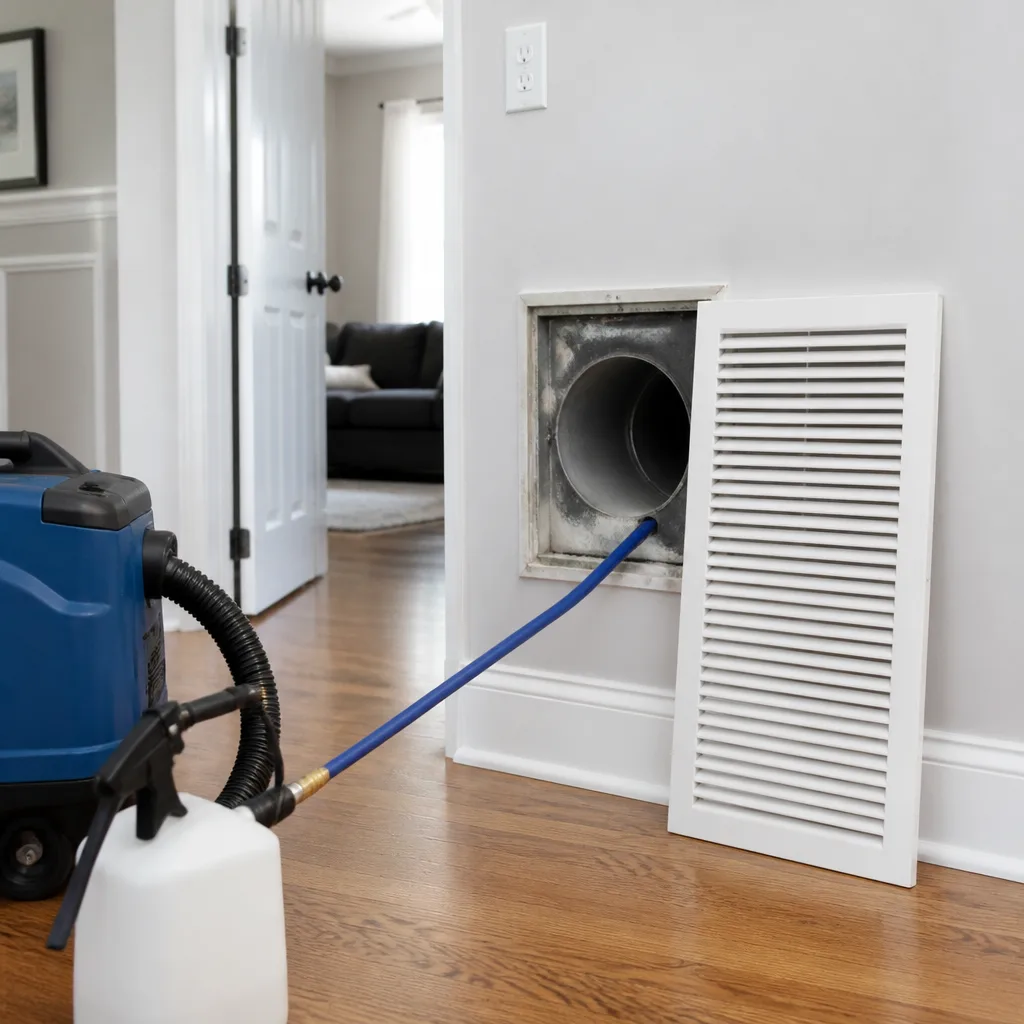 Sanitizing & deodorizing
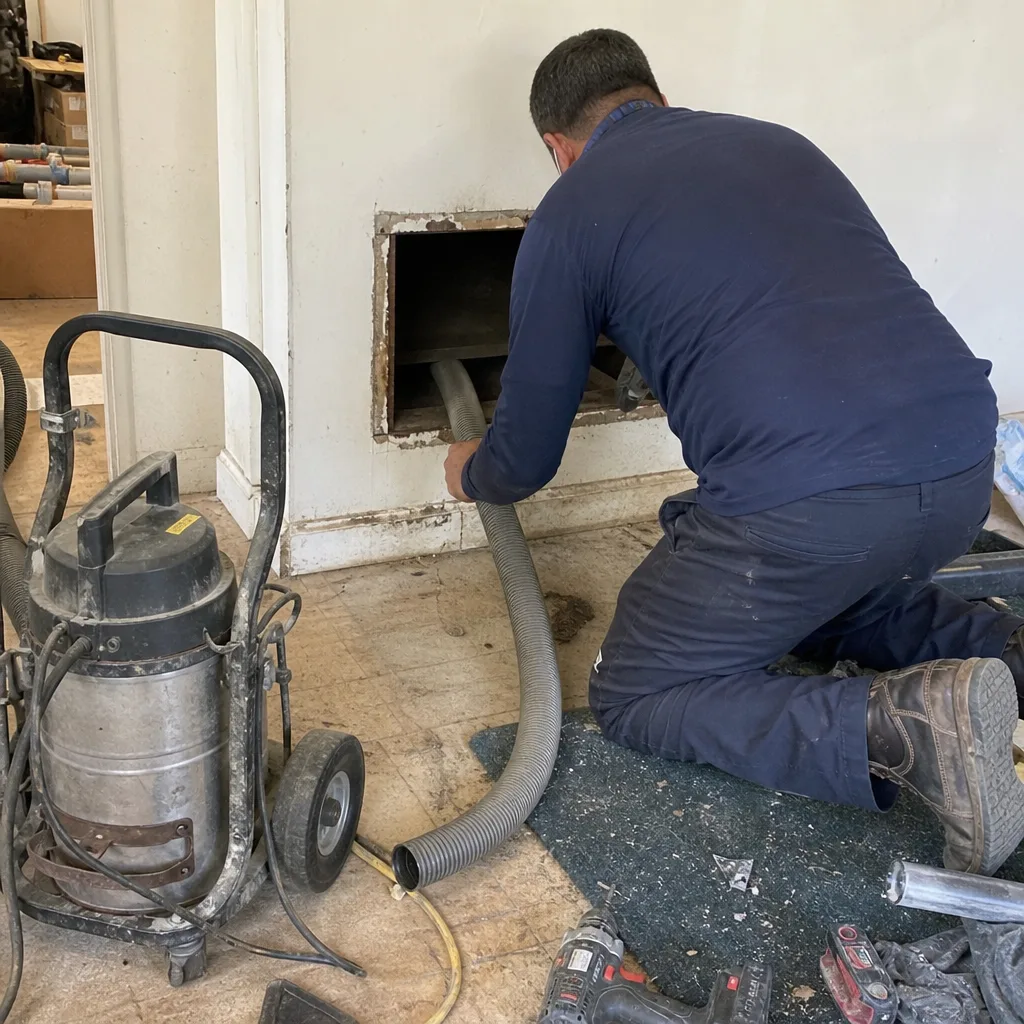
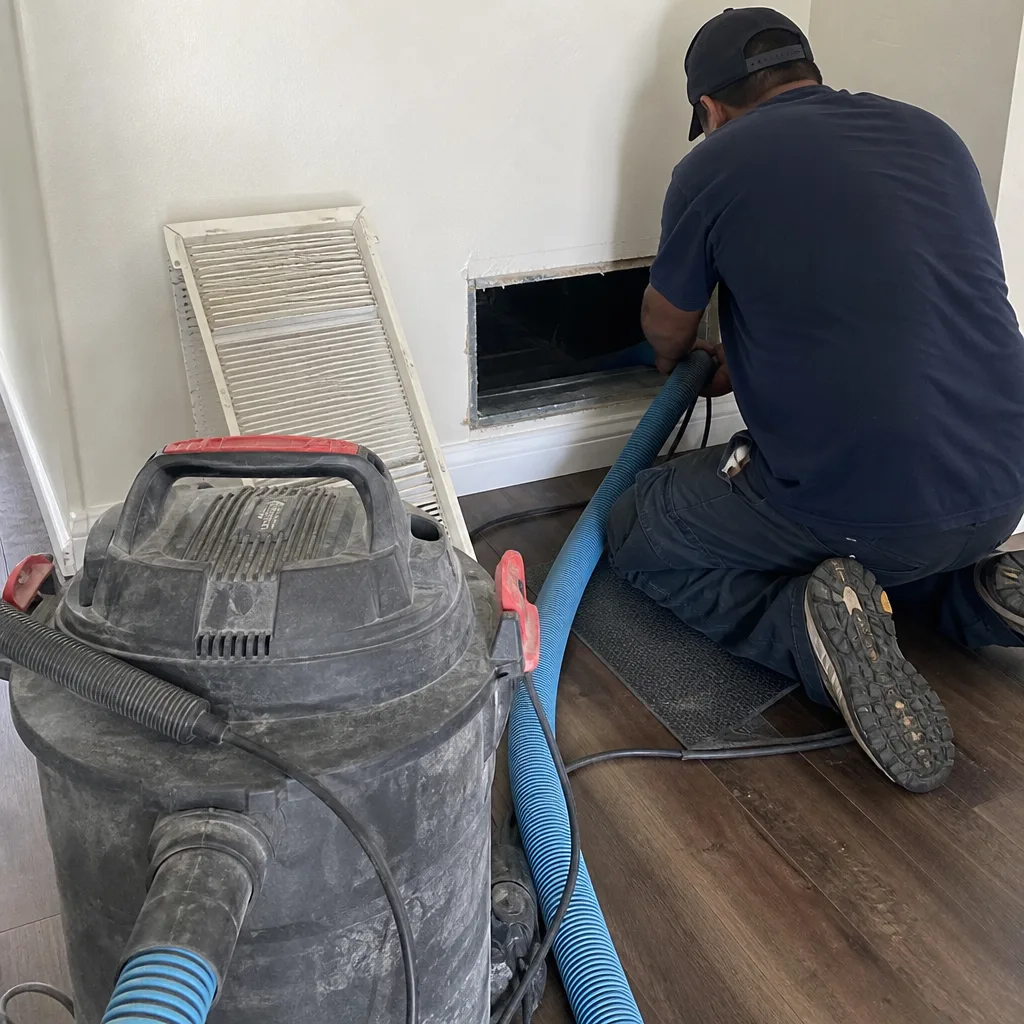
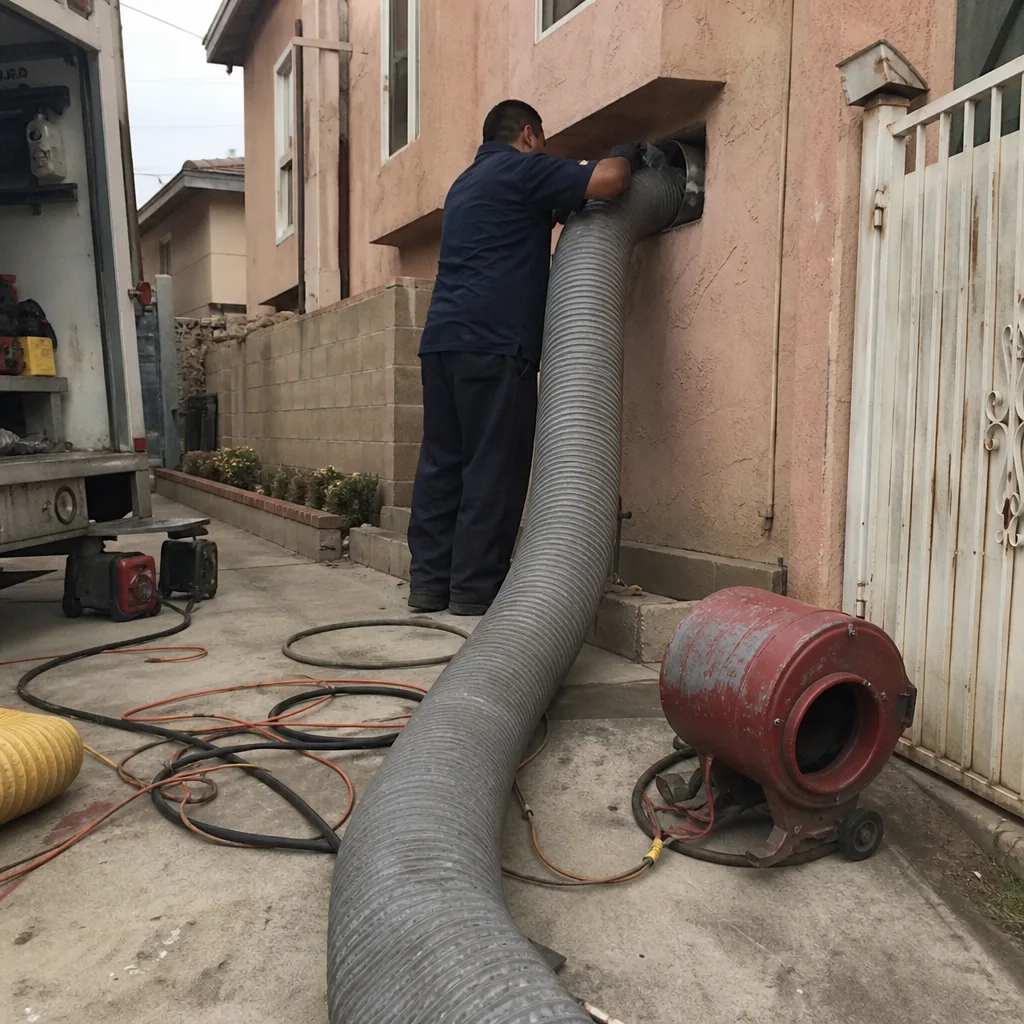
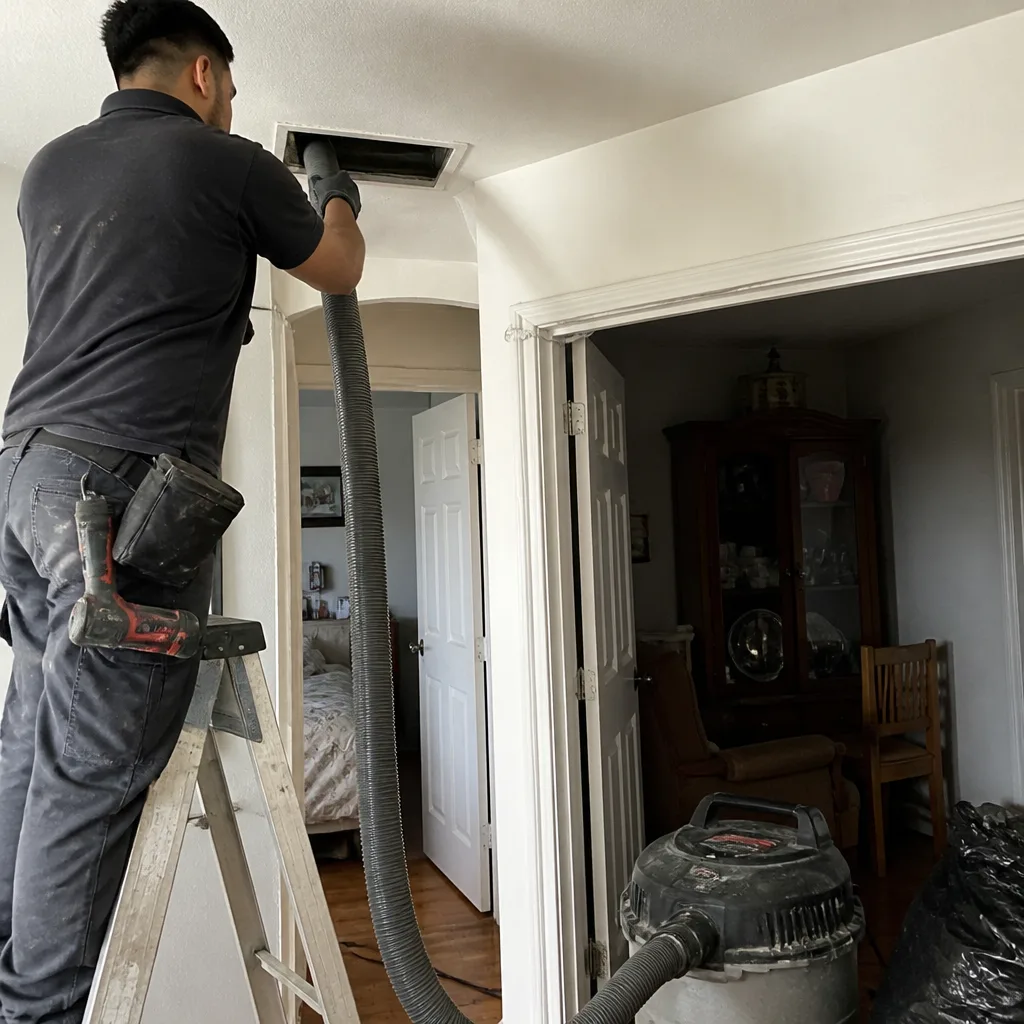
Whole-system duct and dryer vent check with before-and-after photos - you see exactly what came out of your vents
That "$99 whole-house special" is a bait ad - the real number appears once they are in your hallway, or the "clean" is a shop-vac at the register. We photograph the inside of your ducts before and after instead.
Air Duct Cleaning Permits, Codes & Inspections in CA: What You Need to Know
Most homeowners in Boyle Heights don’t discover that a duct cleaning job has become a code compliance issue until they try to sell the house or file an insurance claim. That’s the moment when unpermitted duct modification work surfaces, and it’s never a pleasant conversation. This guide walks you through the exact line California draws between routine cleaning, which no agency regulates, and duct modification, sealing, or replacement, which can trigger mechanical permits, CSLB licensing requirements, and Title 24 energy compliance. For related reading, see our Air Duct Cleaning Troubleshooting: Common Problems and How to Fix Them. By the end, you’ll know what to ask any contractor before they touch your ductwork, and how to avoid paying twice for work that should have been done right the first time.
Styles & brands we work with
- Whole-home duct cleaning
- Dryer vent cleaning
- Camera inspection
- Sanitizing & deodorizing
Quick Answer
Air duct cleaning itself does not require a permit anywhere in California, including Los Angeles County. However, duct sealing, duct replacement, duct modification, and mold remediation inside ductwork can trigger mechanical permit requirements under the California Mechanical Code, CSLB contractor licensing rules, and Title 24 energy compliance obligations. The permit trigger is not the cleaning; it’s the modification.
Table of Contents
- Where the California Mechanical Code Draws the Line: Cleaning vs. Modification
- CSLB Licensing: What License Classifications Actually Cover Duct Work
- When Mold Remediation Inside Ductwork Becomes a Licensed Contractor’s Job
- Title 24 Energy Compliance: What Triggers It in Existing Homes
- What the City of Los Angeles Requires for Duct Replacement vs. Duct Repair
- How to Verify a Contractor’s CSLB License in 5 Minutes
- What an Inspector Actually Looks At: A Ductwork Inspection Checklist
- Common Mistakes to Avoid
- When to Call a Professional
- Frequently Asked Questions
- The Bottom Line
Where the California Mechanical Code Draws the Line: Cleaning vs. Modification
The California Mechanical Code (CMC), which forms Chapter 18 of the California Code of Regulations Title 24, regulates the installation, alteration, and repair of HVAC systems. Cleaning is not alteration. Brushing, vacuuming, and debris removal from the interior surfaces of accessible ductwork does not change the system’s physical configuration, so no jurisdiction in California requires a permit for it. The moment tools come out that cut openings into ductwork, dismantle and reassemble duct sections, or apply sealants that change airflow dynamics, the work has crossed into modification territory.
In practice, here’s the distinction as it applies to a typical Boyle Heights home built between 1920 and 1980. If a technician uses a Rotobrush or Nikro system to agitate and vacuum the interior surfaces of your existing ducts through existing register openings, no permit applies. If the same technician discovers a disconnected duct section under your crawlspace and reconnects it with sheet metal screws and mastic sealant, that’s a repair. Under CMC Section 103.1, repairs that restore a system to its original condition without changing capacity or configuration generally don’t require a permit. But if the reconnection happens because a duct section was damaged beyond reuse and is replaced with new material, that crosses into alteration territory, and many jurisdictions, including Los Angeles, take the position that a mechanical permit is now required.
Duct sealing deserves special attention because it’s the most common service that unknowingly crosses the line. Applying mastic sealant or aerosolized sealant to the interior of existing ducts as a preventive measure doesn’t require a permit if no new duct material is installed. But here’s the gray zone: if the sealing work is proposed as a substitute for replacing failed duct sections, and the contractor is essentially gluing separated joints back together rather than properly reconnecting or replacing them, the work may be characterized as an improper repair that a building inspector would flag. We’ve seen this in Boyle Heights homes where decades-old galvanized ductwork has separated at the seams, and a homeowner was told sealing would solve the problem. It doesn’t; the CMC requires mechanical fastening at joints, not just adhesive.
The practical takeaway is this: ask any contractor up front whether their proposed work constitutes repair or alteration, and whether they would pull a permit if the local building department reviewed the project description. If the answer is vague, that’s a red flag.
CSLB Licensing: What License Classifications Actually Cover Duct Work
California’s Contractors State License Board (CSLB) issues specific license classifications, and not all of them permit a contractor to touch ductwork. Understanding this distinction matters because hiring an unlicensed or wrongly-classified contractor for work that requires a license can void your homeowner’s insurance coverage for that project and expose you to liability for worker injuries.
The C-20 Warm-Air Heating, Ventilating and Air-Conditioning Contractor classification is the primary license for duct system work. A C-20 holder can install, modify, and repair warm-air heating and air conditioning systems, including ductwork, registers, and related sheet metal components. This is the license classification you should look for if anyone proposes duct replacement, duct modification, or substantial duct repair on your Boyle Heights property.
Here’s where it gets nuanced. A C-43 Sheet Metal Contractor can fabricate and install sheet metal ductwork, but installing ductwork as part of a functioning HVAC system generally requires the C-20 classification. A general building contractor holding a B license can perform duct work only if it’s incidental to a larger project that the B license holder is already managing, such as a whole-home renovation. A handyman with no license can legally clean air ducts, because cleaning is not a licensed trade in California. But that same handyman cannot legally reconnect, seal, or replace duct sections.
Let’s make this concrete with a numbered process for what to check:
- Ask for the contractor’s CSLB license number before any work begins. The number is printed on their business cards, contracts, and vehicles.
- Look up the license on the CSLB website at cslb.ca.gov using the license number, not the business name, since trade names can be reused.
- Confirm that the license classification is C-20 if the job involves anything beyond cleaning: duct replacement, duct repair that requires new materials, or duct modification.
- Verify that the license is active and that the contractor has workers’ compensation insurance if they employ anyone. CSLB shows this directly on the license detail page.
- Beware of anyone who says a license isn’t needed “for this kind of work.” If the work involves modification, California law disagrees.
From our vantage point operating in Boyle Heights, we’ve seen homeowners end up in precisely this situation: a cleaning crew presents a low price, discovers “problems” during the job, and offers to fix them on the spot without a permit or a C-20 license. That’s the exact sequence that leaves a homeowner with unpermitted work and no legal recourse when the repair fails. At Eastgate Air Duct Cleaning, we keep our scope to cleaning, dryer vent cleaning, and air duct repair as standalone services, and we’re clear with every homeowner about what’s permitted, what’s not, and when a licensed HVAC contractor or building permit is genuinely required.
When Mold Remediation Inside Ductwork Becomes a Licensed Contractor’s Job
This is the most misunderstood area in the entire duct cleaning industry, and it’s worth understanding thoroughly before anyone tries to sell you a solution. Mold remediation inside ductwork occupies a regulatory space that most cleaning companies never mention.
California’s Business and Professions Code Section 7026 defines what constitutes a contractor, and the CSLB has consistently held that mold remediation is a construction service requiring a contractor’s license when it involves the removal, repair, or replacement of building materials. Ductwork is installed building material. If mold growth inside your ducts is purely on the surface and can be physically removed by mechanical agitation and HEPA vacuuming without damaging the duct material, that falls under cleaning, which is unregulated. But if the mold has penetrated the duct lining, if duct sections must be removed and replaced because the contamination cannot be adequately cleaned, or if any portion of the remediation requires cutting into walls, ceilings, or the duct system itself, then the work crosses into contractor territory.
The CSLB has issued specific guidance stating that mold remediation that requires disturbing more than 10 square feet of surface area, or that involves the repair or replacement of contaminated building materials, must be performed by a contractor holding an appropriate license. In the ductwork context, that license would typically be C-20 or a C-22 Asbestos Abatement Contractor license if the contamination is in a system that also contains asbestos-containing materials, which is not uncommon in older Boyle Heights homes.
What should a homeowner do if a duct cleaning technician finds mold? First, ask for a clear written description of what was found, where it’s located, and what the proposed remediation involves. Second, ask whether the remediation requires removing or replacing any duct sections. If the answer is yes, you need a licensed contractor, not a cleaning crew. Third, consider having an independent indoor environmental professional assess the situation before committing to remediation. A professional remediation firm using Abatement Technologies negative air machines and HEPA filtration is equipped for serious contamination scenarios in ways that a standard cleaning rig is not. That distinction matters when mold is present.
Title 24 Energy Compliance: What Triggers It in Existing Homes
California’s Title 24 Building Energy Efficiency Standards apply to new construction and to specific modification projects in existing homes. The relevant trigger for duct work is found in the Energy Code’s requirements for alterations to existing buildings, specifically Section 150.2, which governs when an alteration to an existing home must comply with current energy standards.
Here’s what homeowners need to know. Replacing a single failed duct section as a repair does not trigger Title 24 compliance in most cases. But replacing a substantial portion of the duct system, say 40 feet or more, or replacing the entire duct system, is considered an alteration under the Energy Code. When an alteration crosses that threshold, the new ductwork must comply with current Title 24 requirements for duct insulation, duct leakage testing, and airflow verification. That means the contractor should be performing a duct leakage test using a duct blaster, sealing to a maximum allowable leakage rate, and documenting the results for the permitting agency.
In Boyle Heights, where a large percentage of the housing stock dates to the 1920s through 1950s, original ductwork often predates any meaningful energy standard. Homeowners replacing those systems today frequently discover that what they assumed was a straightforward swap is actually a Title 24 compliance project. That’s not a reason to avoid the work; it’s a reason to know what you’re signing up for before the project starts.
The Energy Code also has a mandatory measure that applies whenever ducts are exposed during a remodel: Section 150.0(m) requires that accessible ducts be sealed and tested when the building envelope is opened up for other work. If you’re remodeling a Boyle Heights kitchen and the contractor opens walls or ceilings that expose duct runs, those ducts must be sealed to a specified leakage rate before the walls close up. This is a requirement most homeowners never hear about until an inspector mentions it.
We consult with Air Duct Repair in Boyle Heights customers regularly on this exact point: if the repair work exposes enough ductwork to raise Title 24 questions, that’s a conversation to have with a licensed C-20 contractor who understands the compliance path, not a reason to hide the work from the inspector.
What the City of Los Angeles Requires for Duct Replacement vs. Duct Repair
Los Angeles operates its own building department, the Los Angeles Department of Building and Safety (LADBS), and its interpretations of the California Mechanical Code carry specific weight for Boyle Heights homeowners. Understanding LADBS’s distinctions between repair and replacement will save you from the most common permit mistake.
Under LADBS policy, a repair is defined as work that restores a component to its original function using like materials without increasing capacity, changing the system’s configuration, or extending its useful life beyond its original design. Applying that definition to ductwork: patching a small hole in a duct with sheet metal and mastic is a repair, no permit needed. Reconnecting a joint that has separated is a repair, no permit needed. Replacing a rusted-out duct section with a new section of the same diameter is considered replacement, which requires a mechanical permit under LADBS’s permitting requirements for HVAC alterations.
This distinction surprises people. It shouldn’t. The technical term LADBS uses is “alteration,” and their definition of alteration includes the replacement of system components, not just expansions or reconfigurations. In practical terms, if a contractor proposes to cut out and replace any section of your ductwork rather than patching it, that is a permit-triggering event in the City of Los Angeles.
Duct replacement carries another requirement in Los Angeles: a post-installation inspection. LADBS inspectors will verify that new duct sections are properly supported, that joints are mechanically fastened and sealed, that insulation meets current Title 24 requirements, and that the system operates within design airflow parameters. This inspection is not optional. If you skip the permit and later need to sell your home, LADBS records won’t show the work, and a sharp buyer’s inspector may flag the absence of a permit for visible new ductwork.
For homeowners in the flatlands of Boyle Heights around the 1st Street corridor or up in the hills near Hollenbeck Park, these requirements apply uniformly across the neighborhood. Ductwork in crawlspaces, which is common here due to raised foundations, is subject to the same permitting rules as ductwork in basements or attics elsewhere.
How to Verify a Contractor’s CSLB License in 5 Minutes
The CSLB license lookup is the single most useful tool a California homeowner has, and it takes less time than ordering coffee. Here’s the process, step by step, for verifying that anyone you’re considering for duct repair or replacement work is properly licensed.
- Go to cslb.ca.gov and click “Check a License” in the top navigation.
- Enter the contractor’s license number. This is the 6-digit number that must appear on all advertising, including their website, business cards, and any vehicle signage. If you don’t have the number, you can search by business name or by the individual’s name.
- Read the license detail page carefully. The key fields are: “License Status” (should read Active), “Classification” (should read C-20 Warm-Air Heating, Ventilating and Air-Conditioning Contractor for duct replacement or modification work), “Bond Information” (active bond required), and “Workers’ Compensation” (must show coverage if the contractor has employees).
- Check the “Expiration Date.” A license that expired last month means the contractor is operating illegally as of today.
- Look for any consumer alerts or license actions. The CSLB posts citations, suspensions, and legal actions directly on the license record.
- Write down the license number in your own records. If you ever need to file a complaint with CSLB about that contractor, you’ll need it.
For Air Duct Cleaning in Boyle Heights, license verification is an unusual ask, because cleaning is not a licensed trade. But if a cleaning company proposes repairs, or if you’re hiring a separate C-20 contractor for duct replacement, run the lookup. It takes five minutes and eliminates the worst category of risk.
What an Inspector Actually Looks At: A Ductwork Inspection Checklist
If you do pull a mechanical permit for duct replacement in Los Angeles, here’s what the LADBS inspector will be verifying when they visit your Boyle Heights home. Understanding this checklist in advance positions you to have a productive inspection rather than a frustrating one.
- Proper duct support: Ducts must be supported at intervals specified in CMC Table 6-1, typically every 4 to 10 feet depending on duct size and orientation. Drooping duct runs with improvised supports are a common failure.
- Mechanically fastened joints: Sheet metal joints must be secured with screws or other mechanical fasteners, not tape alone. Mastic sealant can be used on top of mechanical fasteners, but it cannot be the only thing holding a joint together.
- Sealant specification: The CMC requires that duct sealants be rated for the operating temperature and pressure of the system. Silicone and mastic designed for HVAC applications are acceptable; generic household caulk is not.
- Insulation: In unconditioned spaces like crawlspaces and attics, which includes most of the crawlspace ductwork in Boyle Heights, ducts must be insulated to the current Title 24 R-value requirement, typically R-6 or R-8 depending on the climate zone and duct location.
- Clearance to combustibles: Ductwork near furnaces, water heaters, and other heat sources must maintain the clearances specified in the manufacturer’s installation instructions and the CMC.
- Duct leakage test results: For Title 24-triggering alterations, the inspector will require documentation of a duct blaster test showing leakage below the maximum allowed rate.
None of this checklist applies to routine cleaning. A Rotobrush or Nikro cleaning pass through existing ductwork doesn’t change any of these conditions and doesn’t require inspection. That’s the clean line that keeps cleaning services accessible while ensuring modification work meets code.
Common Mistakes to Avoid
- Paying for unpermitted duct replacement. If a contractor replaces your duct sections and tells you a permit isn’t needed because “it’s the same size,” you’re getting bad advice. LADBS considers duct replacement an alteration requiring a permit, and unpermitted work surfaces at the worst possible time: during escrow.
- Letting a cleaning-only company “fix” duct problems on the spot. We see this in Boyle Heights regularly. A cleaning technician finds a disconnected duct and offers to fix it while they’re there. That repair, if it involves new materials, is beyond their legal scope unless they hold a C-20 license. Insist on a licensed contractor for the fix.
- Confusing mold cleaning with mold remediation. Surface mold removal from accessible duct interiors is cleaning. Mold that has penetrated duct lining or requires duct section replacement is remediation and requires a licensed contractor. Anyone who blurs this line is selling something.
- Thinking Title 24 doesn’t apply to older homes. Title 24 alteration requirements apply to all buildings, regardless of age. A 1925 bungalow in Boyle Heights that gets new ducts today must meet current insulation and leakage standards, not 1925 standards.
- Not asking for the CSLB license number before work starts. The number should be on the quote, on the contract, and on the technician’s vehicle. If it’s nowhere to be found, ask why.
- Accepting a verbal promise that “we’ll handle the permit.” The permit must be in your name or specifically authorized by you in writing. If no permit document exists before work starts, the promise means nothing.
- Using an unlicensed handyman for duct sealing. Duct sealing with mastic is technically within repair territory if no new materials are involved, but the moment the handyman replaces a section or installs a new transition, they’re operating without a license. It’s a thin line, and unlicensed individuals cross it constantly.
When to Call a Professional
If your ductwork has visible gaps, disconnected sections, or damage that goes beyond surface debris, that’s a repair conversation, not a cleaning conversation. The right professional will tell you which category you’re in. If you suspect mold inside your ducts and the proposed solution includes removing or replacing duct sections, stop and consult a licensed C-20 contractor before proceeding. If you’ve discovered that previous duct work in your home was done without permits and you’re now preparing for a sale, a licensed contractor and possibly a call to LADBS should be your next steps. Eastgate Air Duct Cleaning offers Air Duct Cleaning services with free estimates in Boyle Heights for duct cleaning, dryer vent cleaning, and duct repair. If you’re not sure whether your situation is a cleaning or a repair issue, call (855) 382-4682 and we’ll tell you honestly which path you’re on.
Frequently Asked Questions
No, air duct cleaning does not require a permit anywhere in California, including the City of Los Angeles. Cleaning is considered maintenance, not alteration, because it doesn’t change the physical configuration of the duct system. The work is done through existing register openings using agitation and vacuum equipment without cutting into or modifying the ductwork. That said, if cleaning reveals damage that requires duct section replacement, the replacement work itself may trigger permit requirements.
Unpermitted duct replacement in Los Angeles can create liability in three practical ways. First, a home sale may stall when the buyer’s inspector identifies the work and the seller can’t produce a permit. Second, a homeowner’s insurance claim for HVAC damage may be denied if the damage is attributed to unpermitted modification. Third, LADBS can require the work be brought up to code retroactively, which often means tearing out and redoing the original work. None of these outcomes are worth the few hundred dollars saved by skipping the permit.
Sealing existing duct joints with mastic or tape as a standalone procedure does not require a permit, because it doesn’t replace material or alter the system’s configuration. However, if the sealing is part of a larger project that includes duct replacement, or if the sealing is intended as a substitute for properly reconnecting separated duct sections, the work crosses into repair or alteration territory that may require a permit and a licensed contractor. The distinction is whether new materials are being installed and whether the system’s original condition is being restored or altered.
Yes, California landlords are required to maintain rental housing in a habitable condition, and significant mold growth inside the duct system can constitute a habitability violation if it affects indoor air quality. Boyle Heights renters with documented mold inside ductwork should notify the landlord in writing and request remediation. If the landlord fails to act, the Los Angeles Housing Department accepts complaints and can inspect the property. Tenants should not attempt duct mold remediation themselves, both because of the health risks and because the remedy belongs to the owner.
Duct replacement in California requires a contractor holding a C-20 Warm-Air Heating, Ventilating and Air-Conditioning Contractor license issued by CSLB. A general building contractor with a B license may also perform duct replacement if the duct work is incidental to a larger project under their management, but a C-20 is the correct classification for standalone duct replacement. An unlicensed individual cannot legally replace duct sections, and hiring one voids your insurance protection for that work.
Duct replacement in Boyle Heights typically runs $2,500 to $7,500 for a full system in an average single-family home, with partial replacements proportionally less. The range reflects home size, duct accessibility in crawlspaces versus attics, and the current Title 24 insulation requirements for the climate zone. The single biggest variable is whether the work is a straightforward swap or triggers Title 24 compliance testing, which adds $400 to $800 for duct leakage testing and documentation. Call (855) 382-4682 for an exact quote on duct repair or replacement in Boyle Heights, and we’ll give you a straight answer on whether a permit applies to your situation.
Duct cleaning done with improper equipment or technique can damage ductwork, particularly in older Boyle Heights homes where the ducts may be thin-gauge metal or fiberglass-lined. Negative air machines that pull too hard can collapse flexible ducts, aggressive brush systems can tear insulation, and poorly resealed access points can leak conditioned air into crawlspaces. That’s one reason we run Rotobrush and Nikro systems calibrated for residential ductwork rather than improvised rigs. The right equipment cleans without damaging; the wrong equipment creates repair bills.
For most Los Angeles homes, including Boyle Heights, air duct cleaning every 3 to 5 years is a reasonable interval. Homes with pets, smokers, recent remodeling work, or visible dust accumulation around registers may need cleaning more frequently. Homes with occupants who have significant respiratory conditions may also benefit from a shorter interval. The honest answer is that this isn’t an annual service for most homes. If a company tells you it’s needed every year, ask them to show you the buildup that justifies it.
The Bottom Line
Air duct cleaning in California is a maintenance service with no permit requirement and no licensing mandate. The regulatory complexity lives in the services that sit adjacent to cleaning. Duct replacement requires a mechanical permit in Los Angeles and a C-20 contractor’s license. Duct sealing sits in a gray zone that becomes regulated the moment new materials enter the job. Mold remediation inside ductwork becomes a licensed contractor’s job when duct sections must come out. Title 24 compliance kicks in when enough duct work is replaced to constitute an alteration. Knowing these distinctions is what protects a Boyle Heights homeowner from unpermitted work, insurance denials, and expensive corrections. For additional help identifying problems early, read our Air Duct Cleaning Warning Signs: A Boyle Heights Homeowner’s Reference Guide. Ask questions up front, verify licenses, and never let a cleaning crew improvise a repair they’re not licensed to make.
Dryer Vent Cleaning in Boyle Heights is a separate service from duct cleaning, but it sits under the same regulatory umbrella: cleaning is permit-free, and any modification to the vent system follows the same permit and licensing rules described here.
Written by the team at Eastgate Air Duct Cleaning, serving Boyle Heights since 2015. Explore our more guides & resources.
See the difference
 Before
 After
 Before
 After
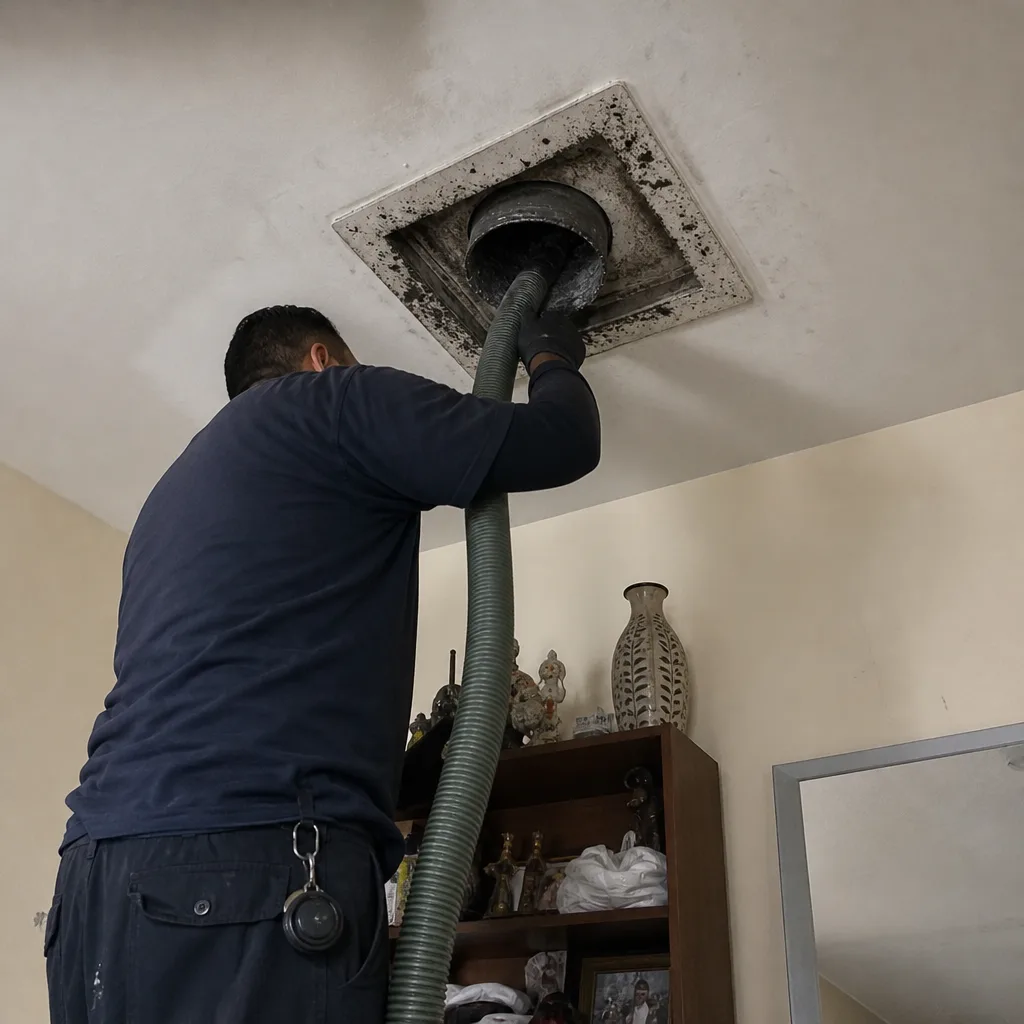 Before
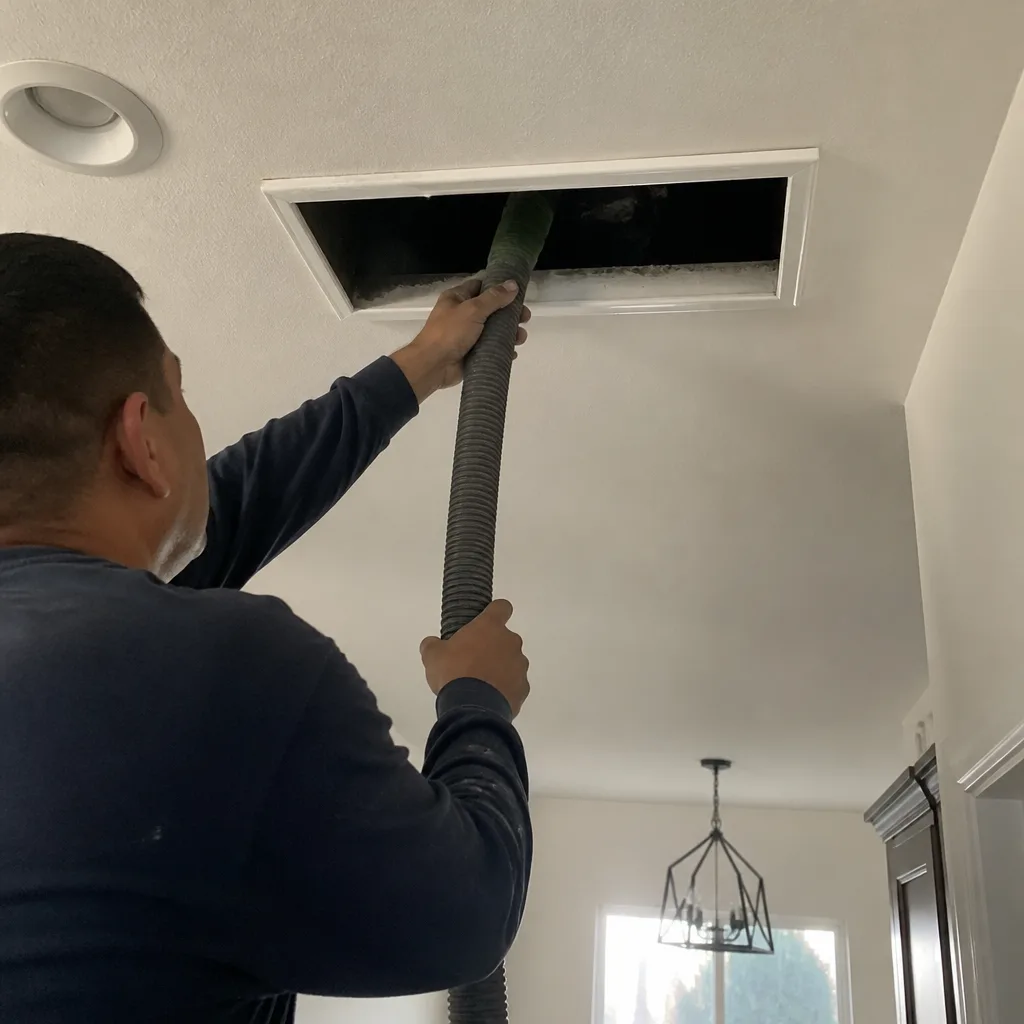 After